
NEW YORK, May 24, 2026, 10:03 EDT
- It’s Starlink, not Mars, that’s powering SpaceX’s IPO buzz for now.
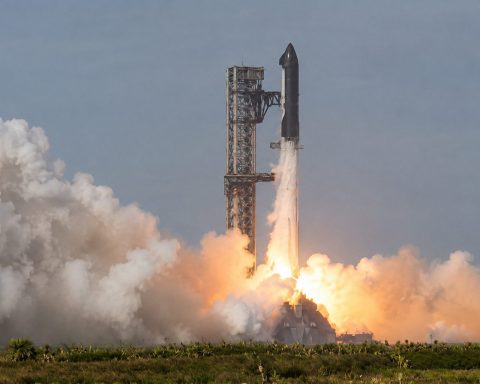
- SpaceX notched a largely successful Starship test, providing a well-timed proof point ahead of the company’s planned June listing.
- It still comes down to whether Starlink can boost its user base without sacrificing too much revenue per account.
SpaceX’s record-setting market debut now centers on a single question: Can Starlink ramp up quickly enough to justify a $1.75 trillion valuation, as the company’s other divisions—still expensive, still incomplete—drag on the balance sheet?
Rohit Kulkarni at Roth Capital Partners didn’t mince words on CNBC: for SpaceX, he said, the “biggest question” for its valuation comes down to Starlink’s ability to scale. That’s front and center for investors now — no longer a footnote. Search – Microsoft Bing
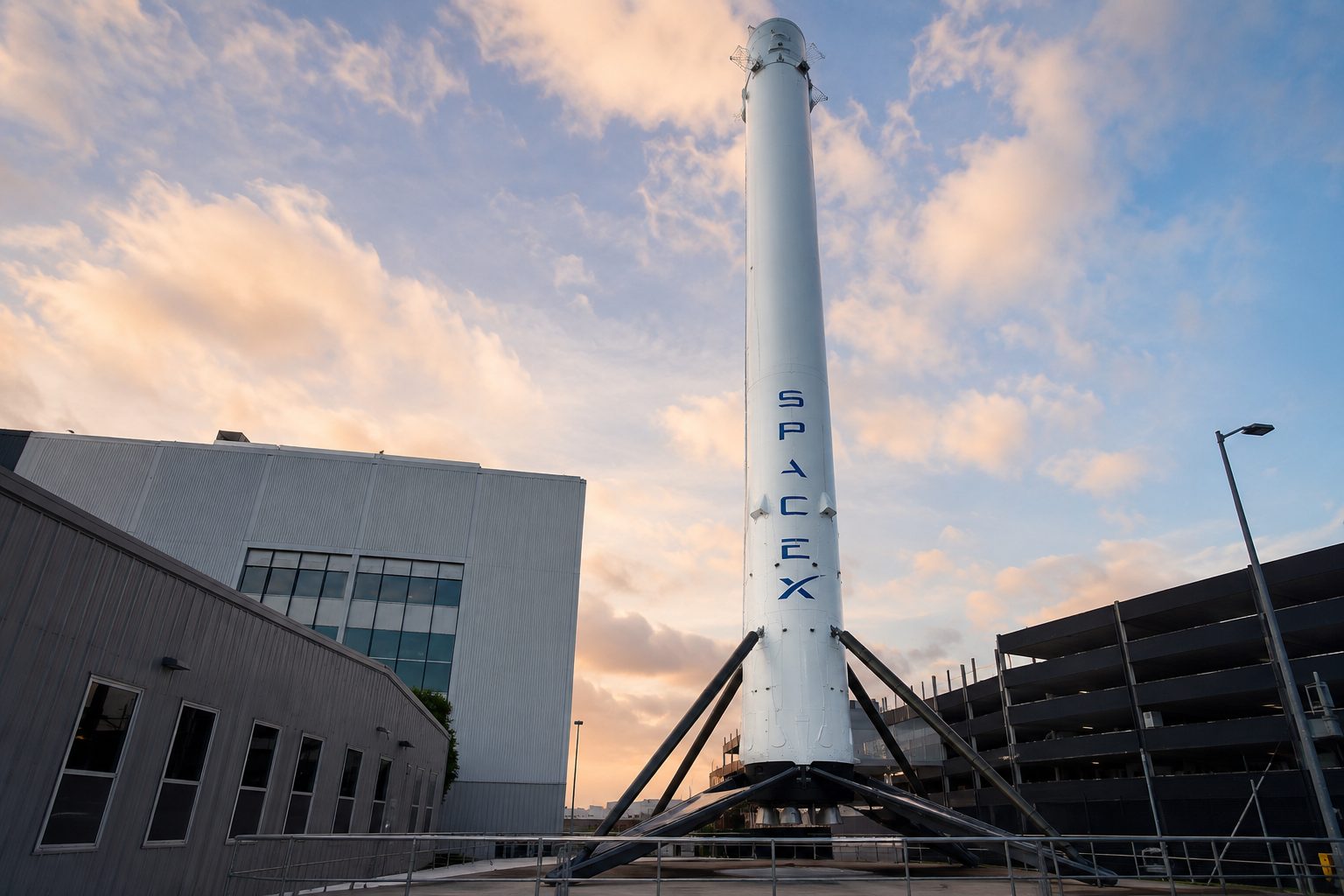
The date’s key here. SpaceX’s Starship V3, the upgraded version, checked off most objectives on May 22—launch, mock Starlink satellite deployment, and a controlled descent into the Indian Ocean, according to Reuters. Kathleen Curlee, research analyst at Georgetown’s Center for Security and Emerging Technology, called the mission a “meaningful step forward.” Reuters
SpaceX has its sights set on a Nasdaq debut as soon as June 12, according to Reuters, putting the company on track for what may become the largest IPO ever. The move would bring SpaceX shares to public investors for the first time.
The numbers put Starlink’s role in the spotlight. SpaceX reported a first-quarter operating loss of $1.94 billion against $4.69 billion in revenue—but Starlink alone brought in $1.19 billion in operating profit. The AI unit, centered on xAI, came in deep in the red: $2.47 billion in operating loss on just $818 million in revenue, according to Reuters.
Starlink counted 10.3 million subscribers as of March, according to a filing cited by Via Satellite, up from 8.9 million at the end of 2025. Still, average revenue per user — what SpaceX pulls in from each customer every month — slid to $66, down from $99 in 2023. That’s expansion, but the growth isn’t straightforward.
SpaceX, according to Axios, claims its total addressable market stretches to $28.5 trillion, factoring in space, connectivity, and AI. The figure, pulled from a recent filing, dwarfs common estimates. Ryan Cummings, chief of staff at the Stanford Institute for Economic Policymaking, didn’t mince words, labeling the projection “farcical.” Axios
The rivalry is moving out of the abstract. Amazon’s Leo satellite network—once dubbed Project Kuiper—plans a constellation topping 3,000 low-Earth-orbit satellites, all linked with Amazon’s ground network and cloud systems. Starlink’s question isn’t about having an edge; it’s about whether that edge lasts in sectors like enterprise, aviation, and government, areas where Amazon’s customer relationships are already entrenched.
Here’s another twist for the market: SpaceX will give certain shareholders a shot at reselling stock ahead of the usual 180-day lock-up that keeps insiders from cashing out after an IPO. Ali Perry, an attorney at Mayer Brown, told Reuters that this staggered release could sidestep “one big lock-up cliff”—but it might mean selling pressure lingers for months. Reuters
The risks thread through familiar territory: Starship hasn’t hit routine launches, Musk’s grip on voting power remains unshaken, and losses from the AI unit pile up as SpaceX asks public investors to assign lofty values to businesses still unproven at scale. Georgetown finance professor Reena Aggarwal told Reuters a strong SpaceX IPO wouldn’t necessarily ignite a bigger IPO rally, but a flop could sour sentiment.
Right now, investors face a different pitch. It’s not just about backing a rocket business—they’re weighing how to value Starlink as a global telecom platform, Starship as the lever to drive down expenses, and AI as the next chapter. Kulkarni’s original question remains: how does Starlink scale?