
WASHINGTON, May 24, 2026, 12:08 (EDT)
NASA will lay out its Moon Base plan in Washington on Tuesday, putting Blue Origin’s Blue Moon lander and SpaceX’s Starship at the center of the next Artemis test before the agency attempts to send astronauts back to the lunar surface. The May 26 briefing will cover new industry partners, mission plans and progress toward a sustained presence on the moon, NASA said.
The reason it matters now is Artemis III. The mission is no longer the landing itself, but a 2027 crewed test in low Earth orbit, the region close to Earth used by many spacecraft, where Orion is expected to practice rendezvous and docking — meeting another spacecraft in orbit and locking to it — with one or both commercial lander test vehicles. Jeremy Parsons, a Moon to Mars official at NASA, called the flight an “important stepping stone” toward Artemis IV, the agency’s planned lunar landing mission. NASA
The outside pressure is also rising. China launched three astronauts to its Tiangong space station on Sunday, with one set for a year-long stay, as Beijing works toward a crewed moon landing by 2030; NASA is trying to land astronauts in 2028, two years earlier.
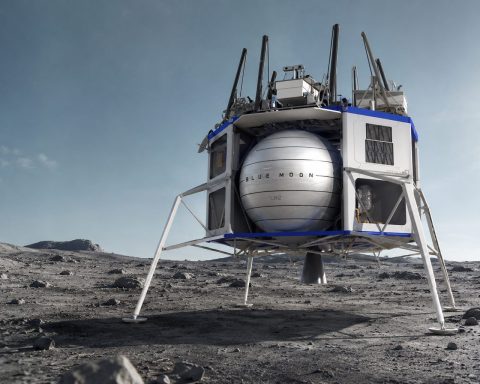
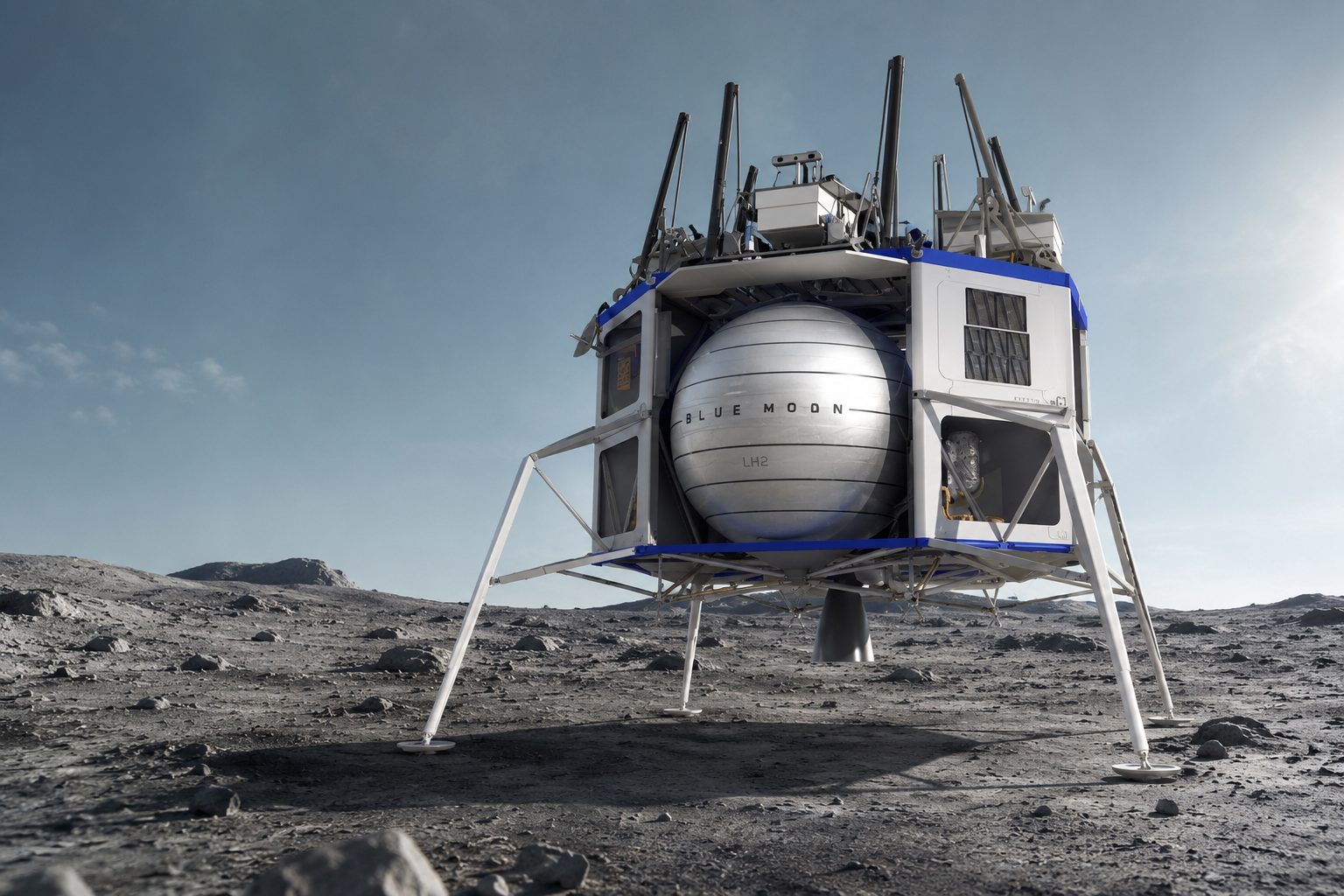
Blue Origin is drawing fresh attention because its full-scale Blue Moon Mark 2 crew-cabin trainer is now operating at NASA’s Johnson Space Center in Houston. NASA said the trainer will support mission simulations, communications checks, spacesuit work and preparations for simulated moonwalks; the flight lander is expected to stand about 52 feet tall, with the crew cabin near its base.
Blue Origin also has a smaller lunar vehicle in the pipeline. NASA said environmental testing of the Blue Moon Mark 1 cargo lander, also called Endurance, has been completed in a thermal vacuum chamber at Johnson, where engineers modelled space-like temperature and vacuum conditions before launch. The vehicle is meant to demonstrate precision landing, autonomous guidance and cryogenic propulsion, meaning propulsion using very cold fuels.
NASA Administrator Jared Isaacman told lawmakers last month the agency had “received responses from both vendors” for the late-2027 Artemis III docking test, Aerospace America reported. He also said he was gaining confidence that both landers could be involved, a sign NASA is trying to keep two suppliers in the race rather than betting only on one. Aerospace America
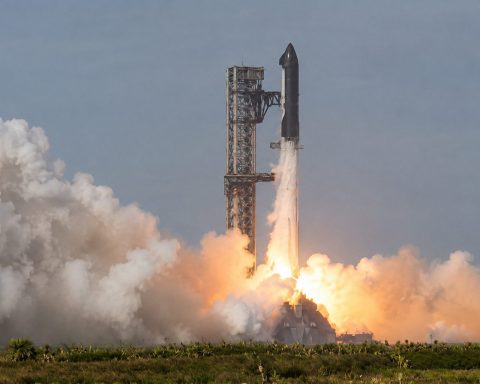
SpaceX, the other lander provider, gave NASA new test data on Friday when its upgraded Starship V3 flew from Starbase, Texas, on the 12th test flight of the Starship campaign. Kathleen Curlee, a research analyst at Georgetown University’s Center for Security and Emerging Technology, told Reuters the flight was “another meaningful step forward,” though she noted the test still had “some anomalies.” Reuters
Blue Origin is trying to bulk up on the ground as well. Florida Governor Ron DeSantis announced on Friday a $600 million expansion of the company’s Rocket Park campus in Cape Canaveral, including an 830,000-square-foot upper-stage manufacturing facility; Blue Origin CEO Dave Limp called it the “latest and most ambitious chapter” in the company’s Florida work. Reuters
The company’s role dates to NASA’s 2023 selection of Blue Origin as its second Artemis lunar lander provider, under a $3.4 billion firm-fixed-price contract. NASA said then the second provider was meant to increase competition, reduce costs and support a regular cadence of moon landings, after SpaceX had already been contracted for the initial human landing system work.
But the schedule can still move. NASA’s inspector general said in March that both SpaceX and Blue Origin face schedule delays, technical difficulties and integration challenges, and that NASA has no capability to rescue astronauts stranded by a catastrophic lander event. Starship also must prove large-scale in-space refueling, a cryogenic propellant transfer process that has not been tried at that scale, Reuters reported.
That leaves NASA with a narrower near-term test than the moon landing once planned for Artemis III, but not a simple one. The agency still has to settle which lander test articles will fly, whether astronauts will enter at least one of them, how long the mission will run and how new spacesuit interfaces will be checked before it commits crews to a lunar descent.