
New York, June 2, 2026, 05:04 (EDT)
SpaceX is carving out 5% of the stock in its upcoming IPO for a handpicked group—certain employees and individuals tapped by company executives—as revealed in a regulatory filing Monday. These select buyers will sidestep the standard post-IPO lock-up period that typically restricts early share sales.
The disclosure hits days ahead of SpaceX’s anticipated June roadshow, share sale, and Nasdaq debut, raising the question for investors: can Elon Musk’s rocket and satellite outfit actually hold on to that roughly $1.75 trillion valuation? FTSE Russell has indicated SpaceX could make its way into major indexes not long after it lists—an early inclusion that could trigger index fund buying tied to those benchmarks.
Timing is a key factor here. The latest filing zeroes in on which investors get in and out early. The bigger issue still hangs over the market: can Starlink—SpaceX’s satellite internet unit—actually grow into the hefty valuation pitched to public investors? Roth Capital’s Rohit Kulkarni put it bluntly to CNBC: “How does Starlink scale?” YouTube
The reserved-share plan lets SpaceX handpick certain buyers for IPO shares at the offering price—a directed share program rather than a typical open distribution. According to the filing, SpaceX left out both the number of shares pegged for this program and any names of eligible recipients. Any reserved shares that aren’t snapped up will hit the public market instead.
The lock-up period isn’t a simple six-month hold. Ali Perry, a Mayer Brown lawyer focused on public launches, pointed out that staggering share releases could help avoid a sudden flood of selling. “It is probably better for the market that there will not be one big lock-up cliff,” she said. Still, Perry added, this method “doesn’t eliminate the impact, just redistributes it.” Reuters
Right now, Starlink is carrying the financial load, not the AI unit. SpaceX’s recent filing put its first-quarter operating loss at $1.94 billion from $4.69 billion in revenue. The connectivity business—driven by Starlink—delivered $1.19 billion in operating profit. Meanwhile, the AI arm posted a $2.47 billion loss on $818 million revenue.
The split is at the heart of the valuation debate. Morningstar’s Nicolas Owens and Suryansh Sharma peg SpaceX at $780 billion, putting it roughly 48% under its private-market price tag, with a “narrow moat,” their shorthand for only modest, lasting advantages over rivals. They note Starlink posted $11.3 billion in revenue in 2025, up 50%, and operating income cleared $4.4 billion. Morningstar
“SpaceX doesn’t have a clear-cut peer group, so putting a number on it isn’t easy,” said Georgetown finance professor Reena Aggarwal. She pointed to what she called “somewhat of a halo effect around Musk and his unconventional vision.” Valuing companies like this is difficult, Aggarwal added, because there simply isn’t a direct comparison. Reuters
Competition’s lopsided. Blue Origin and Amazon are aiming to take on SpaceX in both heavy-lift rockets and satellite internet, yet Blue Origin’s New Glenn launch-pad mishap has knocked its timeline off course—giving SpaceX an edge, if only slightly, for now. “The market still needs alternatives,” said Mark Boggett, who runs Seraphim Space, but this delay just “strengthens SpaceX at the margin.” Reuters
SpaceX is drawing fresh backing from government contracts. Days after it secured a $2.29 billion deal for a high-speed satellite communications system, the company landed a $4.16 billion contract from the U.S. Space Force. This latest award centers on satellites designed to detect and target airborne threats.
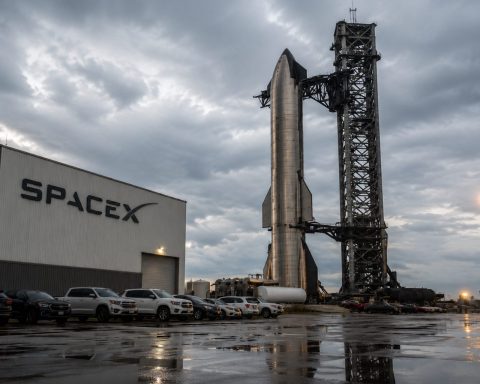
The path forward isn’t exactly straightforward. The U.S. Federal Aviation Administration has told SpaceX to look into a problem with its Starship booster after a mishap in May—a setback for the vehicle at the core of SpaceX’s ambitions to cut launch expenses and ramp up Starlink. Morningstar, for its part, pointed to ongoing issues around spectrum rights, regulatory hurdles, and hard capacity ceilings for satellite broadband, particularly where terrestrial telecom players keep a tight grip on crowded markets.
Musk keeps a tight grip on SpaceX, holding 85.1% of its voting power after the share sale, and he’s agreed to hold off selling for about a year. Public investors, though, could be in for a ride: high valuation, lock-up shares releasing in stages, a shot at index inclusion, and the ever-present question—just how much more can Starlink haul in?