
NEW YORK, June 3, 2026, 14:29 EDT
- SpaceX is setting its IPO price at $135 a share—an unusual step ahead of the formal bookbuilding process.
- The company aims to pull in $75 billion, targeting a Nasdaq debut that could come as soon as June 12.
- Now, it’s all about Starlink, AI computing, and whether investors are at ease with Elon Musk holding the reins.
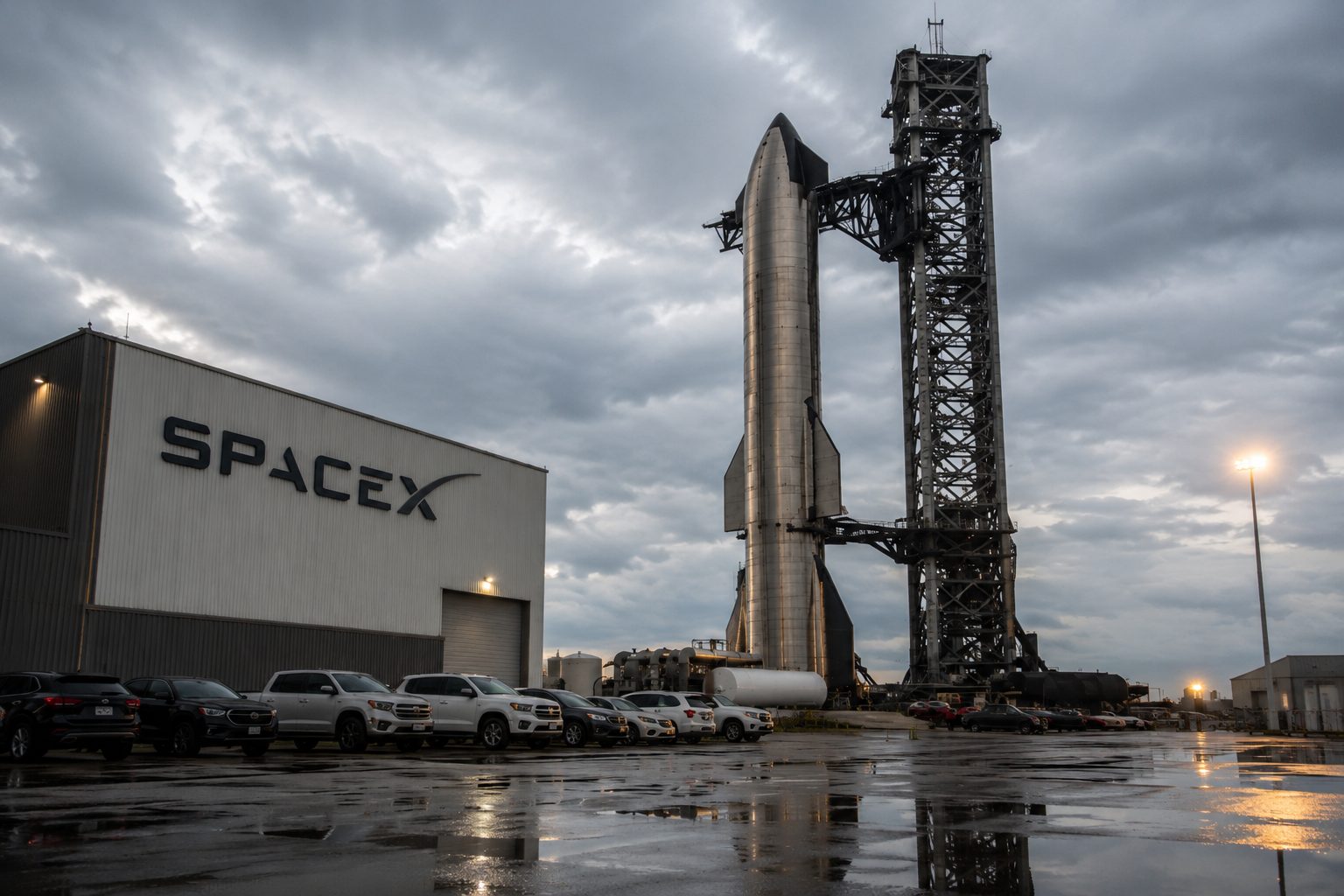
SpaceX, led by Elon Musk, is targeting an IPO price of $135 per share, a source told Reuters, putting the rocket company on track to raise $75 billion at a $1.75 trillion valuation ahead of its investor roadshow. The listing—expected as soon as June 12—would see 555.6 million shares hit the Nasdaq under the ticker “SPCX.” Reuters
Now, those “key questions” Bloomberg highlighted last month—who’s backing the deal, Musk’s grip on control, and what’s in the numbers—are about to be tested directly in the market. The IPO roadshow kicks off Thursday, as SpaceX aims for what could be the biggest U.S. stock debut on record, ending a lengthy drought for mega-listings. Bloomberg
SpaceX is tossing out the typical IPO playbook. Rather than floating a price range and tweaking it after gauging investor appetite, the company wants to nail down its terms from the start and see if buyers are willing to bite.
“Musk is simply taking a ‘take-it-or-leave-it’ approach,” said Weiheng Chen, senior partner at Wilson Sonsini Goodrich & Rosati. Craig Coben—formerly Bank of America’s co-head of Asia-Pacific global capital markets—was more direct: “When you’re the most anticipated IPO ever, you can ask investors to adapt to your process.” Reuters
The IPO is set up as an all-primary deal, so proceeds go straight to the company—no existing shareholders cashing out here. According to Reuters, Musk would need to hang onto his SpaceX stake for 366 days post-offering. The fresh capital is aimed at ramping up AI computing and boosting SpaceX’s satellite network.
SpaceX added to the AI narrative on Wednesday, picking up approval for a Texas reinvestment zone that’s linked to a proposed Terafab semiconductor facility, with an eye-watering $119 billion price tag. This move marks another step as SpaceX stretches from rockets and Starlink into chipmaking and heavier-duty computing infrastructure—areas where investors are now weighing valuations well ahead of the actual buildout.
Starlink is still the simpler piece to value here. Oppenheimer, in a note Wednesday, projected SpaceX’s satellite broadband arm could shake up the $1.6 trillion U.S. communications sector—AT&T and other incumbents look particularly vulnerable. The firm also bumped up its 2035 space-revenue forecast sharply, now calling for $800 billion, up from $500 billion.
But not everyone’s buying into the lofty numbers. Morningstar tags SpaceX with a $780 billion fair value—nowhere near the IPO goal. Analyst Nicolas Owens put it plainly: “We don’t see Grok as one of the leading AI labs today.” He described the company as “significantly overvalued,” pointing to unproven orbital data centers and Starlink’s remaining obstacles. Spokesman-Review
Skeptics have fresh ammunition in the numbers. SpaceX boosted revenue to $18.67 billion in 2025, up from $14.02 billion the prior year, yet it posted a net loss of $4.94 billion after turning a $791 million profit previously. For the first quarter, revenue hit $4.69 billion; losses deepened to $1.27 a share, compared with 18 cents a year earlier.
SpaceX, at the target valuation, would be valued at 93.7 times its projected 2025 revenue, according to Reuters. For context, Rocket Lab trades around 118 times revenue, while Tesla comes in at nearly 17 times—an imperfect but inescapable comparison, since there’s no true listed peer for SpaceX.
Governance risk is another factor. The IPO prospectus spells out a dual-class share system, meaning voting rights are stacked in favor of Musk and a select circle of insiders. Investors who are comfortable betting on Musk’s track record might not mind, but anyone outside that inner group gets little voice—especially if the ambitious AI and space bets stretch out longer than management projects.
There’s still plenty on the table for Wall Street. According to Bloomberg News, SpaceX is hashing out underwriting fees below 0.75% on that approximately $75 billion raise—banks would divide close to $500 million. The deal’s being led by Goldman Sachs, Morgan Stanley, BofA Securities, Citigroup, and J.P. Morgan.
Here’s the real question: do investors see SpaceX mostly as rockets and Starlink, just with the possibility of AI, or as something bigger—an AI infrastructure play already nearing the public-market giants in value? The roadshow’s demand will reveal just how much of that vision buyers are ready to pay for upfront.