
NEW YORK, May 24, 2026, 18:02 (EDT)
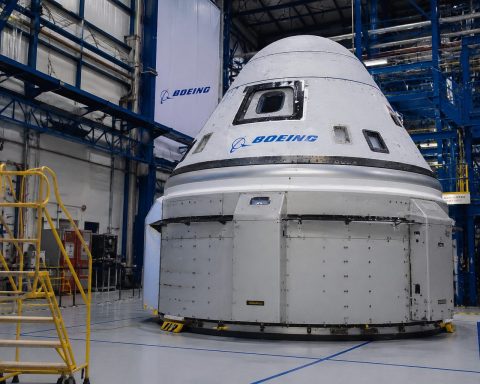
Boeing finds itself swept into Wall Street’s ongoing Tesla-SpaceX play, with SpaceX’s IPO talk and new merger rumors bringing fresh focus to the question: just how much space do legacy aerospace names have left as the sector shifts?
Boeing finds itself in a tough spot. SpaceX, according to Reuters, is aiming for a public debut as soon as June 12, with a possible $75 billion haul and a valuation near $1.75 trillion. Boeing, by contrast, is still working to prove to investors it can squeeze cash from its aircraft and defense operations again. An IPO is the first time a company’s shares are offered to the public.
Momentum in the debate picked up after SpaceX’s Starship pulled off most of its key objectives during Friday’s test flight—satellite deployment happened, the vehicle managed a controlled splashdown in the Indian Ocean. That test drew plenty of attention ahead of the IPO. Starship sits at the center of SpaceX’s ambitions for lower-cost launches, scaling Starlink, and upcoming NASA work.
A Yahoo Finance piece—sourced from 24/7 Wall St.—made the case that if Tesla and SpaceX ever merged, Boeing would face more fallout than most rivals. Boeing’s deep ties to commercial jets, defense, satellites, crewed space, and government launch contracts put it squarely in the crosshairs, the article said. It referenced Gene Munster of Deepwater Asset Management and Musk biographer Walter Isaacson, both of whom have speculated about a potential Tesla-SpaceX union sometime over the next ten years, but emphasized there’s no deal.
Wedbush Securities’ Dan Ives took a more aggressive stance on timing, saying after the SpaceX IPO filing that SpaceX and Tesla “will eventually merge into one company in 2027,” citing the deepening ties between Musk’s ventures. There’s been no official word of any merger from Tesla or SpaceX. Business Insider
The lines keep blurring. SpaceX’s IPO paperwork revealed roughly $650 million in deals last year connecting SpaceX, Tesla, xAI, and X. xAI snapped up $506 million worth of Tesla Megapack batteries, while SpaceX shelled out $131 million for Tesla Cybertrucks. As for stock, Tesla holds close to 19 million SpaceX Class A shares—less than 1% post-offering, according to Reuters.
Boeing isn’t sweating the idea of Tesla churning out passenger jets anytime soon. The real concern? Musk’s ecosystem — rockets, satellites, batteries, chips, and that AI software capable of handling tasks usually left to humans — could start muscling in on fields where Boeing has traditionally leaned on its size and deep government relationships.
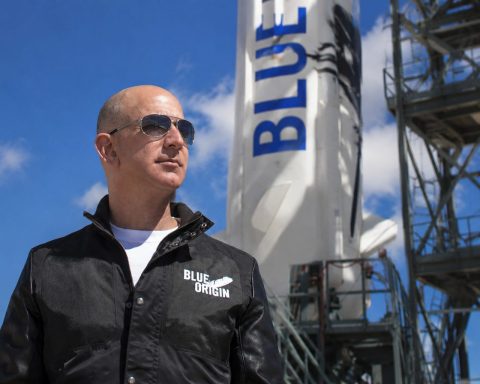
The field of direct rivals is small but formidable. United Launch Alliance—Boeing and Lockheed Martin’s rocket partnership—goes head-to-head with SpaceX and Blue Origin to secure U.S. national security launch deals. In April 2025, SpaceX, ULA, and Blue Origin landed contracts from the U.S. Space Force totaling $13.5 billion through 2029. SpaceX picked up 28 missions for $5.9 billion; ULA grabbed 19 missions, bringing in $5.3 billion.
Boeing’s comeback story still gives the company some breathing room. First-quarter revenue landed at $22.217 billion, a 14% jump, with its backlog swelling to a record $695 billion. Still, losses persist: the company logged a core loss per share of 20 cents and reported negative free cash flow at $1.454 billion. (Free cash flow here is what’s left after capital expenditures.) CEO Kelly Ortberg said Boeing was “building on our momentum” while keeping safety and quality front and center. Boeing Investors
Investors have taken different approaches with these stocks. Boeing finished Friday at $219.02, posting a small loss. Tesla ended at $426.01, with Lockheed Martin closing at $533.24. U.S. equity markets won’t open Sunday or Monday for Memorial Day—trading resumes Tuesday.
Money is pouring into space-focused ETFs, with investors putting $1.3 billion into these funds over the past month, Morningstar Direct figures show, as reported by Reuters. These ETFs, which bundle space-related stocks into a single tradeable share, are drawing in cash fast. Morningstar ETF analyst Bryan Armour put it this way: big inflows like this usually crop up when “something new and shiny” hits the market. Reuters
The trade isn’t without risk. SpaceX remains unprofitable even as it grows, and its filing laid out extensive transactions with other Musk businesses. The Associated Press noted SpaceX posted a $2.6 billion operations loss last year on $18.7 billion in sales, and the prospectus hands Musk and certain shareholders extra voting power, curbing the say of regular investors.
The merger? It could hit a wall. Regulators would start poking around, Tesla shareholders might bristle at the threat of dilution, and SpaceX backers could just hold out for a straightforward IPO instead of getting tangled up with an automaker. Todd Sohn, ETF strategist at Strategas, flagged the stampede into space funds as a risky move—especially, he said, when “everybody is thinking the same way.” The problem: the public space market is still small and fund holdings tend to pile up on the same names. Reuters
Even so, Boeing finds itself caught in a market debate it didn’t trigger. The company points to its backlog as evidence for solid demand. The sticking point: can its space and defense units keep pace if SpaceX suddenly gets a much fatter balance sheet from public investors — especially if Tesla turns into something beyond another Musk-run neighbor?