
Houston, May 22, 2026, 06:09 CDT
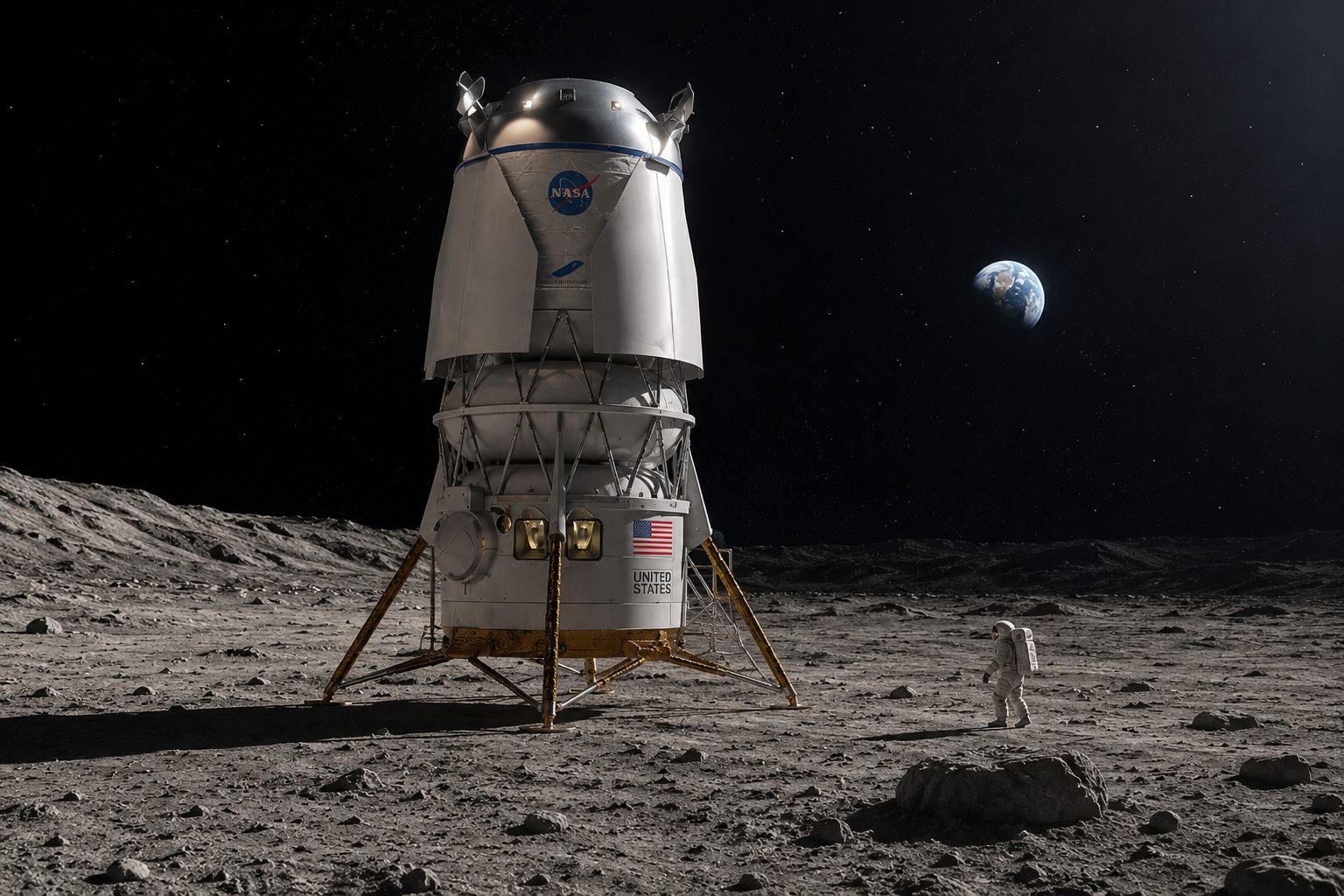
NASA astronauts have access to a full-scale Blue Moon Mark 2 lander prototype at Johnson Space Center, putting Blue Origin’s hardware in the spotlight as the agency works toward testing competing lunar landing vehicles. The mock-up stands over 15 feet tall inside Houston’s Space Vehicle Mockup Facility, where it’s being used for spacesuit fit checks, moonwalk practice, and a range of mission simulations, according to NASA.
The shift is notable: Artemis III won’t serve as the first U.S. crewed Moon landing since Apollo anymore. Instead, NASA has recast the 2027 flight as a low-Earth-orbit dry run. Astronauts will board Orion, practicing rendezvous and docking maneuvers with one or both commercial human landing systems—the vehicles designed to ferry crews between lunar orbit and the Moon’s surface.
Blue Origin and SpaceX now face tighter deadlines. NASA’s updated Artemis III timeline is designed to reduce risk ahead of Artemis IV—the mission targeting the Moon’s south pole for the return of American astronauts. But a lot remains in flux, including how long Artemis III will last, who will join the crew, and if astronauts will access a lander test article.
The Blue Moon trainer isn’t actual flight hardware, but it does let NASA and Blue Origin run “human-in-the-loop” tests—putting astronauts or mission controllers in the loop with real equipment mockups, then sending feedback back to Blue Origin as development on the real lander continues. According to NASA, the operational Blue Moon lander should reach about 52 feet in height, with its crew cabin situated close to the bottom. NASA
Jeremy Parsons, acting assistant deputy administrator for NASA’s Moon to Mars program, described the Earth orbit mission as a key step forward in the agency’s Artemis III update. Parsons referred to it as “one of the most highly complex missions NASA has undertaken.” NASA
Last year, Blue Origin secured a $3.4 billion fixed-price contract from NASA to deliver a second Artemis lunar lander—this one for Artemis V. NASA’s rationale: two competing lander models boost reliability and keep the cadence of Moon missions on track. SpaceX had already snagged the contract for earlier Artemis landings.
Things got closer once NASA shifted Artemis III to focus on an Earth-orbit docking demo. Back in April, NASA Administrator Jared Isaacman told lawmakers the agency had received proposals from SpaceX and Blue Origin for a rendezvous-and-docking test set for late 2027. He also said he was “gaining confidence by the day” that both companies’ landers would be involved. Aerospace America
SpaceX is still out front as the main challenger. The upgraded Starship V3—key for NASA’s Moon plans and central to SpaceX’s broader ambitions—had its Texas launch scrubbed Thursday. Bad fuel readings and a balky launch-tower arm forced the halt. SpaceX flagged a new launch window for Friday, starting at 5:30 p.m. Central and running 90 minutes.
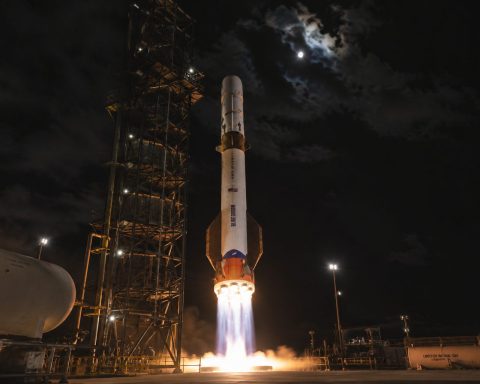
Blue Origin is shifting its focus to the Moon mission, pulling resources from other projects. Back in January, Reuters said the company would halt New Shepard space-tourism trips for no less than two years, aiming to speed up progress on its New Glenn rocket and the Blue Moon lunar lander.
Risks remain significant. Starship and Blue Moon both need to demonstrate successful on-orbit cryogenic refueling—transferring super-cooled propellant in space—as well as pull off uncrewed lunar landings before NASA will let either fly astronauts down. According to Space.com, Blue Moon is ahead on one front: it’s the first of the two lander projects to get a cabin mockup installed for astronaut training at a NASA site.
In an April note, Clayton Swope, senior fellow at the Center for Strategic and International Studies, pointed out that NASA’s latest approach reduces some risks by shifting Orion-lander docking tests nearer to Earth. But there’s a trade-off—if both commercial landers aren’t ready in time for Artemis III in 2027, Artemis IV could get pushed back too. “Every day that a lunar lander is not available,” Swope warned, could tack on more delays to the landing effort. CSIS
NASA’s new Houston cabin isn’t the end goal—it’s a proving ground. Astronauts, controllers, and engineers now have hands-on access to something they might eventually board in orbit, long before any lunar landing happens. For Blue Origin, it’s also a chance to prove Blue Moon is advancing past diagrams, formal wins, or assembly updates.