
WASHINGTON, May 22, 2026, 12:03 EDT
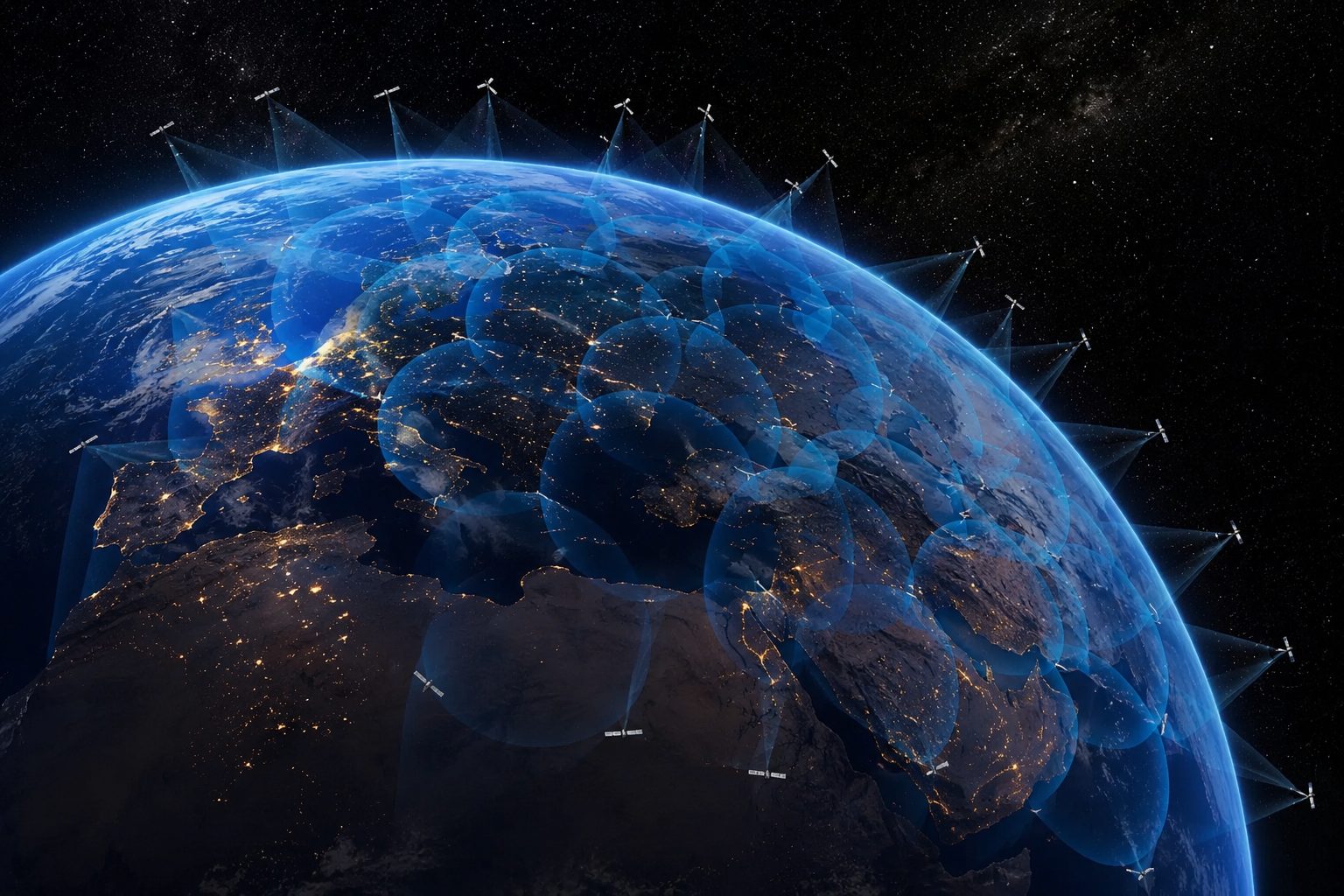
Low Earth orbit satellite companies are finding themselves up against a less obvious hurdle than launch logistics or spectrum: processing and making sense of telemetry from fleets that now stretch into the hundreds or even thousands. SpaceNews, in a May 20 analysis, dubbed this challenge the “cardinality wall”—a data crunch that intensifies as every spacecraft, subsystem, sensor, and operational mode spins up another stream to track in real time. LinkedIn
This isn’t just an engineering curiosity anymore. SpaceX’s S-1 breaks out Starlink’s scale: roughly 9,600 LEO satellites, and 10.3 million subscribers spread over 164 countries and territories. That’s from a structured summary of the filing and SEC search hits.
This is turning into a market issue, too. Satellite broadband, Earth observation, direct-to-device—each sector is pushing into bigger fleets, increasingly hands-off control, faster decisions. Cardinality refers to how many unique data series a system manages; for satellite operations, that often runs into the millions when you tally up satellite IDs, sensors, timestamps, subsystem states.
Eutelsat OneWeb’s numbers are huge. The company’s 600-plus LEO satellites generate over 50,000 telemetry data points each, every second. That adds up to more than 1 million data points a second across the whole fleet, according to a customer case study published by InfluxData. Dan Kroboth, who heads LEO satellite operations for Eutelsat OneWeb, described the flow as a “mass quantity of data” and said their chosen platform was “purpose-built for our data.” InfluxData
It’s not only a question of handling volume. According to InfluxData, OneWeb’s previous telemetry setup hit snags with storage costs, redundant data, and the burdens of transformation and tagging. With the company looking at over 15 million high-cardinality time series to manage, that’s the sort of demand that can bog down dashboards, deliver alerts with a lag, and complicate troubleshooting.
Competition is intensifying. Starlink’s reach dwarfs any challenger so far; Eutelsat OneWeb is pushing ahead with its own sizable hybrid LEO-GEO system. Amazon Leo, for its part, claims over 300 satellites in orbit and contracts for more than 100 launches—laying groundwork for a fleet topping 3,000.
Direct-to-device, or D2D — basically satellite connections right to regular mobile phones — is complicating the picture. According to Fierce Network, SpaceX’s filing claims Starlink Mobile now reaches around 7.4 million unique devices monthly in roughly 30 countries. Meanwhile, AT&T, T-Mobile, and Verizon have inked an agreement in principle to create a joint venture focused on closing U.S. coverage gaps with satellite-powered D2D tech.
Satellites still aren’t ready to take over from towers any time soon. Roy Chua, founder of AvidThink, told Fierce that “physics, spectrum depth, handset RF support, indoor coverage and economics” all continue to give terrestrial networks the upper hand, especially in urban and suburban areas. Still, he sees SpaceX’s filing as a sign of bigger mobile ambitions down the line. Fierce Wireless
Carrier execs don’t want to hang their hats on just one space network. AT&T’s John Stankey put it bluntly: the industry needs “multiple constellations to buy from” or pricing gets out of hand. Srini Gopalan at T-Mobile pointed to May numbers—satellite traffic ran at just 0.0002% of total volume for T-Mobile, calling it simply a “complementary use case.” Via Satellite
The worry: fleet expansion could outpace upgrades in ground software, staffing, or automation. Operators lagging in telemetry queries risk overlooking early warnings, letting problems ripple through the fleet. Overspending on storage and analytics—especially as lower-margin connectivity services grow—could push costs ahead of revenue. The D2D joint venture with the U.S. carrier is still waiting on final agreements and other closing hurdles.
The safety implications are significant. According to the ESA’s most recent figures—updated April 21—there are roughly 15,200 active satellites circling the planet, along with another 44,870 tracked space objects, the bulk clustered in congested orbits. That’s translating to a surge in collision avoidance maneuvers, additional system checks, and a growing pile of operational data that needs sorting.
Right now, the “cardinality wall” doesn’t get much attention—just technical headaches. Still, it’s a problem with teeth, and the stakes are rising. As the LEO rivalry heats up, it’s not simply about adding satellites; getting faster at interpreting their data could tip the balance for whoever cracks it first.