
WASHINGTON, May 22, 2026, 17:02 EDT
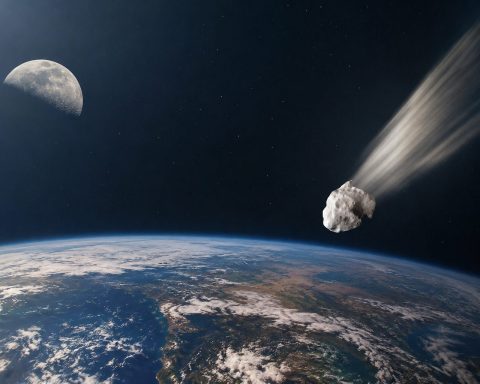
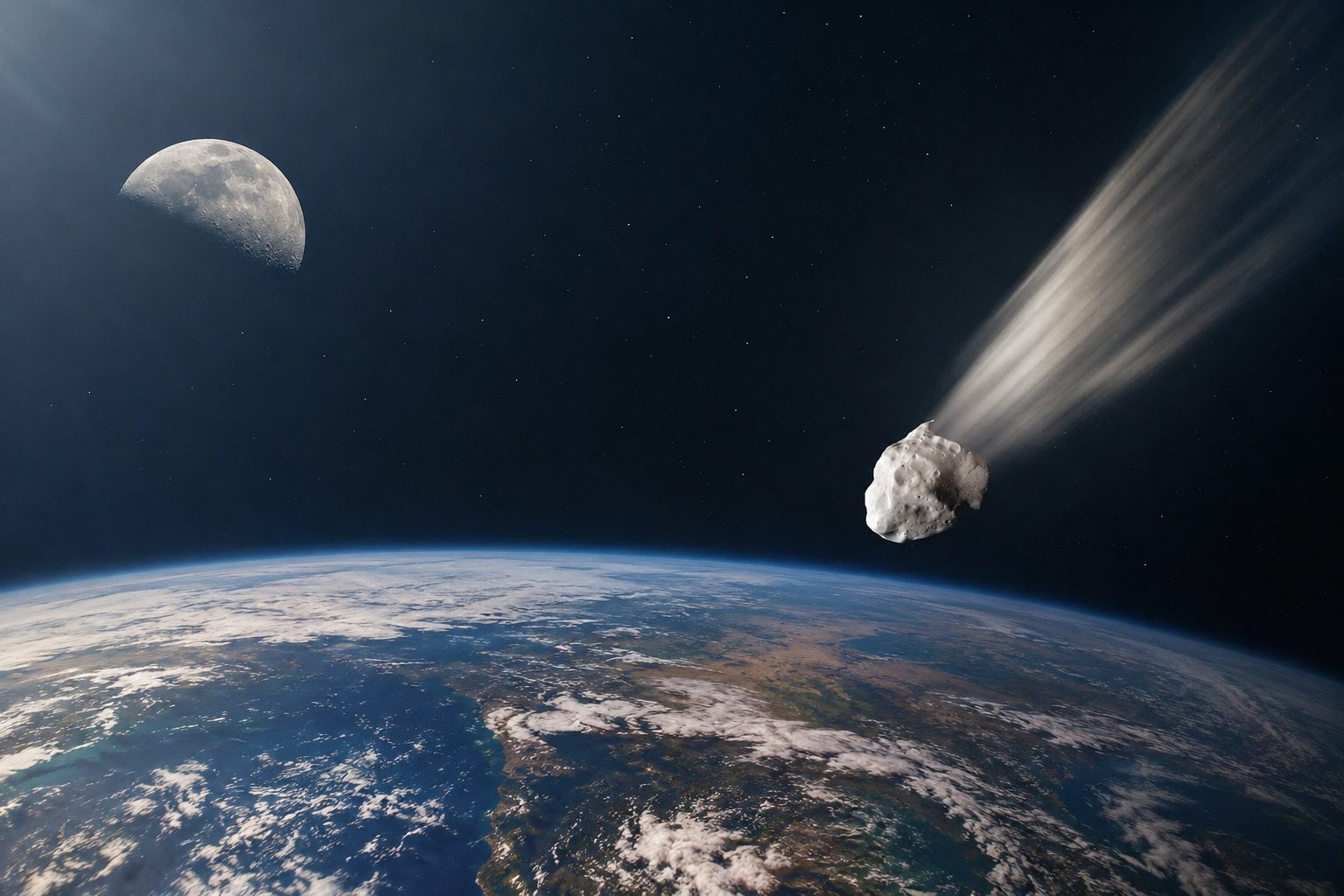
Fresh data confirmed asteroid 2026 JH2 zipped past Earth on Monday, clearing the planet at close to 0.00061 astronomical units—about 91,000 km out. That’s around 0.24 times the distance to the moon, according to NASA’s radar planning site. One lunar distance equals the typical Earth-moon separation.
This is significant—the object was detected just days ahead of the flyby. It turned up on May 10, picked up by the University of Arizona’s Mt. Lemmon Survey. As of May 22, the European Space Agency’s page had 171 optical observations logged, and the asteroid didn’t appear on its risk list.
This wasn’t some catastrophic failure. It was more a checkup for the usual planetary defense process—spot a dim space rock, gather follow-up data, tighten up the orbit, and eliminate any risk before “asteroid” shows up in news alerts.
Richard Binzel, who teaches planetary sciences at MIT, told CNN that objects this large swing by Earth’s vicinity “several times per year.” He noted that only recently have surveys become sensitive enough to detect them. The Telegraph
NASA’s Goldstone radar planning page puts 2026 JH2’s width near 20 meters and notes that details on its physical makeup are sparse ahead of the flyby. According to the same page, Petr Pravec measured a 21-minute rotation period, with its brightness variation hinting at a somewhat stretched profile.
The asteroid falls into the Apollo near-Earth object category—its orbit stretches beyond Earth’s but still intersects our planet’s trajectory. According to ESA, near-Earth objects include both asteroids and comets with orbits that swing within 1.3 astronomical units of the sun.
The encounter drew astronomers’ attention, though it was far too dim to spot without telescopes. Gianluca Masi, who leads the Virtual Telescope Project, described it to Space.com as “a sharp dot of light” when viewed through telescopes, moving against the blurred trails of distant stars. Space
Context matters here. Wired pointed out that while asteroid 2026 JH2’s approach was tight compared to other near-Earth objects in the same timeframe, it wasn’t without precedent. Last year, the far smaller 2025 TF skimmed past Earth at just 260 miles above the surface.
The key risk isn’t with this asteroid itself—it’s the short notice. Initial data on 2026 JH2 came from just 24 observations over a few days, so its size was guessed based on brightness and reflectivity. That process gets the job done, but it’s hardly foolproof.
ESA’s table puts the next close pass of 2026 JH2 at May 13, 2090, keeping a distance of roughly 1.04 million km from Earth’s center. That’s it for now—a small rock skimmed by, got tracked, and kept going.