
PASADENA, California, May 22, 2026, 13:02 PDT
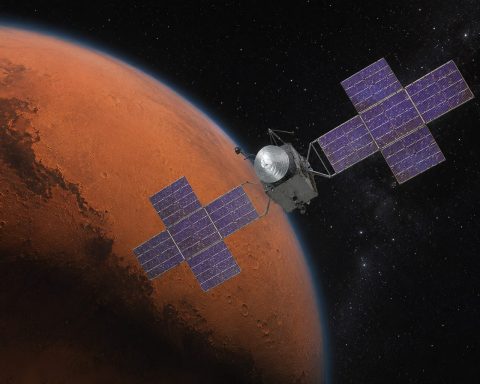
Psyche, NASA’s spacecraft, captured a natural-color shot of Mars as a slim crescent during its May 15 flyby—one last look at the full planet before the camera frame brimmed over with red. NASA released the image in its photojournal, later picked up by Phys.org. The Psyche probe snapped the picture at about 5:03 a.m. PDT using its multispectral imager, which records several wavelengths.
The flyby wasn’t a side trip—NASA confirmed the spacecraft passed just 2,864 miles from Mars, grabbing a gravity boost off the planet as it heads for the metal-heavy asteroid Psyche out in the main belt. With this maneuver, the craft taps Mars’s movement and pull to alter its speed and direction, all without burning much fuel.
Psyche picked up a 1,000-mile-per-hour speed bump and nudged its orbital plane by roughly 1 degree compared to the Sun, according to NASA. “On course for arrival” in summer 2029, said Don Han, who heads navigation for Psyche at NASA’s Jet Propulsion Laboratory. Scientific American
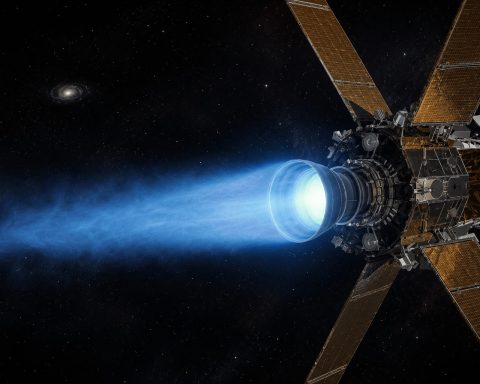
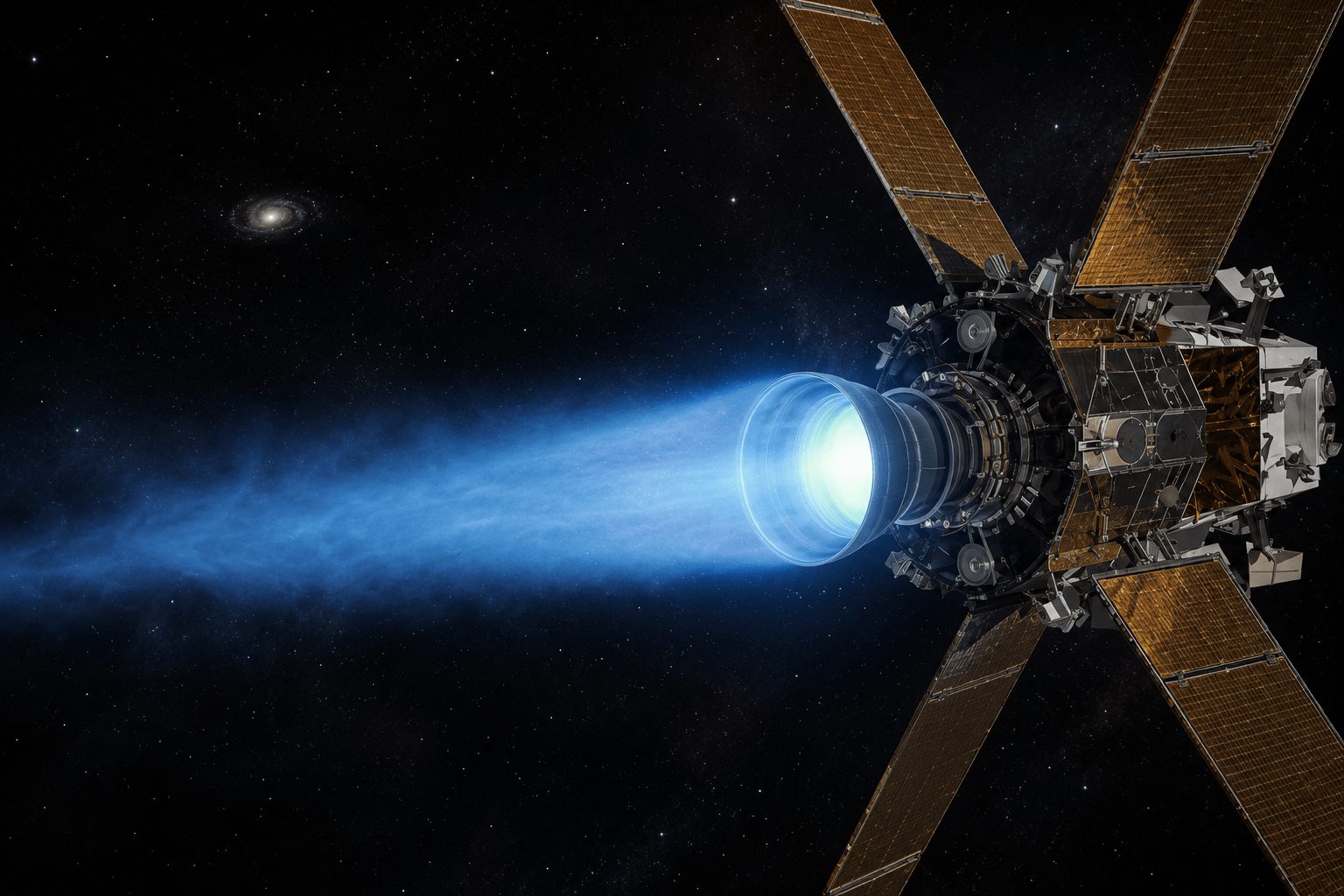
Before the close approach, JPL made it clear: passing Mars would give Psyche a needed push, not just speeding up the spacecraft but also nudging it onto a path toward the asteroid—an oddball in the solar system lineup. The mission counts on solar-electric propulsion, which combines electricity with xenon gas for gentle, continuous thrust. That makes the Mars flyby a smart way to shave off both propellant use and travel time on the lengthy journey.
The crescent turned out to be a bit of a surprise. With Psyche coming in at a high phase angle—Mars lit up side-on, the way we see a crescent Moon from Earth—the planet’s disk looked narrow. Yet the crescent itself shone brighter and wrapped further around Mars than scientists had figured, thanks to atmospheric dust scattering sunlight more intensely than anticipated.
NASA treated the flyby as a full test run ahead of the upcoming asteroid rendezvous. During the maneuver, the spacecraft fired up its imagers, magnetometers, and its gamma-ray and neutron spectrometer. Jim Bell, who leads Psyche’s imaging operations at Arizona State University, called the thousands of Mars photos a “unique and important” chance to put both the cameras and the initial image-processing systems through their paces. NASA
The new batch went beyond just the crescent image. Among the photos: Mars’ southern polar cap, wind streaks etched over Syrtis Major craters, and a boosted-color look at the sprawling Huygens crater. Those familiar landmarks let instrument teams calibrate, offering up targets they know far better than the as-yet-unreached asteroid.
The scramble for asteroid missions is broadening, but it’s not being driven by private companies. ESA’s Hera, on track for a November 2026 rendezvous with Dimorphos after swinging past Mars, lines up alongside NASA’s Lucy, which keeps picking up speed from Earth gravity assists as it heads for the Jupiter Trojans. Psyche, though, stands apart—targeting an object believed to be packed with a much higher ratio of metal compared to rock or ice.
NASA launched Psyche back on Oct. 13, 2023. Late July 2029, it’s set to slip into the asteroid’s gravitational pull, with its primary mission formally kicking off in August. For roughly two years after that, the spacecraft will circle the asteroid—snapping images, mapping terrain, and tracking down its make-up.
Scientists are hoping for straightforward answers from Psyche, but there’s a chance the asteroid won’t deliver the clarity they want. NASA’s objectives focus on figuring out if Psyche is actually a core, or something unmelted; right now, the data remains messy. The agency points out that metal might account for anywhere between 30% and 60% of the asteroid’s volume, and those estimates don’t line up neatly. If Psyche turns out to be more of a mixed composition, the mission still matters, though the idea of a bare planetary core gets harder to defend.
At this stage, it’s a navigational milestone. Lindy Elkins-Tanton, principal investigator for Psyche, described the Mars flyby as a “critical gravitational slingshot.” With Mars now in the rearview mirror, the real challenge kicks off once the craft arrives at the asteroid. Space