
NEW YORK, May 28, 2026, 14:03 EDT
SpaceX could end up merging with Tesla after an IPO, at least if you ask early SpaceX backer Peter Diamandis. The XPrize Foundation founder told Bloomberg Television it’s just a “matter of when,” not if, reigniting debate over whether Boeing’s sluggish turnaround can compete with a Musk-led giant in aerospace and AI. Diamandis argued such a deal would give Musk wider latitude to connect Tesla’s cars with SpaceX’s infrastructure. Neither Musk nor representatives for SpaceX and Tesla offered comment, according to the report. An initial public offering, or IPO, refers to a company’s debut sale of shares to public investors. The Edge Malaysia
Timing here is key. SpaceX is lining up what Reuters Breakingviews, in a Thursday note, called a $1.75 trillion IPO—a figure that could push investors to revisit how they value the entire space sector, just as Boeing is out to prove it can ramp up plane production again. Even talk of a Musk deal, without any actual offer, lands squarely in the market’s immediate focus.
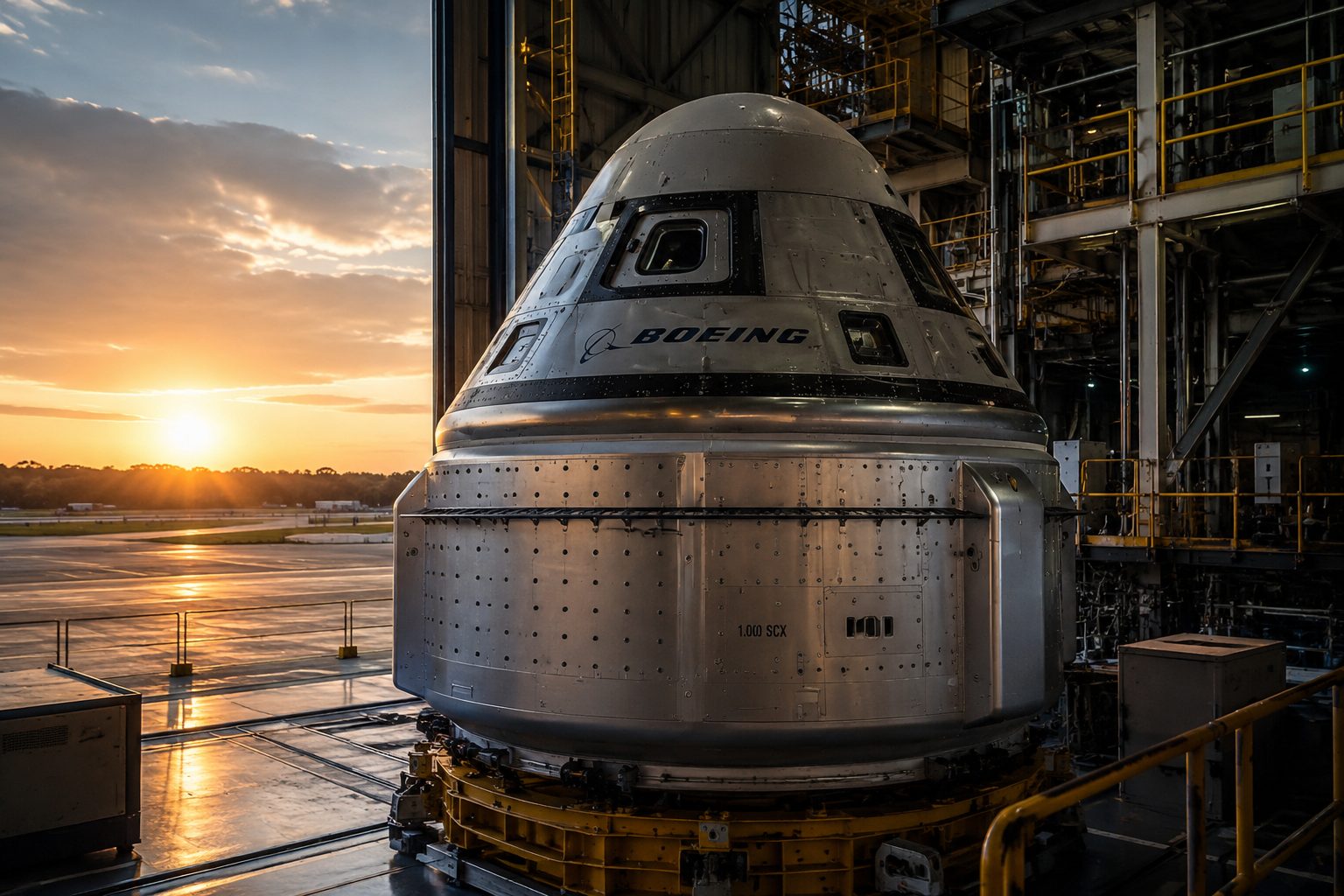
According to a Yahoo Finance piece sourced from 24/7 Wall St., the Tesla-SpaceX merger talk is still just that—talk—but the column argued the very idea puts heat on Boeing. Pressure would hit Boeing right across crewed missions, rockets, satellites, defense launches, and talent recruitment. Boeing’s risk stands out, the article notes, since its turnaround remains shaky and its space and defense efforts overlap directly with SpaceX’s turf.
Boeing is pushing ahead. Federal Aviation Administration chief Bryan Bedford told Reuters he’s looking for 737 MAX 7 certification this summer, with the MAX 10 to follow before year-end. He also said the agency is behind Boeing’s plan to ramp up 737 MAX production to 47 aircraft a month, up from 42. “It’s important for the country that Boeing is successful,” Bedford said. Reuters
Chief Executive Kelly Ortberg pushed back on the idea that China’s recent order for 200 Boeing jets was underwhelming, instead calling it a starting point. He described the deal—as it stands now—as just an “initial tranche” that will be finalized later this year. A source told Reuters there’s potential for China to sign up for another 300 to 500 jets, but only if Boeing lives up to its spare-parts commitments. Reuters
Boeing stock changed hands at $228.58 early this afternoon in New York, climbing $4.28. Tesla, meanwhile, was up $2.28 at $442.64. Boeing’s market cap hovered near $180 billion—nowhere close to Tesla’s $1.57 trillion. That gap underscores just how much investors care about capital access in the race between the two.
Boeing’s first-quarter numbers show the balance sheet still has issues. Revenue landed at $22.2 billion, with a core loss of 20 cents per share and negative free cash flow at $1.5 billion—cash after capital spending, in other words. The company’s backlog climbed to a record $695 billion. Debt is moving in the right direction, dropping to $47.2 billion from $54.1 billion.
SpaceX is big, but the bottom line is still messy. In its IPO filing, the company posted a $1.94 billion operating loss for the first quarter, off $4.69 billion in revenue. Starlink turned a profit, while the AI unit dragged with a $2.47 billion loss. Musk’s grip remains tight—he’ll hold 85.1% of the voting power, according to the same filing.
Some on the Street aren’t dismissing Tesla’s future as pure speculation. Dan Ives, Wedbush Securities’ tech research chief, told Reuters he sees SpaceX and Tesla merging “into one company in 2027,” arguing Musk is eyeing tighter grip on the AI landscape. Triple D Trading’s Dennis Dick struck a note of skepticism. SpaceX could trade strong, he said, but that “near-$2 trillion valuation is a little scary.” Reuters
Boeing faces plenty of competition. Airbus, for one, has led in Chinese aircraft deliveries since 2018, according to a Reuters report earlier this month, and Beijing’s been in talks with Airbus on a similar-scale aircraft purchase. Then there’s space: Boeing’s United Launch Alliance joint venture with Lockheed Martin is up against SpaceX and Blue Origin, both now Pentagon rivals.
The Musk wildcard cuts both ways. SpaceX is pitching investors on ventures that are still taking shape, but on Thursday Musk clarified that the company’s Colossus AI clusters are leased to Anthropic for just six months—contradicting earlier talk suggesting a longer-term deal. It’s a snapshot of how quickly the narrative (and revenue prospects) for SpaceX’s AI play can turn.
Boeing has a more immediate target: ramp 737 output to 47 jets a month, then reach 52 early next year. Certifications need to wrap, and that China commitment? The company still has to convert it into real, signed airline deals. If a SpaceX-Tesla combination ever shows up, Boeing’s challenge would go much farther. For now, it’s all about execution.