
BEIJING, May 28, 2026, 23:07 (China Standard Time)
The International Institute for Strategic Studies has sounded a fresh alarm: a U.S.-China clash over Taiwan risks spiraling into a nuclear standoff. That warning lands just as satellite images show Beijing pressing ahead with a sprawling, partially underground military facility outside the capital. It’s all happening on the same day China publicly justified its recent air force operations near Taiwan, actions slammed by Taipei after a week of tense military drills.
Timing is key here. The Shangri-La Dialogue—the region’s top defense summit—kicks off Friday in Singapore, and attention has already zeroed in on Chinese military moves near Taiwan, plus coast guard patrols by China around the Pratas Islands, not to mention fresh doubts about how far Washington will go for Taipei.
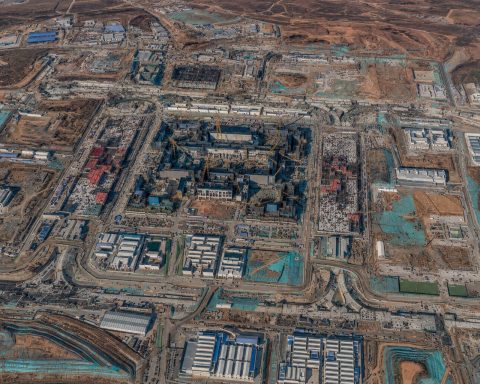
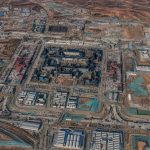
On May 20, Futura Sciences highlighted satellite images that pointed to what it called a vast underground military command center outside Beijing—a development, the outlet said, underscoring China’s drive to secure its command-and-control networks. Previous satellite-based reports labeled the facility “Beijing Military City,” an installation roughly 20 miles southwest of the capital featuring tunnels, dedicated roadways, and tight restrictions on access. Futura
It’s not just about how big the site is. The worry centers on what a facility built to this standard might enable China to do in wartime—letting top officials and communications networks keep running after initial strikes, even if those strikes target and try to cripple command hubs.
The IISS assessment pointed out that a conflict over Taiwan would likely have U.S. and Chinese forces going after each other’s command, communications, intelligence, and surveillance nodes, but there’s scant public sign of any real guardrails to prevent things from escalating. Daniel Salisbury, senior fellow at IISS, flagged that nuclear risk talks between Washington and Beijing don’t have the Cold War-era routines, saying bluntly, “the culture of discussion is just not there.” Reuters
China pushed back. Defense Ministry spokesperson Jiang Bin dismissed the IISS report as “quite inconsistent” with reality, reiterating that Taiwan remains an internal matter. Foreign Ministry spokesperson Mao Ning called on the United States to approach Taiwan with “utmost caution.” Reuters
Beijing fired back after Taiwan’s complaints about increased Chinese air and sea maneuvers. Jiang told reporters Taiwan had no business “interfering” with air force operations, cautioning its military not to engage in “provocation.” China, he added, plans to step up both training and combat preparations. Reuters
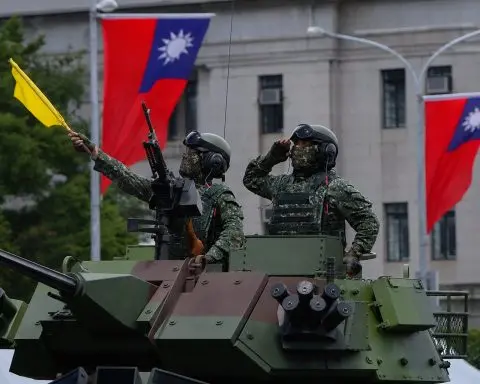
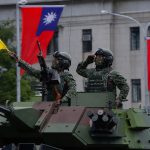
This week, Taiwan’s defense ministry reported tracking 21 Chinese military aircraft—including J-16 fighters and drones—circling the island, marking the second “joint combat readiness patrol” by China in a week. Su Tzu-yun, director at Taiwan’s Institute for National Defence and Security Research, told Reuters that Chinese warships armed with cruise missiles, operating just 24 nautical miles from Taiwan, could drastically reduce warning time and “temporarily paralyse Taiwan” if Beijing launches a surprise attack. Reuters
China is bankrolling that campaign, even as its economy loses steam. Back in March, Beijing announced a 7% bump in defense spending for 2026, pushing the budget up to 1.91 trillion yuan—about $277 billion. Premier Li Qiang said those funds will go toward “advanced combat capabilities.” According to James Char at the S. Rajaratnam School of International Studies, the PLA’s budget is climbing “roughly the rate of GDP growth plus inflation.” Reuters
The Pentagon’s latest public report on China’s military highlights that the PLA is moving ahead on its 2027 ambitions—preparing itself for potential conflict over Taiwan and beefing up capabilities to challenge the U.S. in nuclear and strategic arenas. The report also points out that China has put 67 new intelligence, surveillance, and reconnaissance satellites into orbit in 2024, pushing its ISR fleet past 500. These satellites play a role in tracking targets, mapping out terrain, and aiding military operations.
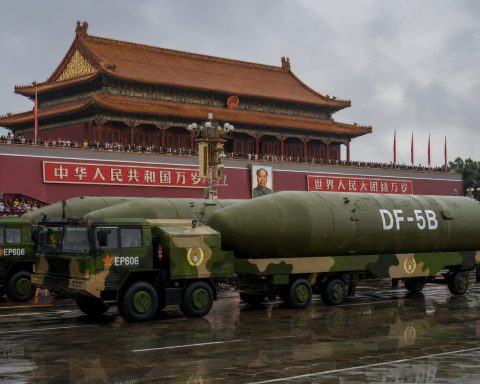
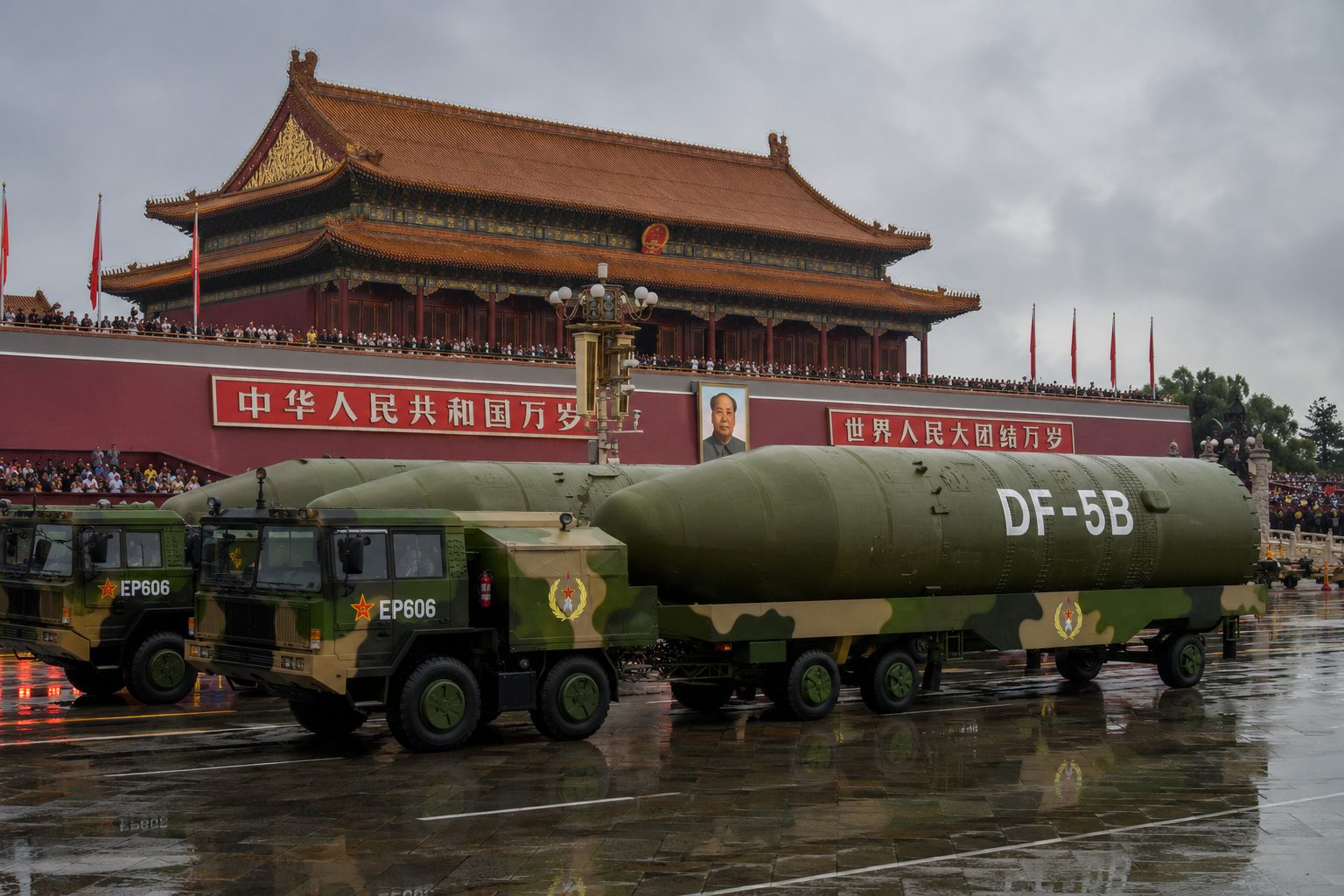
China’s nuclear stockpile is still much smaller than America’s or Russia’s, but the trend is raising eyebrows. A Pentagon report from December, cited by Reuters, projected China could have 1,000 warheads by 2030. For comparison, the Federation of American Scientists puts the U.S. total at roughly 3,700 active warheads, Russia at 4,400, and China at 620.
Still, open satellite images don’t settle the question of what the Beijing site is ultimately for, how hardened it is, or when it’ll go operational. Business Insider pointed out the absence of any obvious military activity near the complex and found no reference to the site on official Chinese government web pages. Entry, though, was blocked—signs at the perimeter specifically banned drones and photography.
Uncertainty here works in multiple directions. Should the complex turn out to be a wartime command bunker, it aligns with a broader Chinese push to make its leadership, missile, and communications networks tougher to knock out. But if analysts have exaggerated its significance, one fact doesn’t change: Taiwan, the United States, and China are maneuvering with less margin for error than the gravity of the situation suggests.