
New York, June 1, 2026, 15:04 EDT
With SpaceX edging toward its stock-market debut, chatter about a possible Tesla-SpaceX merger is stirring again on Wall Street. Boeing, for now, looks like the aerospace player with the most to lose if Elon Musk decides to consolidate his rocket, satellite, AI, and EV ventures. There’s no formal agreement on the table. Wedbush’s Dan Ives told Barron’s he’s sticking with his prediction: Tesla and SpaceX will join forces in 2027, after SpaceX goes public.
The timing is key: an IPO would hand SpaceX a public market valuation, plus liquid stock for deals down the road. According to Reuters, SpaceX’s filing pointed to a possible $1.75 trillion valuation and highlighted how much artificial intelligence — software that automates analysis and decision-making — now figures into Musk’s strategy. The AI push, though, has weighed on first-quarter results. “Companies like SpaceX are difficult to value,” said Georgetown finance professor Reena Aggarwal, citing the lack of a clear peer group. Reuters
Boeing’s push comes at a tricky moment. The company wants to ramp up monthly 737 production to 47 from 42 jets, eyeing 52 early next year, all while emerging from years of turmoil and racking up over $35 billion in losses between 2019 and 2024. “The whole world’s watching,” Chief Executive Kelly Ortberg remarked on whether Boeing can actually meet those goals. Reuters
Boeing slipped $6.92 to $224.23 in afternoon trade. Tesla was also down, last at $419.13, off $16.66. There’s no clear sign from these moves that merger risk was driving trades, but both stocks lost ground as the SpaceX roadshow approached.
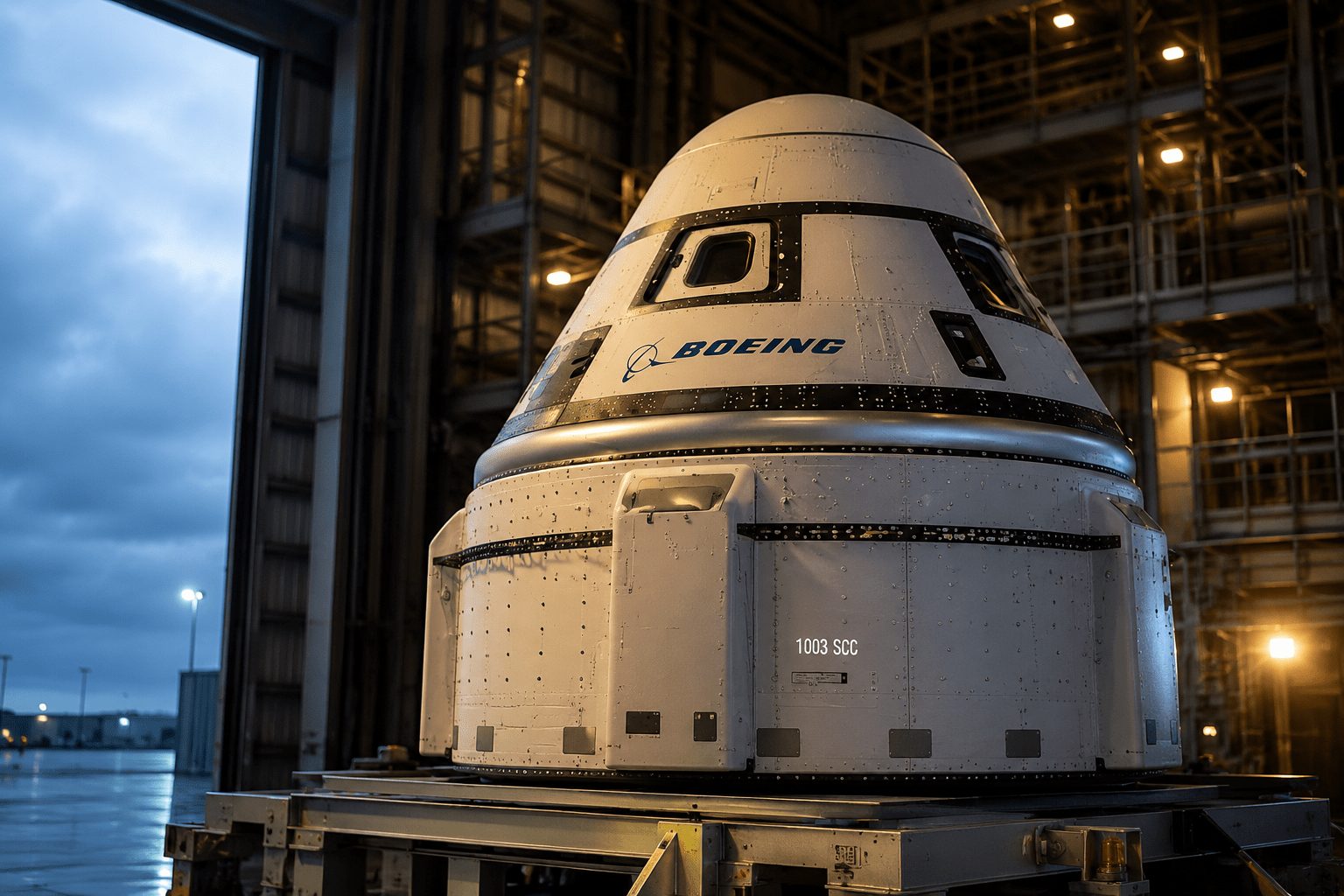
According to an analysis published by 24/7 Wall St. and linked on Yahoo Finance, Boeing stands to lose the most if Tesla and SpaceX ever merge. The argument comes down to direct competition: Boeing’s Starliner faces off with SpaceX’s Crew Dragon, its Space Launch System rivals Starship, satellite manufacturing is challenged by Starlink, and United Launch Alliance—Boeing’s joint venture with Lockheed Martin—would feel the heat as well. The piece makes it clear this merger scenario is still just speculation.
Musk’s companies are now firmly intertwined. Last year, SpaceX, Tesla, xAI, and X moved some $650 million between them, according to SpaceX’s IPO filing. SpaceX bought $131 million worth of Tesla Cybertrucks. Tesla holds nearly 19 million SpaceX Class A shares after putting in $2 billion. Both Tesla and SpaceX are collaborating on Terafab—a chip-manufacturing venture aimed at AI compute.
Boeing’s reserves remain hefty. First-quarter revenue landed at $22.2 billion, with backlog hitting a record $695 billion. Free cash flow, though, dipped to negative $1.5 billion—cash left after capex. “We’re building on our momentum,” Ortberg said in Boeing’s April results statement. Boeing Investors
China also factors into the recovery narrative. Ortberg described the country’s plan to purchase 200 Boeing jets as an “initial tranche,” expecting confirmation sometime later this year. But Reuters noted further orders may hinge on Boeing fulfilling its parts-supply commitments to Chinese carriers. Reuters
Musk isn’t the only threat in play. Boeing still faces fierce competition from Airbus, its longtime commercial-aircraft nemesis, while China’s COMAC C919 targets the same narrowbody segment as both Boeing’s 737 and the Airbus A320. Last week, Reuters reported China has held up some Airbus approvals while leaning on Europe for sign-off on COMAC certification—underscoring how Boeing’s commercial battles extend well beyond the business arena, deep into geopolitics.
The risks around a potential Tesla-SpaceX tie-up are straightforward enough. Any kind of merger would have to navigate valuation headaches, dilution worries, and likely a thicket of regulatory scrutiny. SpaceX’s dual-class share setup leaves Musk firmly in the driver’s seat, since some shares have extra voting power. “It closes the voting door, the courthouse door and the proposal door,” Bruce Herbert, CEO of Newground Social Investment, told Reuters. Reuters
Don’t expect a merged Tesla-SpaceX to roll out commercial jets any time soon. Boeing, on the other hand, faces a more immediate checklist: ramp up deliveries, stay in the FAA’s good graces, secure concrete orders from China, and put an end to its cash bleed.
The SpaceX IPO drops a fresh number onto investors’ dashboards. Should SpaceX shares perform, and if the company’s ties to Tesla tighten, Boeing’s longtime aerospace order could face real pressure.