
NEW YORK, June 2, 2026, 15:05 EDT
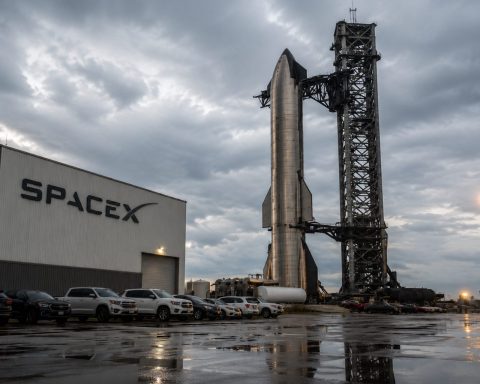
SpaceX is telling investors it could reach a valuation as high as $1.75 trillion, factoring in a greenshoe option. Meanwhile, Jeff Bezos’ Blue Origin is still dealing with the fallout from a rocket explosion that took out its only New Glenn launch pad. These latest moves are putting new pressure on the market to answer a lingering question: will public investors commit cash to a space sector that hasn’t yet delivered meaningful profits?
Timing plays a role here. According to Reuters, SpaceX kicks off its roadshow on June 4. The stock could start trading on Nasdaq as soon as June 12, using the ticker “SPCX,” sources told the outlet. The IPO marks the company’s first stock sale to public investors, while a greenshoe option allows underwriters to issue more shares if demand surges. Reuters
This isn’t landing well for Bezos. Last week, Blue Origin’s New Glenn rocket blew up in a hot-fire test—a ground trial with engines firing while the rocket’s locked down—complicating America’s launch logjam and putting Amazon’s Leo satellite rollout and NASA’s moon plans at risk for further delays. Leo, Amazon’s answer to SpaceX’s Starlink, is their own low-Earth-orbit broadband push.
Just days ago, Bezos struck an upbeat note. Pressed by CNBC to weigh in on SpaceX’s valuation, he admitted he hadn’t dug into the company’s numbers, but didn’t hesitate: “space is going to be a gigantic industry.” During that same exchange, Bezos revealed Blue Origin might open the door to outside investors—though, as of then, nothing concrete. Versant Press Room
Blue Origin CEO Dave Limp said late Monday that New Glenn is on track to fly again before the end of the year. According to Limp, the blast left key fuel tanks at the damaged launch pad “in good shape,” and the nearby boosters seem fine as well. However, the main support tower took a hit and will need repairs. The root cause of the explosion is still unknown. Reuters
NASA Administrator Jared Isaacman sounded a note of caution in comments to CNBC, suggesting repairs might “take some serious time” and saying a 2028 timeline was “within the realm” of what’s possible. New Glenn, set up to haul lunar landers and cargo for NASA’s Artemis moon effort, now faces delays that ripple beyond just Blue Origin’s calendar. Reuters
The difference in pace is striking. SpaceX dominates global launches, while Blue Origin is still working to ramp up New Glenn’s schedule. Amazon, for its part, is using United Launch Alliance—the Boeing-Lockheed Martin partnership—and Arianespace for its launches as well. On Friday, a ULA Atlas V lifted 29 Amazon Leo satellites into orbit.
SpaceX’s lofty ambitions aren’t without hazards. Morningstar analysts pegged the company’s valuation at $780 billion—well under half the figure Reuters reported as SpaceX’s IPO goal. Analyst Nicolas Owens called the company “significantly overvalued.” He also cast doubt on xAI and Grok, arguing Grok isn’t a top AI player right now. Reuters
SpaceX posted $18.67 billion in revenue for 2025, up from last year’s $14.02 billion, but the bottom line flipped—Reuters says the company reported a $4.94 billion net loss after earning $791 million previously. Starlink keeps the lights on, generating profit, while the rest of the business remains a cash drain.
Governance could face questions, too. The IPO prospectus details a dual-class share setup—certain shares carry extra voting rights, letting Musk and a tight group of insiders keep a firm grip on control. SpaceX didn’t reply to Reuters when asked about its IPO targets.
Bankers want in. Joint bookrunners on the SpaceX deal include Goldman Sachs, Morgan Stanley, BofA Securities, Citigroup, and J.P. Morgan. According to Bloomberg News, cited by Reuters, SpaceX is hammering out underwriting fees below 0.75% for its planned $75 billion raise. That’s still hefty—banks stand to pocket about $500 million.
Bezos is facing a different tone in the CNBC line—no longer just a forecast, it’s a challenge. Space, sure, is vast. The immediate test? Hitting launch deadlines, securing funding that doesn’t sting, and generating real revenue beyond the narrative investors are already buying into.