
NEW YORK, June 3, 2026, 12:12 EDT
SpaceX plans to offer shares at $135 apiece to raise $75 billion in its initial public offering, a first sale of stock to public investors, according to people familiar with the matter. The rocket, satellite and artificial-intelligence company aims to sell 555.6 million shares, putting the target valuation at about $1.75 trillion.
The timing matters because SpaceX’s roadshow begins Thursday, leaving investors to assess a fixed price rather than the usual range used in bookbuilding, the process banks use to collect orders and judge demand. Weiheng Chen, a senior partner at Wilson Sonsini Goodrich & Rosati, told Reuters Musk was taking a “take-it-or-leave-it” approach. Reuters
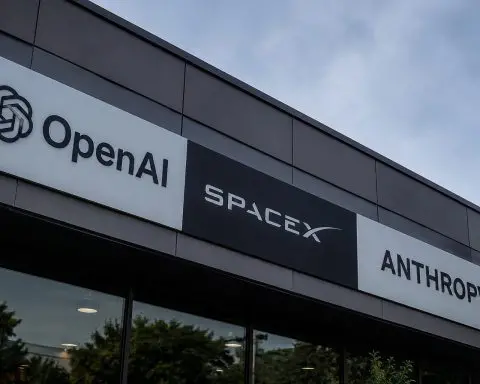
At that size, the deal would test public-market appetite for one of the world’s most closely watched private companies and could pull capital away from other large listings waiting behind it. Reuters has reported that SpaceX, OpenAI and Anthropic are expected to lead a wave of mega-IPOs that could add nearly $4 trillion in market value to public exchanges.
The structure also breaks with convention. SpaceX is planning an all-primary offering, meaning the shares sold are new stock and proceeds go to the company rather than existing holders; underwriters may also have a 15% greenshoe option, which lets them sell additional shares if demand runs hot.
Bloomberg’s May 20 newsletter had framed the then-pending filing around the banks running the deal, Musk’s control and the company’s financials. Those points now sit at the center of the pricing debate, rather than just the disclosure checklist.
Banks are being squeezed even as the fee pool looks large. Bloomberg News reported, and Reuters carried, that SpaceX was negotiating underwriting fees below 0.75% on the roughly $75 billion raise, still enough to generate about $500 million for the banks; Goldman Sachs, Morgan Stanley, BofA Securities, Citigroup and J.P. Morgan are among the bookrunners.
The public filing landed on May 20. The SEC record shows Space Exploration Technologies Corp. filed a Form S-1, the prospectus used to register securities with regulators, under accession number 0001628280-26-036936.
The numbers gave investors a first hard look at the business. Reuters reported that first-quarter revenue rose to $4.69 billion from $4.07 billion a year earlier, while losses widened; Starlink, the satellite internet unit, generated operating profit, but the AI division posted a $2.47 billion operating loss on $818 million of revenue.
Starlink is the clearest competitive threat. Oppenheimer said the satellite broadband unit could disrupt the $1.6 trillion U.S. communications industry, with AT&T, Verizon and T-Mobile among legacy providers that may face faster subscriber and revenue pressure as SpaceX expands.
But the valuation is not a clean read. Morningstar analysts Nicolas Owens and Suryansh Sharma put SpaceX’s fair value at $780 billion, well below the IPO talk, and wrote that future revenue from orbital computing remains “highly uncertain”; they also warned that later insider lock-up releases could weigh on the shares. Business Insider
Governance will get scrutiny, too. The prospectus uses a dual-class structure in which Class B shares carry 10 votes each and Class A shares sold to public investors carry one vote, concentrating power with Musk and other insiders; Reena Aggarwal, a Georgetown University finance professor, told Reuters there is a “halo effect” around Musk, but few real peers for valuation. Reuters
SpaceX is aiming to trade on Nasdaq under the ticker SPCX, with a debut expected as early as June 12. The terms could still change during investor meetings, but for now Musk is asking Wall Street to meet him on his terms.