
CAPE CANAVERAL, Florida, June 4, 2026, 07:08 EDT
- Blue Origin says New Glenn could be back in the air before year-end, despite last week’s pad explosion.
- NASA’s chief warned that fixing the problem could require “some serious time.”
- NASA’s effort to trial competing lunar landers from SpaceX and Blue Origin hits a snag with this setback.
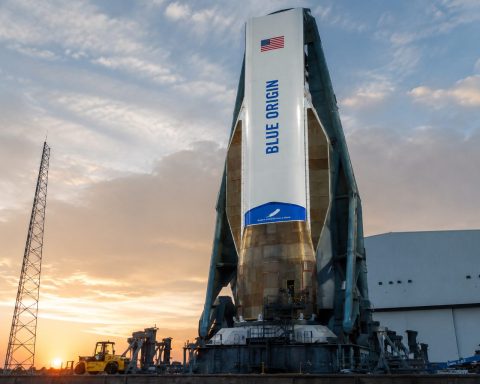
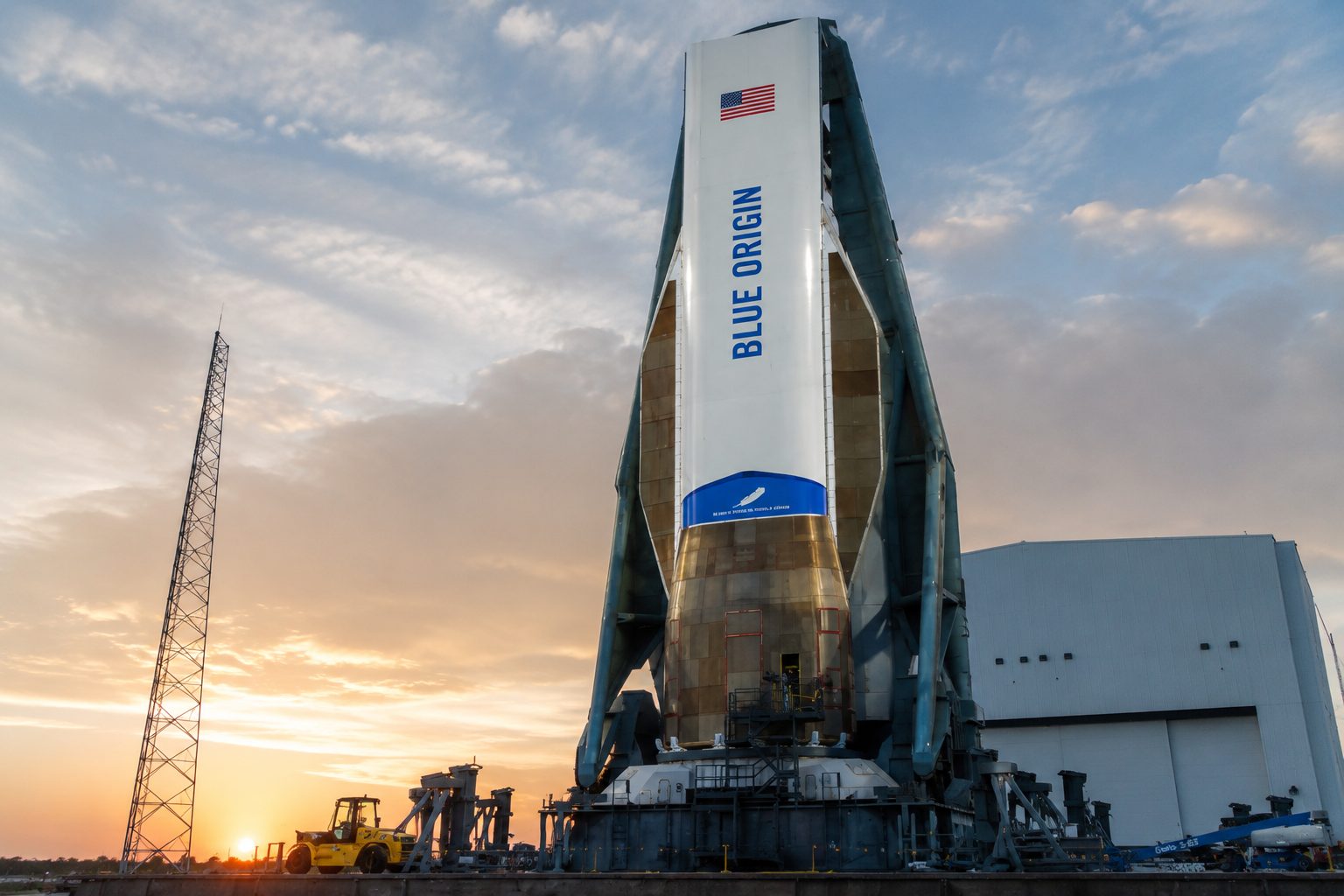
Blue Origin CEO Dave Limp now targets another New Glenn flight before 2026 wraps up, accelerating the timeline after a test blast wrecked the sole New Glenn pad in Florida. The explosion happened during a hot-fire, where engines are fired while the rocket stays anchored on the ground.
The issue is timing. New Glenn is up against two crammed calendars—NASA’s Artemis moon program and Amazon’s Leo satellite internet network, which aims to rival SpaceX’s Starlink with its planned low-Earth-orbit broadband constellation.
NASA has shifted Artemis III into a low-Earth-orbit demo, aiming to try out rendezvous and docking maneuvers—linking up spacecraft in orbit—using one or both of the commercial landers under construction by Blue Origin and SpaceX. Pad access, lander development, and flight testing now run on a single timeline.
Limp described the pad’s methane, hydrogen, and oxygen tanks as “in good shape,” calling the intact equipment “a bit of good news.” A lightning tower and the transporter-erector—used for moving and lifting the rocket—were lost, according to the company, though it reported that several important pad components and nearby rocket hardware escaped damage. AP News
NASA Administrator Jared Isaacman sounded a note of caution in comments to CNBC, saying repairs could demand “some serious time,” with a 2028 timeline “within the realm” of what’s possible. Company and industry insiders described the pad to Reuters as “practically destroyed,” warning that operations may be off the table for no less than six months. Reuters
Blue Origin hasn’t disclosed the cause behind the explosion yet. Jeff Bezos, the company’s founder, told reporters it was “too early” to identify what went wrong, describing it as a “very rough day.” Cape Canaveral Space Force Station officials confirmed there were no injuries. AP News
The rocket was slated to carry 48 Amazon Leo satellites, but none of those were actually aboard New Glenn at the time of the explosion. Rajeev Badyal, who leads the Leo program at Amazon, assured staff the satellites “were not on the vehicle.” Amazon’s larger launch strategy, he added, continues to involve United Launch Alliance and Arianespace. Business Insider
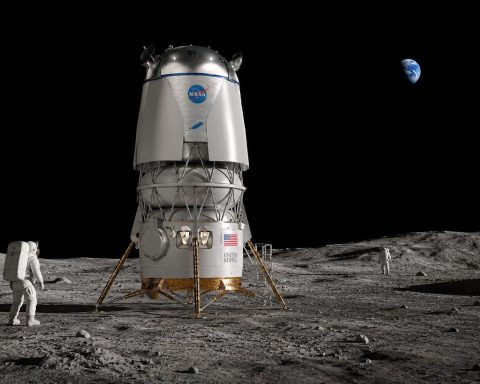
NASA has moved past the drawing board with Blue Moon. Back in May, officials announced that a full-size model of Blue Origin’s Blue Moon Mark 2 crew cabin had arrived at Johnson Space Center in Houston, set up for both training and testing. The actual flight lander, once built, is projected to reach roughly 52 feet in height and will transport a pair of astronauts from lunar orbit down to the Moon’s surface.
NASA is eyeing a closer launch window for another Blue Origin assignment. The agency has its sights set on the Moon Base I mission, now penciled in for no earlier than fall 2026. It’ll fly aboard the Blue Moon Mark 1 Endurance lander, carrying payloads such as gear to examine thruster effects on lunar regolith and reflectors designed for pinpointing exact positions.
The downside’s hard to ignore. Cause still unknown, pad repairs pending, and New Glenn was already coming off April’s mission failure when the test-stand went up. Any lengthy pause here chips away at Blue Origin’s shot to collect vital flight data before NASA’s Artemis deadlines come up.
Competition might cushion the impact, but the risk remains. Amazon’s lineup includes alternative launch providers, and for NASA’s Artemis program, SpaceX’s Starship is also in play. Still, Reuters reports both Blue Origin and SpaceX are running into technical snags—think in-space refueling, where propellant is shuffled between spacecraft in orbit, and various design revisions.
“We will fly again before the end of this year”—that’s the line Limp’s put in the sand. Blue Origin has to do more than talk, though; the company needs a ready pad and a rocket up in the air before delays start eating into NASA’s moon timeline. AP News