
New York, June 7, 2026, 10:03 EDT
- Investor demand for SpaceX’s IPO has hit around $150 billion—about double what the company is actually looking to raise.
- A listing could put Elon Musk’s company’s valuation near $1.75 trillion, pushing the limits for tech IPOs carrying hefty price tags.
- Starlink still brings in most of the money, yet SpaceX is courting investors with bets on rockets, satellite broadband, and AI computing, too.
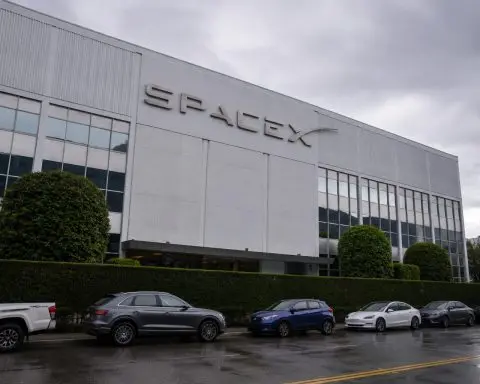
Investor appetite for SpaceX’s forthcoming stock-market debut is huge, with demand circling $150 billion—double the $75 billion target—according to two sources cited by Reuters. That kind of interest puts Elon Musk’s rocket and satellite firm in a solid negotiating spot before pricing, set for this week. Still, order books aren’t locked; the final tally could move.
The listing is drawing attention as it’s expected to gauge what public investors are willing to spend on a business unlike anything else in the market. SpaceX pulls together rocket launches, the Starlink satellite internet service, and AI computing under one roof, and its initial public offering — marking the first time its shares hit the public market — would land after a steep climb in U.S. tech stocks.
There’s a retail angle here, too. According to Reuters, SpaceX might reserve up to 30%—that’s $22.5 billion—of its IPO for retail buyers, far above the usual cut for individuals in a big-ticket listing. Shares will likely list under the ticker SPCX.
Roth Capital Partners’ Rohit Kulkarni put the Starlink question plainly on CNBC weeks back: how does it really scale? That single issue, he argued during a May 20 segment, sits at the heart of SpaceX’s business model and its valuation debate. The satellite-internet business is front and center in the discussion.
Starlink stands out as SpaceX’s most straightforward revenue driver, compared to the company’s more recent ventures. According to a Reuters report, SpaceX’s roadshow leaned on Starlink’s performance but also touted rockets and AI as potential entries into even bigger markets.
SpaceX is doubling down on its AI ambitions. On Friday, the company disclosed a multi-year deal with Google, locking in $920 million per month starting October 2026 and stretching through June 2029. The agreement covers cloud services and will tap into roughly 110,000 Nvidia GPUs—key hardware for AI workloads.
Earlier, SpaceX struck a computing power agreement with Anthropic, the company behind the Claude chatbot, tied to its Colossus 1 site in Memphis. According to Reuters, the combined value of SpaceX’s announced compute deals with both Anthropic and Google tops $70 billion, assuming the contracts run their full course.
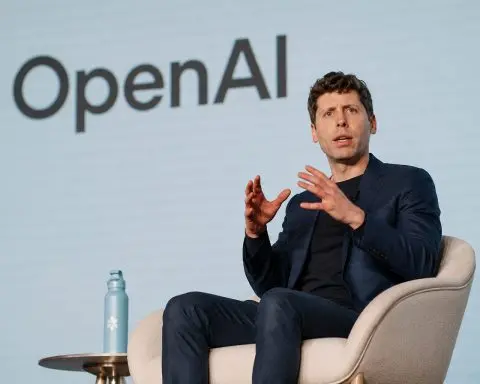
Competition is heating up. Reuters says both OpenAI and Anthropic are lining up their own public debuts after SpaceX, so investors could soon get a clearer shot at AI exposure — instead of treating SpaceX as a stand-in for the sector.
To some investors, this offering is shaping up as a test of just how hot the market is right now. “The question mark surrounding it is whether it’s an indication of market froth,” said Jason Pride, chief of investment strategy and research at Glenmede, speaking to Reuters. Over at Allspring Global Investments, portfolio manager Matt Wittmer described the IPO as “an important benchmark.” Reuters
But the trade isn’t without risk. Reuters points out SpaceX trades at about 110 times trailing sales, with no profits on the horizon—meaning S&P 500 entry isn’t happening soon, given the index’s profitability requirement and other hurdles. Morningstar’s Nicolas Owens, in a note earlier this week, flagged SpaceX as “significantly overvalued,” adding that investors might see better entry points after the IPO. Reuters
SpaceX is sticking with a flat $135 per share—skipping the typical IPO tactic of floating a price range and tweaking it after sounding out investors. Weiheng Chen, senior partner at Wilson Sonsini Goodrich & Rosati, described it to Reuters as a “take-it-or-leave-it” move. He pointed to Musk’s fanbase, plus the absence of straightforward peers, as reasons the strategy fits. Reuters
Right now, investors face a double calculation: Starlink, with its established satellite broadband revenues, and SpaceX, pitched as a longer-term gamble on launches, communications, and AI infrastructure. The Starlink side is measurable. The broader SpaceX play remains speculative.