
CAPE CANAVERAL, Florida, June 7, 2026, 12:04 (EDT)
- NASA is exploring options to keep Blue Origin’s Moon lander timeline on track, even as the company’s New Glenn launch pad remains out of commission.
- Blue Origin reports that the main fuel tanks made it through the May 28 explosion intact. CEO Dave Limp is sticking to his timeline—he says New Glenn’s next flight is still set for before year-end.
- NASA is gearing up for Artemis III, a 2027 Earth-orbit docking trial that will pair Orion with one or both of the commercial lunar landers from SpaceX and Blue Origin. The issue comes as preparations continue.
NASA is urging Blue Origin to stick to its lunar lander schedule following an explosion of a New Glenn rocket during ground testing, a setback that’s renewing concerns about Jeff Bezos’s company and its ability to deliver on upcoming Artemis milestones.
Awkward timing: just days before the explosion, NASA said Blue Origin’s Blue Moon Mark 1 Endurance lander wouldn’t launch until at least this fall. That mission, aimed at dropping payloads near the Moon’s south pole, is supposed to help cut risk ahead of the Artemis crewed landings now slated for 2028.
NASA has shifted Artemis III to a 2027 low-Earth-orbit test, where the agency’s Orion spacecraft is set to practice docking and rendezvous maneuvers with commercial landers from SpaceX and Blue Origin. According to NASA, the mission aims to verify key systems before astronauts eventually use a lander to travel from lunar orbit down to the Moon’s surface.
NASA Administrator Jared Isaacman told Spaceflight Now that the agency is “de-coupling the lander from the launch vehicle and the pad itself” following the May 28 explosion that left Launch Complex 36 at Cape Canaveral heavily damaged. A NASA spokesperson added that the agency wants the first Blue Moon Mark 1 cargo lander—and possibly the Mark 2 crewed version—shifted onto a launcher other than New Glenn. Spaceflight Now
Blue Origin’s been working to contain the fallout. On June 1, Limp said the pad’s tanks for oxygen, liquid hydrogen, and LNG held up fine, the water tower made it through, and repair crews can fix the main support tower right where it stands. “We will fly again before the end of this year,” he wrote. Blue Origin
The company reported everyone was accounted for following the hot-fire test—a prelaunch step where rocket engines are fired as the vehicle stays grounded. What triggered the incident is still being investigated.
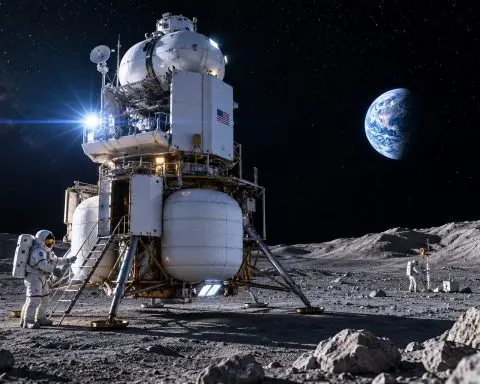
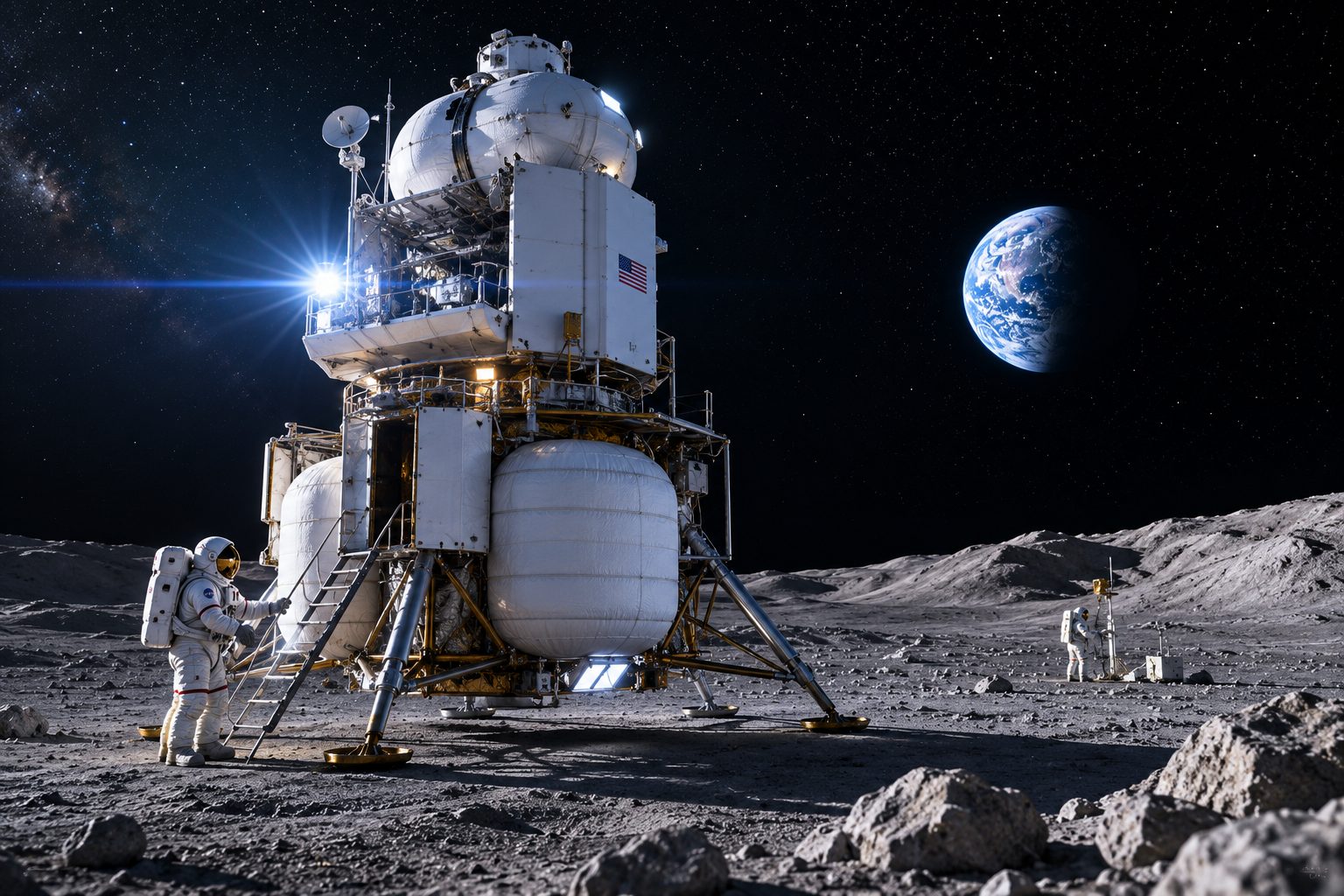
Blue Origin’s lunar gear is moving ahead. Back in May, NASA reported that its Johnson Space Center was now home to a full-scale Blue Moon Mark 2 crew cabin mock-up, used for training and mission simulations. The agency is looking to link up with landers in Earth orbit in 2027, aiming to land astronauts on the Moon the following year.
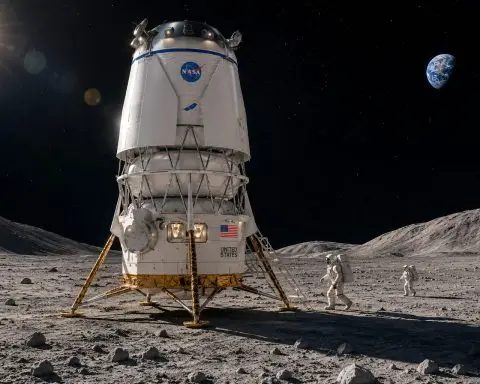
Blue Origin’s Mark 1 cargo variant is set for initial testing duties, according to the company. Built for a single launch, it’s rated to haul as much as three metric tons to the lunar surface. The Pathfinder mission, meanwhile, is focused on putting the BE-7 engine through its paces, as well as trialing cryogenic systems, landing accuracy, and communications gear. The cryogenic tech is there to keep super-cold fuels—liquid hydrogen and oxygen—from evaporating.
There’s a catch: Blue Moon was designed with New Glenn at its core. John Couluris, Blue Origin’s SVP of Lunar Permanence, told viewers during an April launch webcast that keeping both the rocket and lander under one roof allowed engineers to fine-tune “the entire stack,” according to Spaceflight Now. That same piece pointed out Blue Moon fits snugly in New Glenn’s seven-meter fairing. SpaceX’s Falcon Heavy, by comparison, offers a tighter fairing and its pads aren’t equipped to handle a hydrogen-fueled Blue Moon lander. Spaceflight Now
NASA isn’t working with much wiggle room. Back in March, the agency’s inspector general flagged that Blue Origin’s Artemis V lander project was running at least eight months behind schedule, cautioning that a further 11-month setback at the critical design review stage looked probable. The report also named cryogenic fluid management as a major technical hurdle for Blue Origin.
SpaceX, NASA’s other big lunar lander contractor for Artemis, is facing its own timeline crunch. Lori Glaze, now acting associate administrator at NASA’s Exploration Systems Development Mission Directorate, called Artemis III’s docking test “absolutely key to bring down some of the risk,” in comments to Scientific American. Scott Pace from George Washington University described the plan for an Earth-orbit test as an “excellent idea.” Scientific American
NASA is divvying up early Moon contracts between several players. Astrolab landed $219 million, while Lunar Outpost secured $220 million for their lunar terrain vehicles. The agency tapped Blue Origin as well, awarding it a $188 million delivery deal for transporting a rover with the Mark 1 lander. Astrobotic and Intuitive Machines are in line for upcoming Moon Base cargo runs.
The immediate issue isn’t Blue Origin’s ability to fix a launch pad—it’s NASA’s challenge to keep the lander on schedule, even as its intended rocket sits idle.