
New York, June 2, 2026, 11:17 EDT
Morningstar pegs SpaceX’s value at $780 billion—less than half what Elon Musk’s company is aiming for as it eyes a public listing, injecting a dose of skepticism just as SpaceX prepares to court investors this week. “We don’t see Grok as one of the leading AI labs today,” said Morningstar equity analyst Nicolas Owens, referencing the xAI chatbot now folded into SpaceX. Reuters
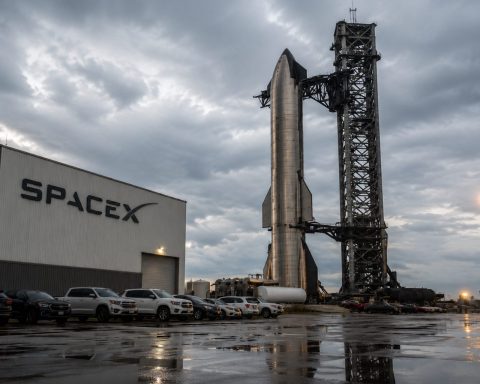
This call carries extra weight right now, with SpaceX gearing up for what might become the biggest IPO on record. The company is looking to pull in up to $75 billion, targeting a valuation near $1.75 trillion. Investors could get their first look at the roadshow as soon as June 4, and SpaceX shares could hit the Nasdaq by June 12.
According to Bloomberg News Tuesday, SpaceX is pushing for underwriting fees under 0.75% on its massive $75 billion deal—an unusually low cut for banks, yet the sheer size of the transaction leaves about $500 million in fees on the table. Joint bookrunners on the deal include Goldman Sachs, Morgan Stanley, BofA Securities, Citigroup, and J.P. Morgan. Both SpaceX and Morgan Stanley didn’t respond right away to Reuters’ requests for comment, and Goldman Sachs declined to say anything.
The S-1—its public registration statement—dropped May 20, with an updated version hitting the SEC site on June 1, according to filings. Investors finally have something quantifiable after months of conjecture, but the share price range remains under wraps.
First-quarter results came in mixed. SpaceX posted $4.69 billion in revenue, but took a $1.94 billion operating loss. Starlink, the satellite-internet arm, recorded $1.19 billion in operating profit. The AI division, though, lost $2.47 billion against $818 million in revenue, according to the filing cited by Reuters.
The filing lays bare just how much control Musk holds: he’s set to keep 85.1% of total voting power. SpaceX plans to stick with a dual-class structure, assigning 10 votes per Class B share—those stay with insiders—while the Class A shares, the ones up for grabs on the public market, get only one vote each. “There is somewhat of a halo effect around Musk and his unconventional vision,” said Reena Aggarwal, finance professor at Georgetown University. Reuters
SpaceX outlined a setup offering unusual flexibility for select early investors. The company carved out 5% of IPO shares for a group that includes specific employees and individuals picked by top executives as part of a directed share program. Unlike the typical post-IPO lock-up that blocks insiders from selling for months, these shares are not subject to that restriction.
Bloomberg Law flagged the 5% set-aside as well, noting the updated filing spells out exactly how much Class A stock is earmarked for the program. While IPOs often include directed share programs, a lock-up waiver stands out—especially when the deal hinges on retail demand and limited supply.
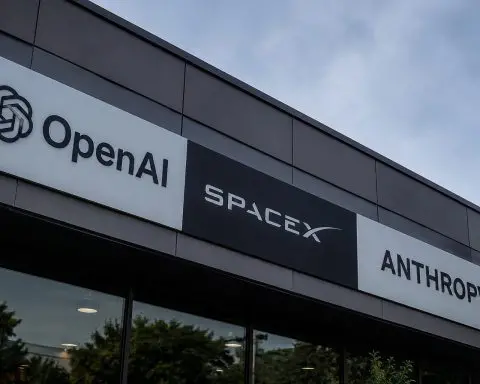
Competition’s all over the map. SpaceX and its reusable rockets, plus Starlink, have set the pace, leaving Blue Origin and others scrambling for scale. Over in AI, Grok is up against entrenched players—OpenAI, Anthropic—the very group Morningstar flagged when it raised doubts about SpaceX’s future in AI.
Index buying could end up supporting the deal. FTSE Russell flagged that SpaceX qualifies for fast entry into both its Russell U.S. Equity Indexes and the FTSE Global Equity Index Series, with an investable market cap estimated at roughly $70 billion. That kind of inclusion often compels some funds to pick up shares to keep pace with their benchmarks.
The risks here loom large. Morningstar flagged potential for a near-term pop, citing the thin float and backing from a heavyweight bank group. Still, Owens pointed out that anyone thinking long-term might want to wait for a wider margin of safety after the IPO. That’s really what hangs over the roadshow: whether public investors are willing to pony up now for ventures—think orbital data centers, Mars infrastructure—that exist mostly on paper.
SpaceX is “so large and extraordinarily valued” that it doesn’t really serve as a typical IPO market barometer, IPOX research associate Lukas Muehlbauer said. That’s probably exactly what Wall Street wants. For fresh investors, though, it could end up being the snag. Reuters