
New York, May 19, 2026, 11:06 (EDT)
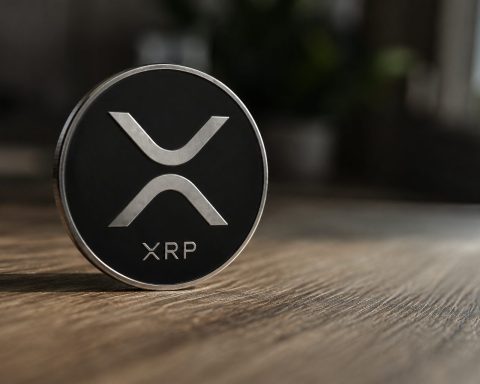
XRP hovered close to $1.37 on Tuesday, with traders sizing up Standard Chartered’s renewed $4 roadmap even as some flagged risks that Ripple’s payments model could sideline the token itself. The debate has shifted: price goals matter less than whether inflows can actually counter skepticism over XRP’s usefulness in real settlement flows.
The point is grabbing attention now: fresh capital keeps hitting XRP funds, despite the token still trading far off last year’s highs. In the week from May 11 to 15, XRP spot exchange-traded funds—these are share-like products tied directly to the token—pulled in $60.495 million in net inflows. That pushed total inflows up to $1.39 billion, according to SoSoValue data published by KuCoin.
With fresh drivers scarce, the flow is key here. XRP hovered around $1.37, according to Binance, slipping just under 1% in the past 24 hours. The token’s value sat close to $84.6 billion, trading between $1.37 and $1.39 during that stretch.
Standard Chartered’s roadmap, examined by 24/7 Wall St., points to $4 as the first significant repricing level that XRP needs to crack before making any lasting push toward $10. Their analysis lays out a sequence: $2.80 by 2026, then $7 in 2027, and $12.60 come 2028. For now, the token remains stuck near the low-$1 mark, meeting resistance between $1.45 and $1.50, according to the report.
That’s a big leap from the five-year numbers. Johnny Rice, writing for The Motley Fool, calculated that with XRP trading near $1.43, $1,000 would buy about 700 coins. At $5 per XRP, that would come to $3,500. If XRP hits $1.50, the position grows to $1,050. At just $0.25, though, it drops to $175. Rice, for his part, doesn’t expect fireworks—he sees XRP staying under $1 by 2031.
Bears aren’t only looking at the technicals. According to TipRanks, investor Anthony Di Pizio pointed to “structural issues” with XRP, noting that Ripple Payments enables banks to settle using fiat currencies, sidestepping the need to use XRP for every transaction. TipRanks
RLUSD sits at the heart of those worries. Stablecoins are digital tokens pegged to a fixed value. Ripple’s RLUSD, the company says, will maintain a $1 price, issued both on the XRP Ledger and Ethereum. It’s fully backed by separate reserves — cash and cash equivalents — and holders can redeem it one-to-one for U.S. dollars.
XRP isn’t moving on its own. Bitcoin climbed to just under $77,050 on Tuesday, having bounced off a two-and-a-half-week low. Broader crypto mood still tracks shifts in oil, bond yields, and geopolitical jitters.
Another hurdle: institutional altcoin cash is up for grabs. SoSoValue numbers, picked up by Binance News, put Solana spot ETF inflows at $58.11 million for the May 11-15 stretch—just shy of XRP’s $60.49 million.
The risk? Simple enough: ETF inflows could dry up, Bitcoin might keep calling the shots, and RLUSD could turn out handier than XRP for banks handling daily settlements. If that plays out, Standard Chartered’s $4 waypoint is less a short hop away and more of a ceiling the market has to reach for.
Right now, the real question isn’t Ripple’s ability to put payments infrastructure in place. The focus is squarely on whether XRP manages to snag enough of that value to finally escape the trading range that’s kept even optimistic projections on a short leash.