
Paris, May 22, 2026, 01:09 (CEST)
Josef Aschbacher, Director General of the European Space Agency, is calling for Europe to secure independent crewed spaceflight capabilities. His push comes after the U.S. shook up NASA’s Artemis timeline, creating headaches for European lunar and Mars projects. In a May 18 essay, Aschbacher pointed to the halt on Gateway—the planned lunar orbital station—and the scrapping of Mars Sample Return, arguing Europe is now “too exposed to decisions beyond its control.” LinkedIn
Timing matters here. With ESA’s 23 member states headed into a series of high-stakes funding and policy sessions—starting with a Council in June, then an Intermediate Ministerial Council in December, and the full ministerial slated for 2028—Aschbacher’s got a slim window to convert strategy into actual budgets and equipment.
Back in March, NASA Administrator Jared Isaacman announced a shift in strategy: the agency hit pause on the Gateway project as it stands and redirected attention toward building up Moon surface infrastructure. “The clock is running in this great-power competition,” Isaacman said at the time. NASA also indicated plans to salvage usable hardware and keep existing partner relationships in play. NASA
Japan, Canada, and ESA were left with unclear prospects for their expected roles in Gateway, Reuters noted back in March. NASA’s commercial lunar lander contractors—SpaceX and Blue Origin—now face greater demands, with both companies critical to the updated U.S. strategy and both fighting the clock.
Aschbacher stopped short of urging a split with Washington. Instead, he pressed for leverage—cooperation, he said, is still central to Europe’s space policy, but he cautioned against letting partnership slip into dependency. Autonomous human spaceflight, in his words, is “not a luxury.” Agence Europe
Human spaceflight covers transporting people beyond Earth—unlike uncrewed missions for probes or satellites. Europe provides the European Service Module for NASA’s Orion crew capsule, but still lacks its own system for carrying astronauts. With Soyuz rides cut off after Russia’s Ukraine invasion, Europe now depends on U.S. Dragon flights for access to space.
Still, Europe remains far from fielding a fully funded astronaut program. Sending crews up takes more than ambition: you need an escape system, certified rockets, the spacecraft itself, training, operational know-how—and a destination. Yet, as Aschbacher himself highlights, the real stumbling block is political—governments across Europe aren’t aligned, budgets and priorities pulling in different directions.
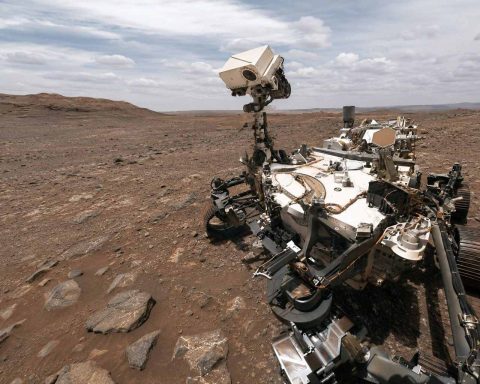
ESA’s Explore2040 strategy lays out continued European work in low Earth orbit, on the Moon, and with Mars, using programs like Terrae Novae, which features the Argonaut lunar lander and Rosalind Franklin Mars rover, plus earlier roles in Mars Sample Return. Low Earth orbit, where the International Space Station operates, stays in focus.
ESA isn’t just focused on the big-ticket efforts. This year, the agency tapped Thales Alenia Space and The Exploration Company for €25 million in contracts, targeting a cargo return service for the International Space Station by 2030. Back then, ESA pointed out Europe’s dependence on partners for cargo and crew transport.
This latest spat hasn’t derailed U.S.-European collaboration. Back in April, NASA signed off on key support for ESA’s Rosalind Franklin Mars rover—think launch vehicle, lander braking engines, radioisotope heater units, and more. The launch is aimed for no sooner than late 2028.
Competition is heating up. NASA pivoted to its Gateway initiative as it looked for a quicker route to establishing a Moon base, shaping the program with China’s lunar push in mind. The agency indicated that some partner roles might continue on surface systems.
ESA faces a new challenge: not just proving it’s a dependable partner, but figuring out how to be more than that. Autonomy and resilience both feature in Strategy 2040 as stated targets; now, Aschbacher’s update makes those concepts the benchmark for funding.