
WASHINGTON, May 22, 2026, 09:02 (EDT)
- NASA’s Perseverance rover has covered 26.09 miles across the Martian surface, just shy of the classic marathon distance of 26.22 miles.
- Mission manager Robert Hogg told Reuters the rover should cover that distance in roughly a month.
- What matters more on the science front: Perseverance has left Jezero Crater and is now exploring ground that could hold clues to Mars’ oldest history.
NASA’s Perseverance rover is about to notch a symbolic achievement on Mars, coming up just shy of marathon distance after over five years of deliberate, stop-and-go navigating across the Martian surface. The rover has logged 26.09 miles so far—41.99 km—falling just short of the marathon benchmark of 26.22 miles, according to Reuters.
Timing is key here: Perseverance has moved past simply logging distance. Now outside Jezero Crater, NASA says the rover has kicked off its fifth science campaign, investigating ancient rocks. Those might let researchers draw parallels between Mars’s early history and Earth’s own beginnings.
NASA’s Perseverance rover touched down in Jezero Crater on Feb. 18, 2021, targeting the site for its historic river delta and former lakebed. The agency says the mission’s main focus: hunting for possible traces of ancient microbial life, plus gathering rock and soil samples for possible return to Earth.
Initially, the rover was set for a surface mission lasting one Martian year—roughly 687 days back on Earth. Ken Farley, Perseverance’s deputy project scientist at Caltech, told Reuters the rover is “in good health” with a power source that should last “at least a decade.” How long it keeps running, though, comes down to future NASA calls. Reuters
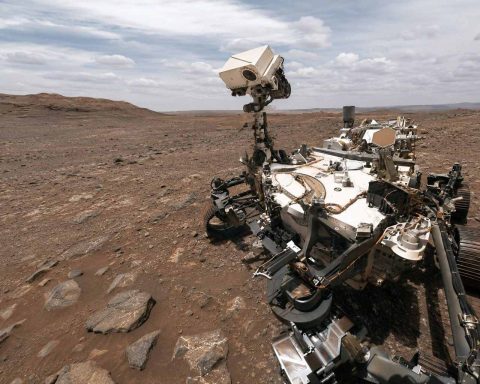
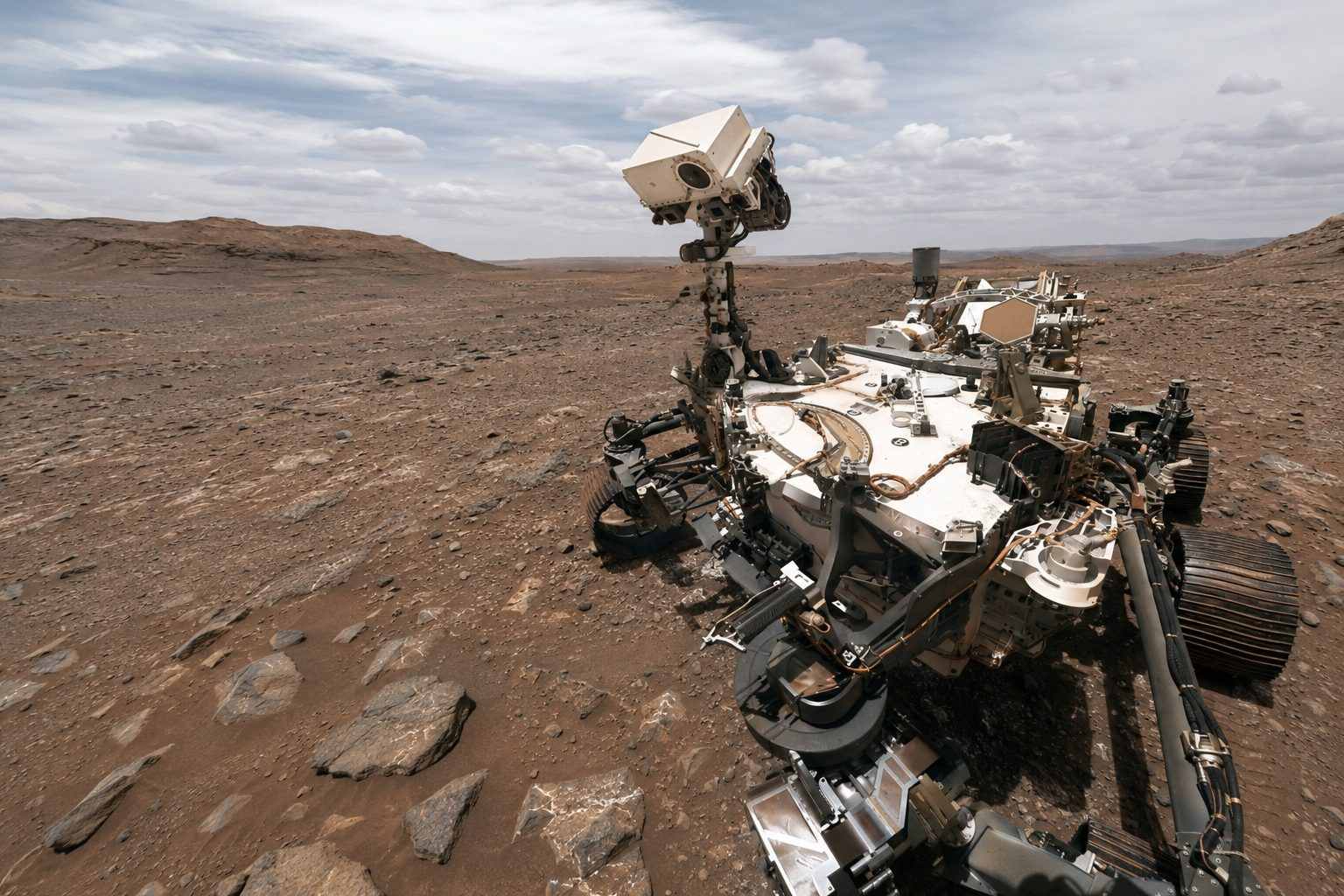
NASA’s newest rover update has Perseverance posted up at Lac de Charmes, just west of Jezero’s rim, where it stitched together a selfie from 61 separate shots snapped on March 11. Katie Stack Morgan, project scientist at NASA’s Jet Propulsion Laboratory, dubbed the spot Mars’ “Wild West”—the farthest the rover has pushed west since it landed. NASA
Those rocks aren’t just scenery. NASA says Perseverance scraped away part of an outcrop dubbed Arathusa, revealing fresher subsurface material and spotting igneous minerals—evidence of rocks created as molten material cooled, probably even older than Jezero Crater itself.
NASA released a 46-frame panorama from the Arbot region, highlighting what the agency called some of the mission’s most geologically rich scenery so far. Scientists are eyeing signs of megabreccia—chunks of rock likely smashed loose by an impact—as well as ancient rocks that could date back roughly 4 billion years.
So the drive total isn’t just for show. Farley told Reuters the rover is analyzing Martian environments that probably resemble early Earth, from an era whose rocks didn’t survive back home.
The core unknown lingers. Last year’s reddish sedimentary rock sample hinted at traces of ancient microbial life, but researchers cautioned the minerals might just as easily have arisen through non-biological processes. Farley put it bluntly: settling the debate requires lab work back on Earth.
The way those samples might make it back to Earth is still an open question. NASA refers to Mars Sample Return as a proposed mission—something on the drawing board, not a finished project.
Perseverance is nearing a milestone already reached by NASA’s Opportunity rover. Opportunity finished a marathon on Mars back in March 2015, wrapping that up after about 11 years and two months on the planet. It ultimately logged the longest Mars rover journey at 28.06 miles—numbers confirmed by NASA and Reuters.
Curiosity is still rolling through Gale Crater for NASA—Reuters put its odometer at 22.93 miles since landing in 2012. Perseverance brought along Ingenuity, the little helicopter that managed 72 flights in Mars’ thin air before wrapping up its mission.
Things get messier from here. Perseverance is busy in the Arbot region, NASA said, and it’s set to head for Gardevarri—where olivine-rich rocks might shed new light on the volcano history of Mars.