
PASADENA, California, May 22, 2026, 08:10 (PDT)
NASA’s Psyche probe snapped an enhanced-color shot of Mars’ Huygens Crater—a double-ringed, 290-mile-wide feature in the planet’s southern highlands—just after using the Red Planet for a course correction toward its destination asteroid. According to NASA, the image captures color contrasts that probably reflect changes in dust, sand, and bedrock across the old landscape.
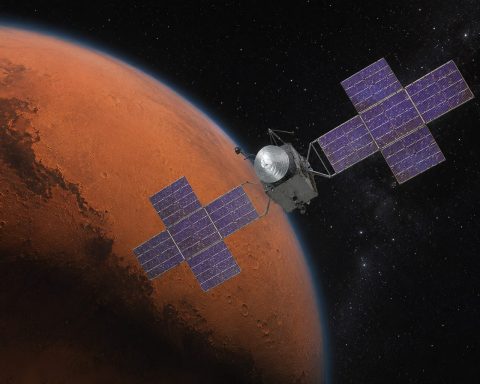
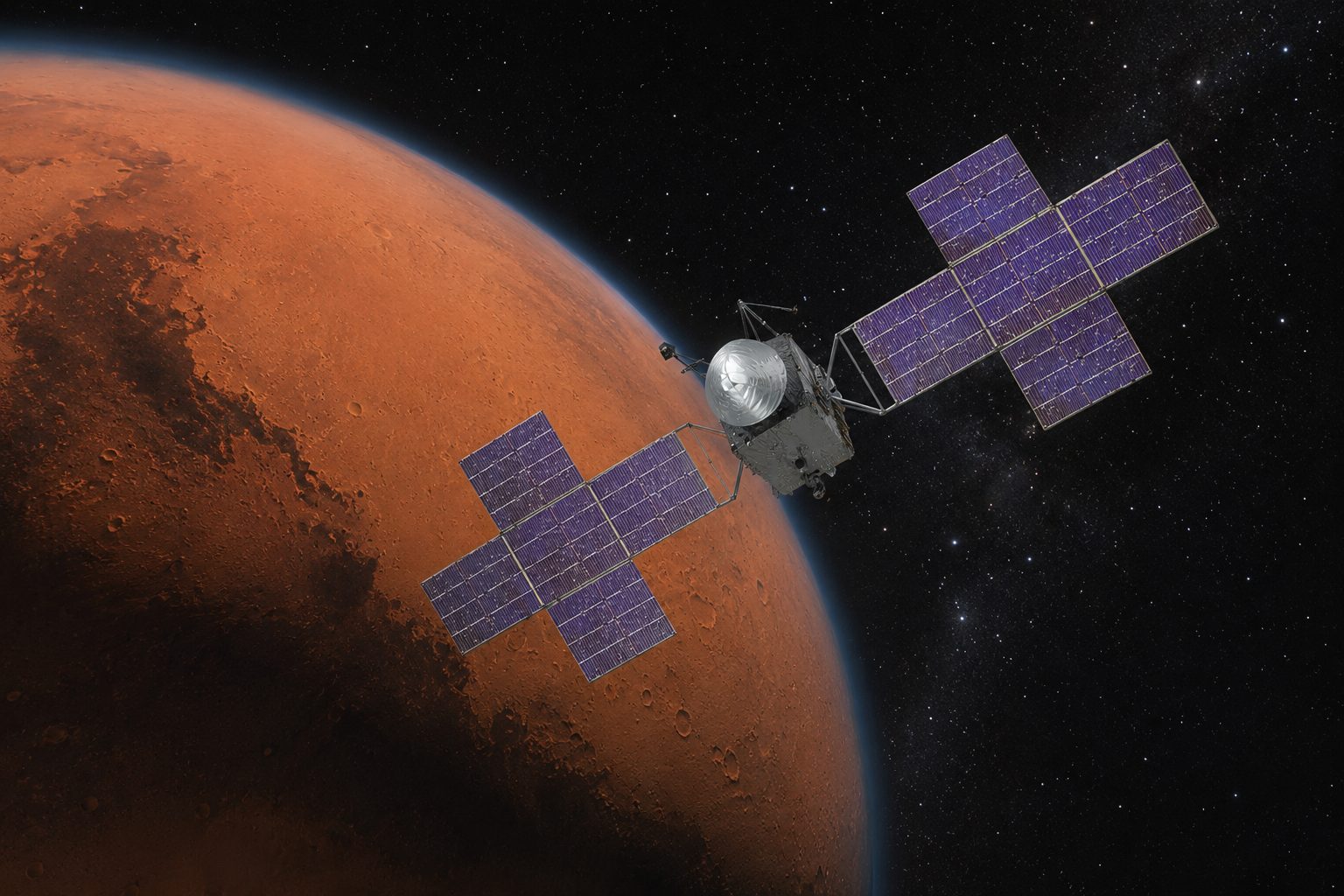
This wasn’t just a pretty snapshot. On May 15, Psyche swung just 2,864 miles from Mars, picking up a gravity boost to accelerate and realign its path toward its namesake target—the metal-heavy asteroid Psyche, out past Mars in the belt toward Jupiter.
The first thing on mission planners’ minds: did the spacecraft make its exit from Mars on the correct trajectory? NASA engineers tapped into the Deep Space Network — their worldwide communications array for interplanetary missions — and scrutinized Doppler shifts in radio signals, using those frequency changes to confirm the path after the flyby.
Don Han, who heads Psyche’s navigation at NASA’s Jet Propulsion Laboratory, said the team tracked a 1,000 mph speed increase along with a roughly one-degree tilt in the craft’s orbital plane. According to Han, the spacecraft remains “on course” for its summer 2029 arrival. Space
Imager A captured the Huygens frame around 1:18 p.m. PDT on May 15, just after the closest approach, according to NASA’s Photojournal. Each pixel covers roughly 2,200 feet. Processed with enhanced color, the image highlights features not visible to the naked eye.
Psyche snapped a natural-color image showing wind streaks across impact craters in the Syrtis Major area of Mars. According to NASA, those streaks run for about 30 miles, while the bigger craters near the lower center of the image come in at approximately the same diameter.
Jim Bell, who heads up the imager instrument on Psyche at Arizona State University, called the Mars data “unique and important opportunities” for calibrating the instrument and putting image-processing tools through their paces. Calibration work isn’t done yet, Bell added—the team will keep collecting images as Mars drifts farther away. Sky at Night Magazine
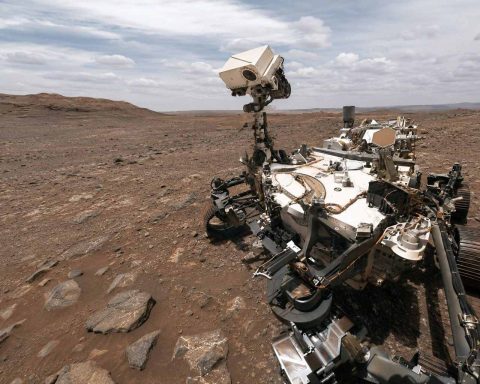
NASA roped in other Mars missions as well. The agency cited Perseverance, Mars Reconnaissance Orbiter, and ESA’s Mars Express as some of the spacecraft and rovers that chipped in with imaging or navigation data to help with calibration.
NASA’s target: asteroid Psyche. At roughly 173 miles across at its widest, scientists suspect this chunk could be the exposed core of a planetesimal—one of those building blocks of planet formation. That makes it a rare chance to look at material like what lies deep inside rocky worlds.
Still, the main theory hasn’t been confirmed yet. Should the asteroid end up being unlike a true planetary core, the mission’s focus could move—less about peering into early planet interiors, more about charting a rare metal-heavy object.
Psyche is set to switch back to solar-electric propulsion, NASA said, relying on sunlight to power its low-thrust system on the way to the asteroid belt. Management of the mission sits with JPL, while Arizona State University heads up mission leadership and imaging work. Intuitive Machines built the chassis for the spacecraft.