
CAPE CANAVERAL, Florida, May 22, 2026, 13:03 EDT
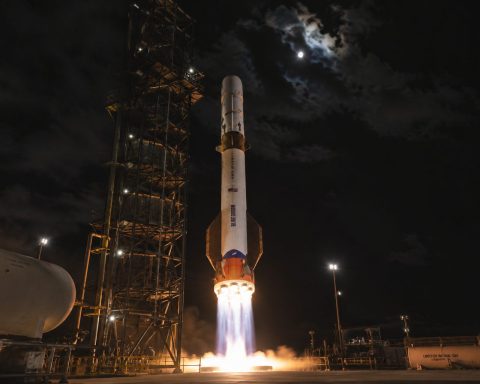
SpaceX’s Falcon 9 upper stage—the segment that drives payloads deeper after the main booster falls away—looks on track to slam into the moon Aug. 5. The rocket part, listed as 2025-010D, has become a new focal point in the ongoing debate over orbital debris and lunar missions. Bill Gray, who operates the Project Pluto site, estimates the impact will come at 06:44 UTC, traveling at 2.43 kilometers per second. “Doesn’t present any danger to anyone,” Gray said. Project Pluto
Scale is the sticking point now. NASA’s Commercial Lunar Payload Services program—CLPS for short—has U.S. firms hauling science and tech payloads up to the Moon and into orbit. The agency counts 15 lunar deliveries scheduled through 2028, with over 60 of its own instruments attached to the program.
So a probably benign crater is drawing notice. Anncy Thresher, assistant professor at Northeastern University focused on public policy and philosophy, pointed out that the Moon’s infrastructure remains minimal, though “that will change in the future.” She emphasized, space agencies and private firms should get ahead now on managing and cleaning up space debris. Northeastern Global News
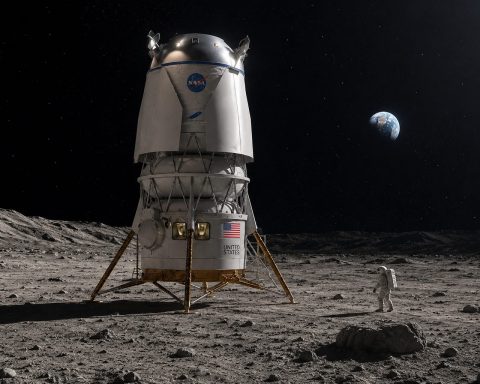
This stage made its debut on Jan. 15, 2025, when a Falcon 9 lifted off from Launch Complex 39A at NASA’s Kennedy Space Center in Florida. Aboard: Firefly Aerospace’s Blue Ghost lunar lander and ispace’s HAKUTO-R, with Blue Ghost carrying NASA payloads under CLPS as part of the Artemis program.
Firefly reported that Blue Ghost touched down at Mare Crisium on March 2, 2025, and ran surface operations for upwards of 14 days. Ispace, for its part, said its Resilience lander probably hit hard—its descent was thrown off after a laser range finder used to gauge surface distance encountered an anomaly.
SpaceX isn’t the whole story here. NASA’s CLPS roster features Astrobotic, Blue Origin, and Intuitive Machines as well, a lineup that signals the agency’s shift toward distributing lunar delivery contracts among multiple private firms instead of sticking purely with in-house missions.
There’s precedent for slamming a spacecraft into the moon—NASA did just that back in 2009 with its LCROSS mission, crashing a Centaur upper stage and a probe to hunt for water ice. That intentional impact kicked up a telltale plume and yielded valuable data. This time, though, the impact isn’t an orchestrated experiment; nobody planned it.
The forecast isn’t locked in. Tracking objects out in cislunar space—the region between Earth and the moon—is trickier than following satellites in low Earth orbit. Even a nudge from sunlight can shift debris onto a new course over time. “Cis-lunar space debris is difficult to track,” Marco Langbroek at Delft University of Technology told Sky & Telescope. As lunar operations ramp up, that uncertainty raises the risk that future impacts could land dangerously close to a lander, crew habitat, or even a historic site. Sky Telescope
Carolin Frueh, an engineer at Purdue University, is taking a close look at that area just as more missions gear up for departure. “The fewer debris pieces we are creating, the better the problem in the end,” Frueh told Purdue. The university pointed out that at least 30 missions could make their way to cislunar space over the next decade. Purdue University
Regulators are taking action, but coordination remains fragmented. The European Space Agency’s Zero Debris initiative targets a dramatic reduction in orbital debris from ESA missions by 2030, focusing on stricter guidelines for both disposal and collision prevention in Earth and lunar orbits. But for commercial operators, the core issue lingers: after a payload’s mission wraps, who shoulders the cost to keep debris out of orbit?
SpaceX’s Falcon 9 schedule probably won’t skip a beat after the Aug. 5 incident. But for anyone eyeing lunar ventures, the message lands clearly—private launches bring routine debris, and with no atmosphere on the moon, that junk isn’t going anywhere.