
LOS ANGELES, May 28, 2026, 03:05 PDT
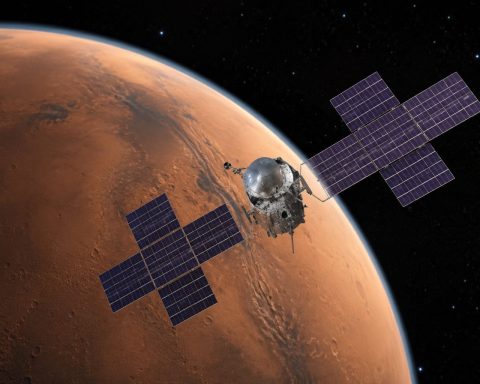
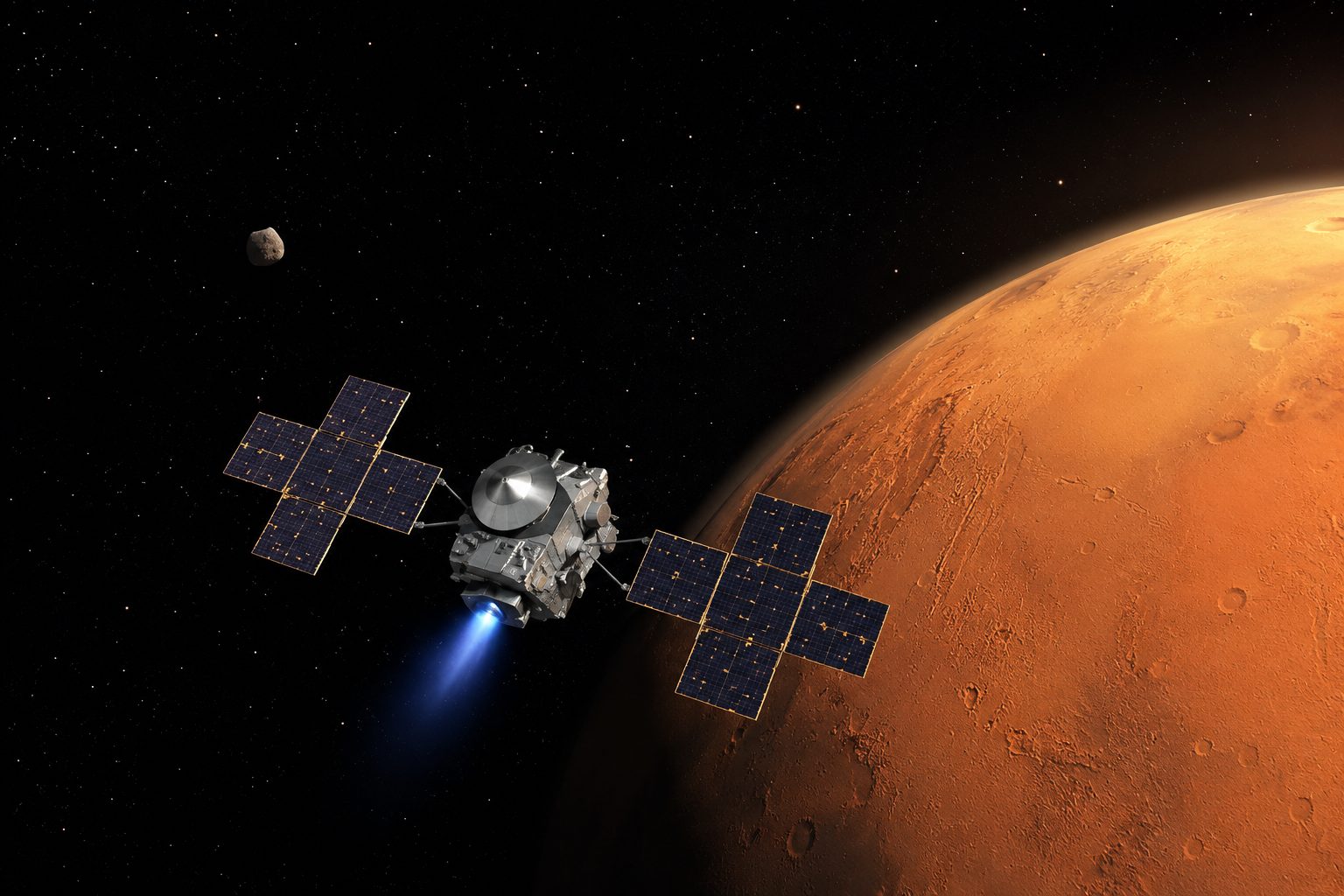
NASA’s Psyche probe, headed to a metal-rich asteroid, picked up about 1,000 mph by slingshotting past Mars and is now officially tracking for a summer 2029 rendezvous, the agency said. The spacecraft swept just 2,864 miles (4,609 km) above Mars on May 15, capturing seldom-seen images of the planet during the maneuver.
This wasn’t just a detour—the pass was central to the mission. It marked the sole scheduled gravity assist, leveraging the planet’s gravitational pull to alter Psyche’s velocity and trajectory, all without tapping its own fuel reserves. That one move set Psyche firmly on course for its asteroid target.
Engineers at NASA’s Jet Propulsion Laboratory verified the outcome using the Deep Space Network, the agency’s global array of radio antennas dedicated to deep-space exploration. Don Han, who heads navigation for Psyche at JPL, reported the spacecraft remains “on course” to reach the asteroid, following a roughly 1-degree shift in Mars’ orbital plane relative to the Sun. ScienceDaily
Psyche’s flyby doubled as a test run for the mission team. The spacecraft fired up its imagers, magnetometers, and gamma-ray and neutron spectrometer, locking onto Mars to fine-tune instruments destined for a target no probe has ever seen.
Arizona State’s Jim Bell, who heads up imaging for Psyche, called the Mars flyby data a “unique and important” chance to put the cameras and initial processing software through their paces. NASA reported that the spacecraft snapped thousands of shots as it neared Mars, covering the approach, surface, and atmosphere. NASA
Among the images: a slender crescent Mars, the planet’s glow sharpened by sunlight filtered through dust in the atmosphere. As Psyche transitioned from darkness into daylight, its instruments grabbed shots of the Martian surface. The water-ice-packed south polar cap turned up in the sequence too—NASA puts its width at over 430 miles.
Other Mars missions added perspective to the flyby. NASA pointed to Mars Reconnaissance Orbiter, Perseverance, and ESA’s ExoMars Trace Gas Orbiter as key sources of comparison data—surface, atmospheric, navigation—during the pass.
Psyche took off in October 2023, beginning a 2.2 billion-mile journey toward its namesake asteroid, which orbits in the main belt between Mars and Jupiter. According to NASA, the spacecraft is expected to fall under the asteroid’s gravitational pull by late July 2029 and kick off its main research mission in August. The plan: spend the next two years surveying and analyzing the asteroid’s makeup.
The target stands out: scientists suspect it’s loaded with iron and nickel, possibly a chunk of core from an ancient planetesimal—one of the early solar system’s construction leftovers. That’s what makes it valuable. Since Earth’s own core is out of reach, Psyche could offer a rare window into the origins of rocky planets.
The science isn’t settled, even if the navigation is. Psyche could prove to be something other than the bare planetary core that some researchers expect; NASA’s plan emphasizes that the mission is aimed at figuring out its composition, not verifying any assumptions.
Lindy Elkins-Tanton, principal investigator for the mission at the University of California, Berkeley, described instrument testing ahead of the encounter as “the icing on the cake”—the real objective was to leverage Mars for a gravity assist, tweaking the spacecraft’s speed and trajectory toward its destination. That part is nearly done. The tougher challenge looms in 2029. NASA Science