
WASHINGTON, May 28, 2026, 07:03 (EDT)
NASA handed Blue Origin a $188 million contract, putting Jeff Bezos’ company in the lead group for its moon base development effort. The deal covers uncrewed delivery of rover hardware to the lunar surface via the Mark 1 lander. Meanwhile, Astrolab picked up $219 million, and Lunar Outpost $220 million, both for building lunar terrain vehicles—rovers ready for either astronaut drivers or remote operation.
The shift in timing is notable: Artemis III isn’t billed as the actual lunar return anymore. NASA has redefined the 2027 mission—it’s now planned as a low-Earth-orbit trial run. Orion will carry out docking and rendezvous maneuvers with commercial landers, either from Blue Origin, SpaceX, or both. It’s a dress rehearsal, not the surface mission itself.
NASA is working to get equipment—think rovers, cargo landers, drones, mapping systems, and support gear—down near the moon’s south pole ahead of the first astronauts. The agency’s Moon Base roadmap starts with robotic launches and tech demos, followed by setting up semi-permanent infrastructure and pushing for extended crew stays.
Blue Origin’s first run at the Moon Base I mission won’t launch before fall 2026. NASA has tapped the company’s Blue Moon Mark 1 Endurance lander to haul cameras for studying how the lander’s exhaust hits lunar soil, plus a laser reflector designed to improve location accuracy for spacecraft. The plan: touch down at Shackleton Connecting Ridge, close to the Moon’s south pole.
NASA Administrator Jared Isaacman called the approach a step-by-step process rather than a final blueprint. “We are not jumping right into the glass dome moon base,” Isaacman told reporters in Washington. The agency, he said, plans to deploy landers, rovers, demonstration missions, and scientific payloads one phase at a time. The Guardian
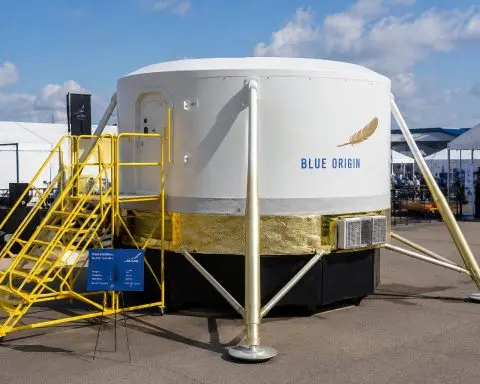
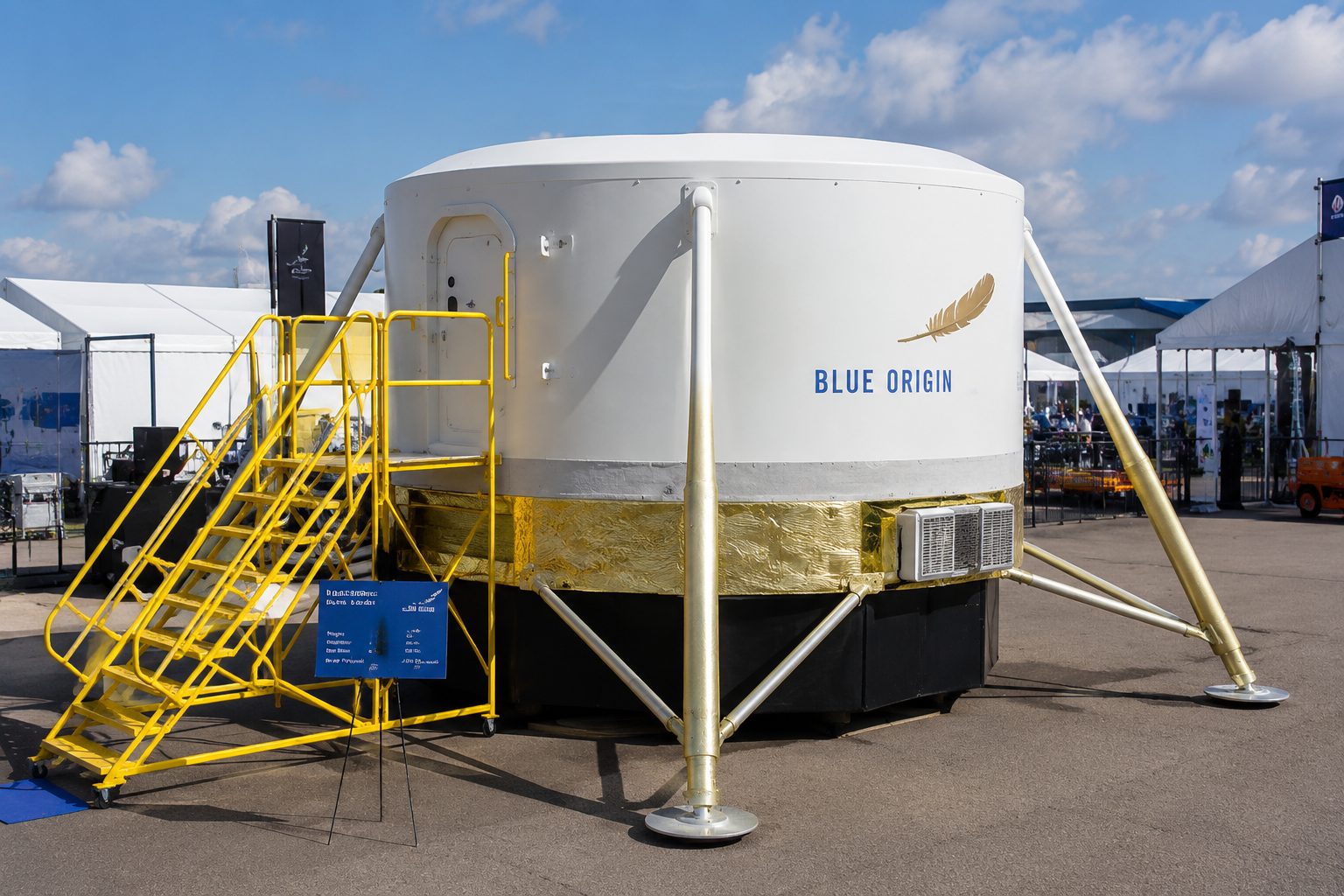
Blue Origin isn’t just sketching ideas on paper. Earlier this month, NASA’s Johnson Space Center started using a full-scale mockup of the Blue Moon Mark 2 crew cabin for astronaut training and testing. The agency is working toward linking up with commercial landers in Earth orbit in 2027 and targeting a moon landing with astronauts by 2028.
Jeremy Parsons, who works on Moon-to-Mars at NASA, described Artemis III as an “important stepping stone.” The plan? Pulling together several spacecraft and various partners for a single launch push. NASA added that astronauts might get inside at least one lander test article—though some mission decisions are still up in the air. NASA
Competition hasn’t let up. SpaceX’s Starship human landing system stays on the Artemis III test roadmap, even as Blue Origin’s Blue Moon shifts into the early surface logistics phase. Astrolab and Lunar Outpost are tapped for the crew rovers, so moon work now looks more like a contracting maze than a solo mission—leaving NASA to handle the coordination.
Blue Origin describes Mark 1 as a cargo lander capable of hauling as much as three metric tons in a single launch to the Moon. The company frames this pathfinder mission as a proving ground for its BE-7 engine, avionics, comms, and the cryogenic hardware designed for ultra-cold propellants, all critical to the setup ahead of NASA’s uncrewed human-landing-system run.
NASA’s Moon Base program manager Carlos Garcia-Galan called the new lunar terrain vehicles “a mix between the Apollo lunar roving vehicle and the Mars-style rover.” Blue Origin’s award features an option period, with another $280.4 million possible across two task orders. Blue Origin CEO Dave Limp said the company was “ready to make it a reality.” GeekWire
Still, delays aren’t off the table. NASA’s Commercial Lunar Payload Services program—the framework backing a wave of private moon shots—acknowledges the difficulty: lunar landings aren’t easy. The agency says it’s willing to accept commercial losses, seeing value in whatever lessons each mission brings to future attempts.
Dust is another headache. When crew landers arrive, exhaust is likely to blast up lunar regolith—kicking rocks and soil out far enough that NASA might have to keep rovers parked roughly 2 kilometers from the landing site, according to Ryan Stephan, NASA’s acting cargo-landers director.