
GREENBELT, Maryland, May 28, 2026, 08:00 EDT
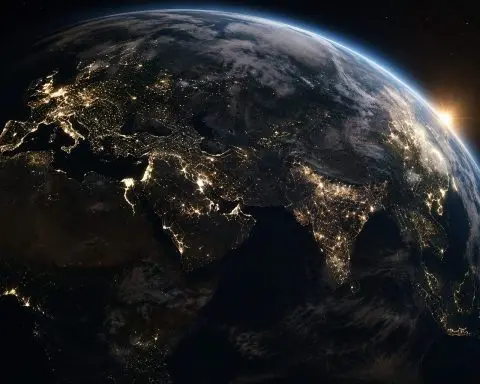
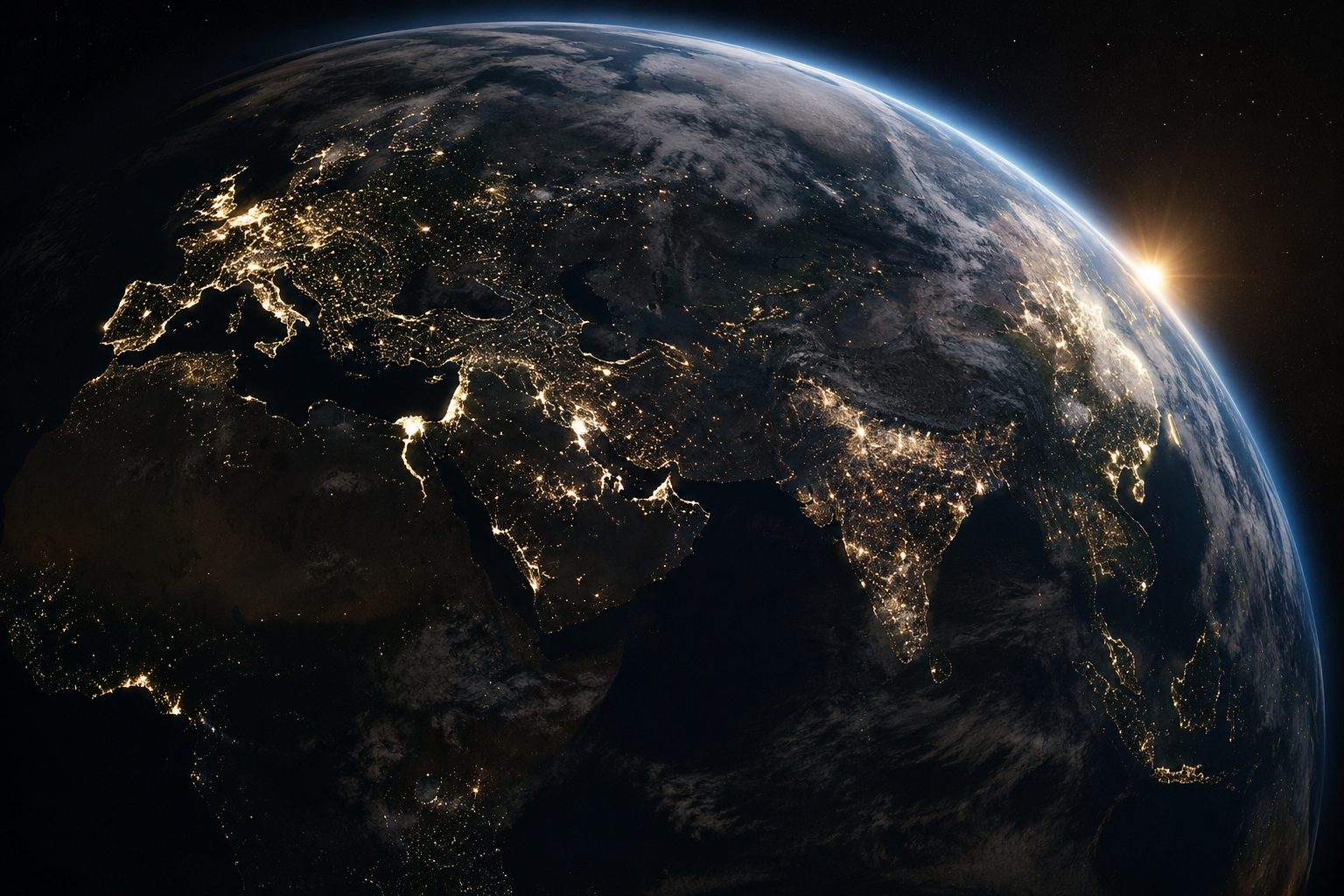
NASA’s latest Black Marble maps reveal a jump in Earth’s night lights between 2014 and 2022, but the story isn’t just about more brightness—patches of the planet faded even as others lit up, resulting in a nighttime landscape that’s anything but uniform. NASA and Space.com point to city expansion, electrification, shifting energy rules, conflict, outages, and economic headwinds as the main forces behind these shifting lights.
This finding is significant: artificial light at night—ALAN, as it’s called—has moved beyond serving as a rough measure of urban expansion. According to NASA, Black Marble data is being used to monitor everything from light pollution and illegal fishing to gas flaring, disaster fallout and even unrest in conflict zones. The night lights have effectively become a public ledger, recording stress points across power grids, economies and key infrastructure.
Published April 8 in Nature and highlighted this month by NASA Earth Observatory, the study pulled in daily images from VIIRS, the Visible Infrared Imaging Radiometer Suite, aboard Suomi NPP, NOAA-20, and NOAA-21. VIIRS, a sensor capable of picking up faint nighttime light from Earth, was key to the analysis.
According to NASA, researchers Tian Li and Zhe Zhu from the University of Connecticut headed up a team that sifted through 1.16 million satellite images, all snapped around 1:30 a.m. local time over a nine-year span. The images come from sensors aboard NASA and NOAA satellites—these are sensitive enough to spot even faint points of light from orbit.
Global radiance didn’t climb evenly. Nature reported that brightening tacked on energy equivalent to 34% of the 2014 level, but dimming erased 18% of that, leading to a net 16% increase between 2014 and 2022.
Most of the growth came out of Asia. According to the paper, China and India logged the biggest jumps in total ALAN area. In eastern and central China, urban projects and industry led the way. Over in India, rural electrification and new streetlights pushed the trend, brightening large stretches.
Europe saw a different trend. According to NASA Earth Observatory, France’s brightness dropped by 33%, while the UK dimmed by 22% and the Netherlands by 21%. The agency pointed to a mix of factors—LED adoption, conservation policies, tighter light-pollution curbs, and the energy crunch that hit after Russia’s invasion of Ukraine in 2022.
NASA found that as more people moved into West Coast cities, those areas lit up, getting noticeably brighter. By contrast, most of the East Coast lost some of its glow. The agency also highlighted flares from oil operations—specifically, the light from burning off surplus gas in places like Texas’s Permian Basin and North Dakota’s Bakken Formation—as a clear marker of energy activity.
“Earth at night has so much to teach us,” said Miguel Román, deputy director for atmospheres and data systems at NASA’s Goddard Space Flight Center. Deborah Gordon, a methane expert with the Rocky Mountain Institute who didn’t participate in the study, described flared gas as “money burned” and argued that public data on wasted gas matters for both energy and economic security. NASA Science
Zhu, who heads UConn’s Global Environmental Remote Sensing Laboratory, called the daily record the “heartbeat of society.” As Li explained, the approach relies on repeated observations—the goal is to confirm any change is genuine, not just satellite or atmospheric noise. UConn Today
The backdrop here is the longstanding night-light record. Previous Defense Meteorological Satellite Program images, along with monthly VIIRS releases, were used to chart urban expansion. However, Nature pointed out that compiled data tended to hide short-lived fluctuations and shifts moving in both directions. NASA’s Black Marble products now factor in corrections for things like atmosphere, terrain, and moonlight, aiming to tease apart daily radiance changes from the usual background noise.
The maps don’t just track wealth, emissions, or development in a straightforward way. Nature pointed out that tying shifts in night-time light too closely to GDP can go off the rails. Dimming might signal anything from efficient LEDs and policy decisions to war damage, outages, or just plain economic slump. NASA, for its part, adds that these sensors also catch things like fishing fleets, gas flares, lava, and even auroras—not just city lights.
The updated maps don’t claim that night skies are getting steadily brighter everywhere. Instead, the data sketch a patchier scene: highways, urban grids, farmland, oil fields—lighting levels fluctuating, even side by side, all beneath the same darkness.