
NEW YORK, May 28, 2026, 15:02 EDT
Elon Musk clarified Tuesday that SpaceX’s lease agreement with Anthropic for access to its Colossus AI clusters is limited to 180 days, a much shorter commitment than some investors inferred from Anthropic’s IPO filing, which suggested a possible term through May 2029. “SpaceX has not committed to leasing Colossus for years,” Musk posted on X. He said both companies can cancel with 90 days’ notice after the first six months. Reuters
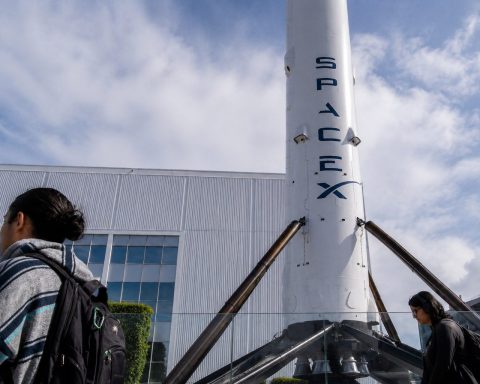
This comes into play as SpaceX shifts its narrative for public investors, moving beyond rockets and satellite internet. Now, the company is spotlighting its push into AI infrastructure — massive computing setups for training AI models. One big detail: Anthropic has committed to paying $1.25 billion each month for access to capacity from Colossus and Colossus II in Memphis, Tennessee.
SpaceX has its eye on a Nasdaq debut as soon as June 12, trading under the SPCX symbol. According to sources cited by Reuters earlier this month, the company plans to meet investors on June 4, with pricing potentially set for June 11. They’re expected to target a $75 billion raise, putting the overall valuation near $1.75 trillion—enough to potentially break records for an IPO of this scale.
According to Barron’s, SpaceX has tapped Goldman Sachs to head up its offering. Business Insider, referencing the S-1, noted that Goldman lands the lead underwriter position, while Morgan Stanley, Bank of America, Citigroup, and JPMorgan Chase round out the group of core bookrunners. Morgan Stanley also shows up as the stabilization agent—the bank designated to help steady trading once shares go live.
Space Exploration Technologies Corp. entered the public IPO pipeline on May 20, when the SEC accepted its registration statement that afternoon. The company appears in the SEC’s technology office, classified under computer programming/data-processing—an unremarkable label for a business that stretches from rocket launches to Starlink broadband and AI compute.
It’s a mixed picture financially. Starlink, the satellite internet arm of SpaceX, posted a $1.19 billion operating profit in the first quarter. Still, the company as a whole ended up with a $1.94 billion operating loss on $4.69 billion in revenue. Losses from the AI division were steep—$2.47 billion against just $818 million in revenue, according to a filing seen by Reuters.
Musk insisted the brief lease was SpaceX’s decision, not Anthropic’s. “We won’t leave them hanging,” he wrote, though he also warned that SpaceX might reclaim the capacity if “compute gets super tight.” Reuters
Index demand may yet play a role. Rob Arnott, the founder of Research Affiliates, told Business Insider that SpaceX’s limited public float—the portion of shares up for grabs—and speedier index eligibility could spark buying from benchmark-tracking funds. “I would say that the buying pressure will be overwhelming,” Arnott said. Business Insider
But it’s not all about operations. Bob Doll, who runs Crossmark Global Investments and once oversaw equities at BlackRock, told Business Insider that anyone looking to pick up SpaceX shares might need to unload something else to pay for them. “Logically,” he said, investors could drop another stock in the same sector, although “maybe they do sell their Procter & Gamble.” Business Insider
Valuation remains tricky. Georgetown University finance professor Reena Aggarwal described a “somewhat of a halo effect around Musk and his unconventional vision,” speaking to Reuters. She pointed out that with firms like SpaceX, “there is no peer group for comparison,” making it tough to pin down a number. Reuters
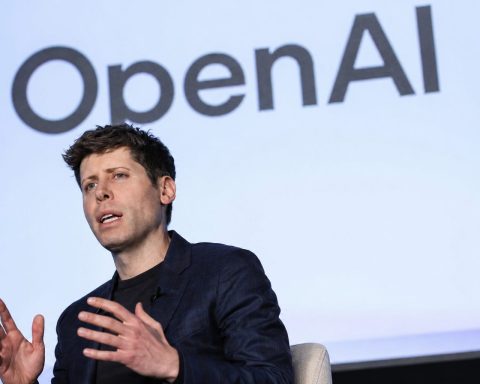
Competition looks different this time. According to Reuters, OpenAI and Anthropic are eyeing public listings, thrusting SpaceX’s deal into a wider race for AI-driven investment dollars. On the space front, Reuters notes that SpaceX’s reusable rockets have put pressure on Jeff Bezos’ Blue Origin to close the gap.
Things might not unfold as planned. According to SpaceX’s filing, Musk stands to keep 85.1% of total voting power, while Reuters Breakingviews flagged restrictions on shareholder sway—supervoting shares, arbitration clauses, and the controlled-company label all factor in. Investors are effectively wagering that Starlink’s expansion, leadership in launches, and AI-fueled revenue will overcome both governance headaches and execution risks.