
NEW YORK, May 29, 2026, 05:02 EDT
SpaceX is facing intensifying questions over whether Starlink’s growth can keep pace with the company’s ambitions, as Bloomberg says the firm is now eyeing an IPO at a minimum $1.8 trillion valuation—right when regulators are zeroing in on its Starship rocket. Bloomberg also reports SpaceX could raise up to $75 billion, potentially setting a new record for initial public offerings.
Timing is crucial here. Formal marketing for the IPO—those investor roadshows that happen before pricing—might kick off as early as June 4, with pricing possibly landing just a week later on June 11, according to Bloomberg. Fund managers are left with only a handful of days to size up a business touting everything from reusable rockets and satellite internet to artificial intelligence and orbital data centers.
With regular U.S. stock trading in New York still ahead, there was nothing to track on SpaceX shares—still a private company. According to its SEC filing, SpaceX has filed to list Class A shares on both Nasdaq and Nasdaq Texas under the ticker “SPCX.” SEC
Starlink stands out as the bright spot here. According to Reuters, SpaceX’s connectivity arm, driven by the satellite-internet business, was the sole unit in the black last quarter. Starlink delivered $1.19 billion in operating profit. Still, across the company, SpaceX booked a $1.94 billion operating loss on $4.69 billion in revenue, with its AI segment chalking up a $2.47 billion loss.
Roth Capital’s Rohit Kulkarni boiled the issue down during a CNBC spot, saying the “biggest question” is simply “how does Starlink scale.” Here, scaling is about whether SpaceX can actually grow Starlink—more users, more satellites, bigger network—while keeping costs in check and not letting them surpass revenue. YouTube
Some analysts argue last week’s Starship test moved the IPO story forward. Mark Vena, CEO at SmartTech Research, told Reuters the flight suggested the upgraded rocket is “moving in the right direction.” James Bruegger of Seraphim Space focused on full reusability, saying that’s where the “real value lies.” But Antoine Grenier of Analysys Mason called the test a “lukewarm success”—a description that could also capture the market’s sentiment. Reuters
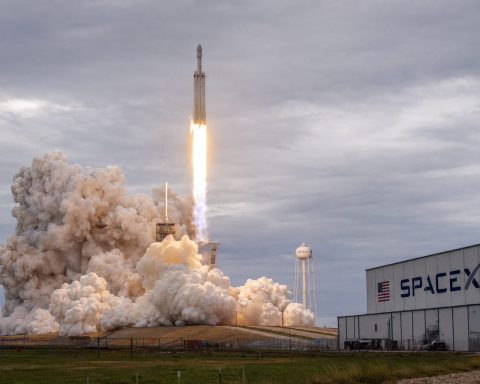
The Federal Aviation Administration struck a stricter tone. According to the agency, the May 22 Starship Flight 12 mission saw a mishap with the Super Heavy booster as it came back over the Gulf of America. No injuries to the public, no reports of public property damage, the FAA said. SpaceX is running the investigation, but FAA officials will supervise, and they’ll need to sign off on the final report and any fixes.
The bigger concern isn’t just a botched splashdown—it’s possible delays. SpaceX has cautioned that slipping schedules or overshooting costs for Starship could push back the rollout of both its next-gen Starlink satellites and AI infrastructure. Austin Moeller of Canaccord Genuity pointed out to Reuters that SpaceX still has to show it can reliably pull off launches, payload deployment, reaching orbit, and nailing vehicle touchdowns at scale.
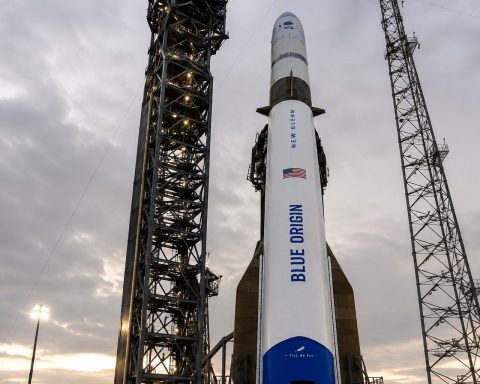
Thursday brought a mixed competitive picture. Blue Origin’s uncrewed New Glenn rocket blew up on the pad during a hot-fire test—an engine burn with the rocket tethered—delivering a blow to Jeff Bezos’ space venture as it tries to close the gap with SpaceX. According to Reuters, New Glenn had been set to launch 48 Amazon Leo satellites, the backbone of a broadband project pitched as Starlink’s challenger, but the cargo wasn’t aboard during the mishap.
NASA Administrator Jared Isaacman weighed in after the Blue Origin mishap, telling Reuters, “spaceflight is unforgiving.” Over on X, Musk reacted to footage of the explosion with a familiar line: “Rockets are hard.” That phrase has been around the space industry for years, but the moment fit—SpaceX’s valuation and setbacks faced by competitors both underline the same reality: heavy-lift rockets are still a long way from becoming simple, reliable infrastructure. Reuters
Control remains a sticking point for investors. According to Reuters, Musk is set to hold onto 85.1% of SpaceX’s total voting power, while the public would be limited to purchasing Class A shares with less influence. “There is somewhat of a halo effect around Musk,” Georgetown finance professor Reena Aggarwal told Reuters, adding that valuing a company like SpaceX isn’t straightforward, since it lacks a direct peer group. Reuters
Demand could still have legs here. Wedbush’s Dan Ives called it the biggest IPO the market’s seen, noting SpaceX is positioned right on the edge of two high-growth sectors. Dennis Dick over at Triple D Trading sounded less convinced, calling it “a little scary” to jump into something with a near $2 trillion price tag. Right now, though, the main issue for investors is whether Starlink’s cash flow is enough to justify that valuation, especially as Starship and AI keep siphoning off capital. Reuters