
COPENHAGEN, May 29, 2026, 17:04 CEST
- Akademikerpension, the Danish pension fund, added SpaceX to its exclusion list ahead of the rocket maker’s planned IPO.
- The fund pointed to valuation concerns and governance issues—specifically, Elon Musk is set to control over 80% of voting rights.
- Just days ahead of SpaceX’s expected roadshow—potentially leading to one of the biggest IPOs ever—the move lands.
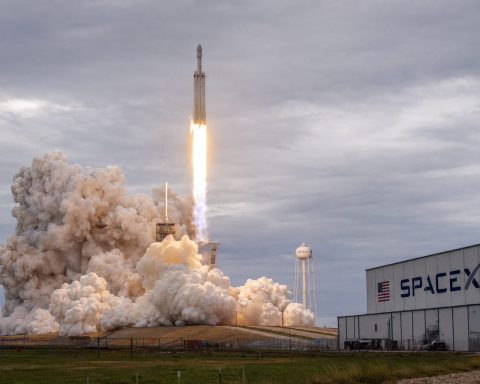
Akademikerpension, the Danish pension fund, said Friday it dropped SpaceX from its holdings before the company’s expected IPO, pointing to governance worries and what it described as overvaluation. The coming public debut is set to gauge appetite for one of the world’s most high-profile private firms.
The clock is ticking. Reuters reports that SpaceX could start pitching the deal to investors as early as June 4, with shares slated for sale by June 11 and a potential Nasdaq debut on June 12. That schedule doesn’t give much leeway for renewed questions about Elon Musk’s grip on the company, AI-related losses, or the valuation on offer.
Akademikerpension flagged that market signals suggest SpaceX could be valued at $1.8 trillion or more, though the fund maintained it can’t see supporting anything north of $1 trillion. “Investors are asked to accept an unprecedentedly low risk premium for a highly uncertain company,” the pension fund told Reuters. Reuters
The fund criticized SpaceX’s governance, noting that Musk is set to hold over 80% of voting rights while acting as CEO, CTO, and board chair. Akademikerpension argued in a statement, “The extreme concentration of power effectively prevents the board from exercising meaningful oversight and makes it impossible to remove Musk against his will.” SpaceX did not respond right away to a request for comment from Reuters. Reuters
SpaceX’s public filing lays bare both the upside and the pressure points. According to Reuters, Starlink—the satellite internet arm—delivered $1.19 billion in operating profit in the first quarter. Even so, the company ended up with a total operating loss of $1.94 billion on $4.69 billion in revenue. The AI division, for its part, dropped $2.47 billion against $818 million in sales.
The AI push came after SpaceX acquired Musk’s xAI back in February, with Reuters reporting that the deal accounted for a large chunk of the company’s first-quarter expenditures and red ink. According to the filing, SpaceX’s ambitions hinge in part on markets and tech that aren’t out there yet—think solar-powered, space-based data centers.
SpaceX remains on the radar for big investors. According to Reuters, mutual funds and passive index players have been squirreling away cash and adjusting allocations, looking ahead to blockbuster IPOs like SpaceX and OpenAI. John Flood, a managing director at Goldman Sachs, noted that “investors are increasingly focused on the impact of potential large IPOs in the pipeline.” Reuters
Index demand might play a role here. FTSE Russell said SpaceX qualifies for quick entry into top U.S. and global equity indexes based on fresh rules, pegging its investable market value around $70 billion. Index inclusion tends to trigger passive buying—though FTSE Russell noted future filings could alter that view.
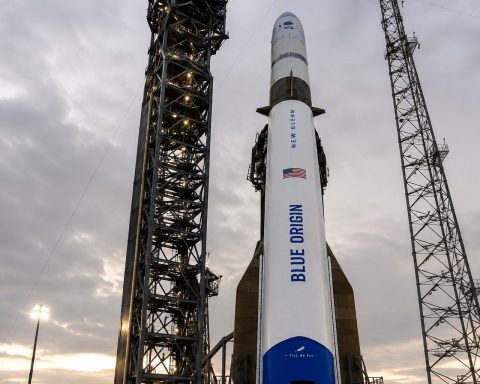
It’s an odd landscape. SpaceX stands out without many true public comparables in rockets or satellites, and investors are watching for IPO moves from AI players like OpenAI and Anthropic as well. Blue Origin—Jeff Bezos’ private space outfit—competes in launches, but SpaceX’s edge with reusable rockets and the Starlink network is front and center in its IPO case.
Some analysts see the deal as a wager on Musk himself. “Love him or hate him, Musk is definitely not boring,” said Aswath Damodaran, a finance professor at NYU’s Stern School of Business, in comments to Reuters. Damodaran pointed out that Musk’s knack for spinning unlikely stories into accepted wisdom has only boosted SpaceX’s allure. Reuters
Matt Kennedy, senior strategist at Renaissance Capital, sees SpaceX appealing to investors as more of a long-term play than a typical aerospace stock. “SpaceX will be pitching itself as a generational company,” Kennedy told Reuters, with a vision designed for those willing to hang on for “20 or 30+ years.” Reuters
A key risk on the horizon: what happens when shares hit the market post-IPO. SpaceX is rolling out a staggered lock-up arrangement—typically, insiders can’t sell for six months, but here, some shareholders could offload stock sooner if SpaceX and its shares show strong performance. Reuters reports that Musk and a handful of major holders are locked in for 366 days.
Ali Perry, an attorney at Mayer Brown focused on public launches, told Reuters the staged structure might help the market sidestep a massive one-day selloff. “It is probably better for the market that there will not be one big lock-up cliff,” Perry said. Still, she cautioned that spacing out the sales “doesn’t eliminate the impact,” only distributes it over time. Reuters
Bloomberg’s Deals newsletter was already spotlighting those stress points—banks on the deal, Musk’s grip, the numbers in the books—before SpaceX ever filed its S-1. Nine days out, those issues moved from speculation to center stage. Now, they’re baked into the pitch.