
GREENBELT, Maryland, June 1, 2026, 09:02 EDT
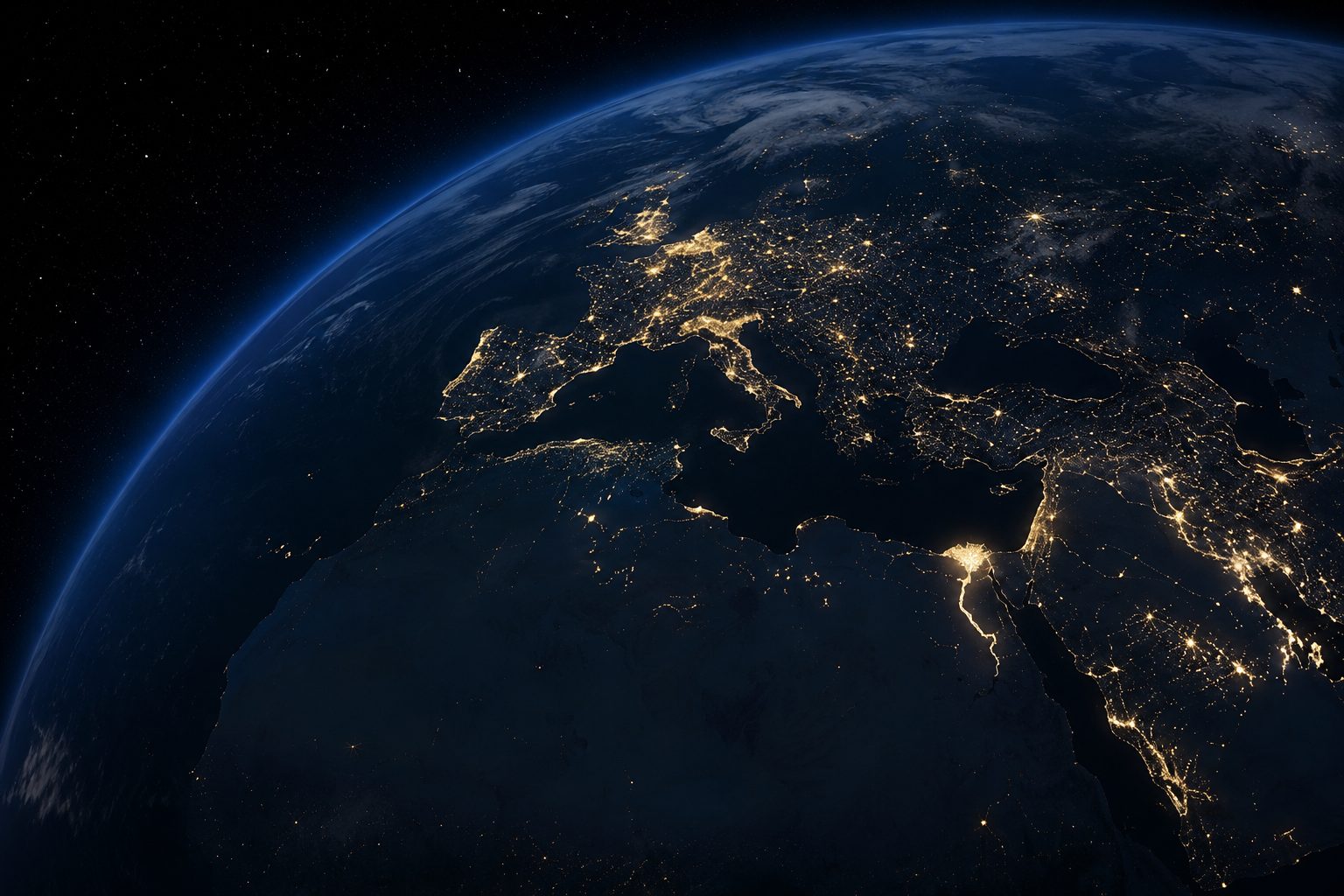
- NASA’s Black Marble maps reveal that artificial night light on Earth increased from 2014 to 2022, though the climb wasn’t exactly smooth.
- Night lights data packs a punch—they’re used to trace everything from access to electricity and war fallout to economic strains, gas flaring, and how governments handle light pollution.
- Asia and Africa lit up, but much of Europe—and some areas in the U.S.—turned dimmer.
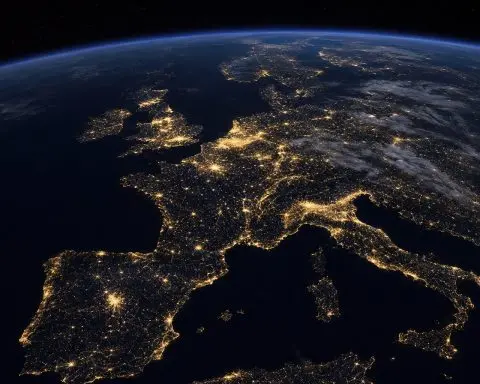
NASA’s newest Black Marble images indicate that Earth’s nights are lighting up more than before. But the story’s not that simple—big swathes are actually getting darker. Researchers publishing in Nature, working with NASA’s night-light dataset, calculated a net global increase of 16% in artificial nighttime brightness between 2014 and 2022. That figure comes after a gross brightening totaling 34% of the 2014 level, which was partially canceled out by dimming that amounted to 18%.
That finding takes on new urgency these days: satellite night lights aren’t just pretty pictures—they’re now almost a real-time read on human activity. NASA’s Black Marble products track everything from light pollution and illegal fishing to gas flaring, shifts in power grids, disasters, and even activity in war zones. Some of these products land within roughly three hours.
NASA’s Black Marble images reveal shifting nighttime patterns: urban sprawl and new power grids are lighting up some areas, while other parts of the globe dim thanks to energy conservation, struggling economies, or conflict, according to a new Space.com report. The story points to data from the VIIRS instruments flying on the Suomi-NPP, NOAA-20, and NOAA-21 satellites.
The Visible Infrared Imaging Radiometer Suite, or VIIRS, supplies the data—these satellite sensors pick up faint light ranging from green to near-infrared. NASA notes that its Black Marble tool strips away interference from moonlight, weather, snow, and even atmospheric effects, making it easier for researchers to pinpoint lights produced by people.
“Earth at night has so much to teach us,” said Miguel Román, deputy director for atmospheres and data systems at NASA’s Goddard Space Flight Center in Greenbelt, Maryland. NASA reported that the study team dug into 1.16 million satellite images, each snapped around 1:30 a.m. local time, collecting data every day across a nine-year stretch. NASA Science
Shifts aren’t happening in lockstep worldwide. According to NASA’s Earth Observatory, urban growth is driving big increases across China and northern India. Meanwhile, France’s brightness fell by 33%, the UK’s by 22%, and the Netherlands’ by 21%—all reflecting the impact of LEDs, stricter conservation rules, and other energy policies.
Europe stands out for policy impact. The Nature paper reports a 4% net drop in artificial-light radiance across the region, and the dimming isn’t random—country borders show up sharply, suggesting national lighting rules and energy mandates are driving the changes.
Zhe Zhu, a remote sensing professor at the University of Connecticut and senior study author, pointed out that the daily data capture jolts that would slip by in yearly or monthly averages. “We can view these dynamics as the heartbeat of society,” Zhu said. He noted that sometimes dimming signals adaptation, not necessarily decline. UConn Today
The study draws a line connecting conflict and economic stress, both visible from space. Reuters flagged sharp drops in night lights in Lebanon, Ukraine, Yemen, and Afghanistan—areas hit hard by war and damaged infrastructure. In Haiti and Venezuela, the losses tracked more with economic turmoil and shaky electricity supply.
The U.S. put its internal divide on display. NASA pointed to a surge in brightness across West Coast cities, linking the glow to rising populations. Over on the East Coast, a noticeable dimming took hold, which researchers traced back to the adoption of energy-saving LEDs and sweeping economic changes.
There’s also a clear energy-market angle here. NASA reported their images tracked gas flaring cycles in both the Permian Basin in Texas and North Dakota’s Bakken Formation—essentially, burning off surplus gas at oil wells, with carbon dioxide and soot going into the air. Deborah Gordon, a methane specialist at the Rocky Mountain Institute who wasn’t involved in the research, called public flaring data “huge for energy, and economic and environmental security.” NASA Science
Peer context matters here. VIIRS sensors riding aboard NASA-NOAA satellites deliver clearer, more frequent images than the older Defense Meteorological Satellite Program’s night-light data. According to NASA, those instruments are now on Suomi NPP, NOAA-20, and NOAA-21.
The maps, though, fall short of capturing every light visible to the human eye. According to the Nature paper, several factors interfere with night-light readings: atmospheric noise, varying viewing angles, and snow cover all play a role. Observations happen at about 1:30 a.m., and polar regions aren’t mapped at all due to issues like the polar day and widespread snow and ice.
The takeaway for astronomers, ecologists, and city officials isn’t exactly straightforward. Earth’s overall brightness has increased, but patches of darkness have crept back in—sometimes from upgraded lamps, policy changes, emergencies, war, or just crumbling infrastructure. Instead of a steady upward trend, the night map now gives a snapshot of where societies are using, losing, saving, or squandering electricity.