
PASADENA, California, June 1, 2026, 10:05 PDT
NASA’s Perseverance rover is about to notch a milestone, creeping up on the marathon mark on Mars. So far, the rover has rolled 26.09 miles—just shy of the 26.22-mile marathon distance. Mission manager Robert Hogg figures it’ll break through that threshold in roughly a month.
The achievement marks a shift: Perseverance has moved past simply exploring Jezero Crater’s ancient lakebed. The rover is now outside the crater rim, digging into older rock formations. NASA says these rocks might hold answers about Mars’ early days, predating even the formation of Jezero.
The timing isn’t great. Perseverance is still busy gathering samples that could contain signs of once-habitable environments on Mars, but after years facing budget stress, there’s still no firm path to get those tubes back to Earth. NASA continues to label Mars Sample Return as an upcoming effort to transport the rover’s chosen materials home for in-depth lab analysis.
Perseverance touched down on Feb. 18, 2021, with an initial timeline of one Martian year—roughly 687 Earth days. Now, five-plus Earth years after landing, the rover’s power supply could last “at least a decade,” Caltech’s Ken Farley, deputy project scientist, said. He called the rover “in good health,” though how long it keeps rolling depends on decisions from NASA. Reuters
The rover’s mission: hunt for evidence of ancient microbes, while drilling out samples of Martian rock and regolith—basically, bits of broken stone and dust—for a shot at bringing them back to Earth. NASA picked Jezero Crater, pointing to its history as a water-filled basin complete with an old river delta; it’s the sort of spot where clues to past life could linger in sediments along the former lakebed or shore.
Perseverance has moved into tougher, more ancient ground now. Katie Stack Morgan, project scientist on the rover at NASA’s Jet Propulsion Laboratory, described the investigation of these old rocks as “a whole new ballgame.” The team is hoping the rocks will reveal if Mars once had a magma ocean—and shed light on conditions that may have made the planet habitable. NASA
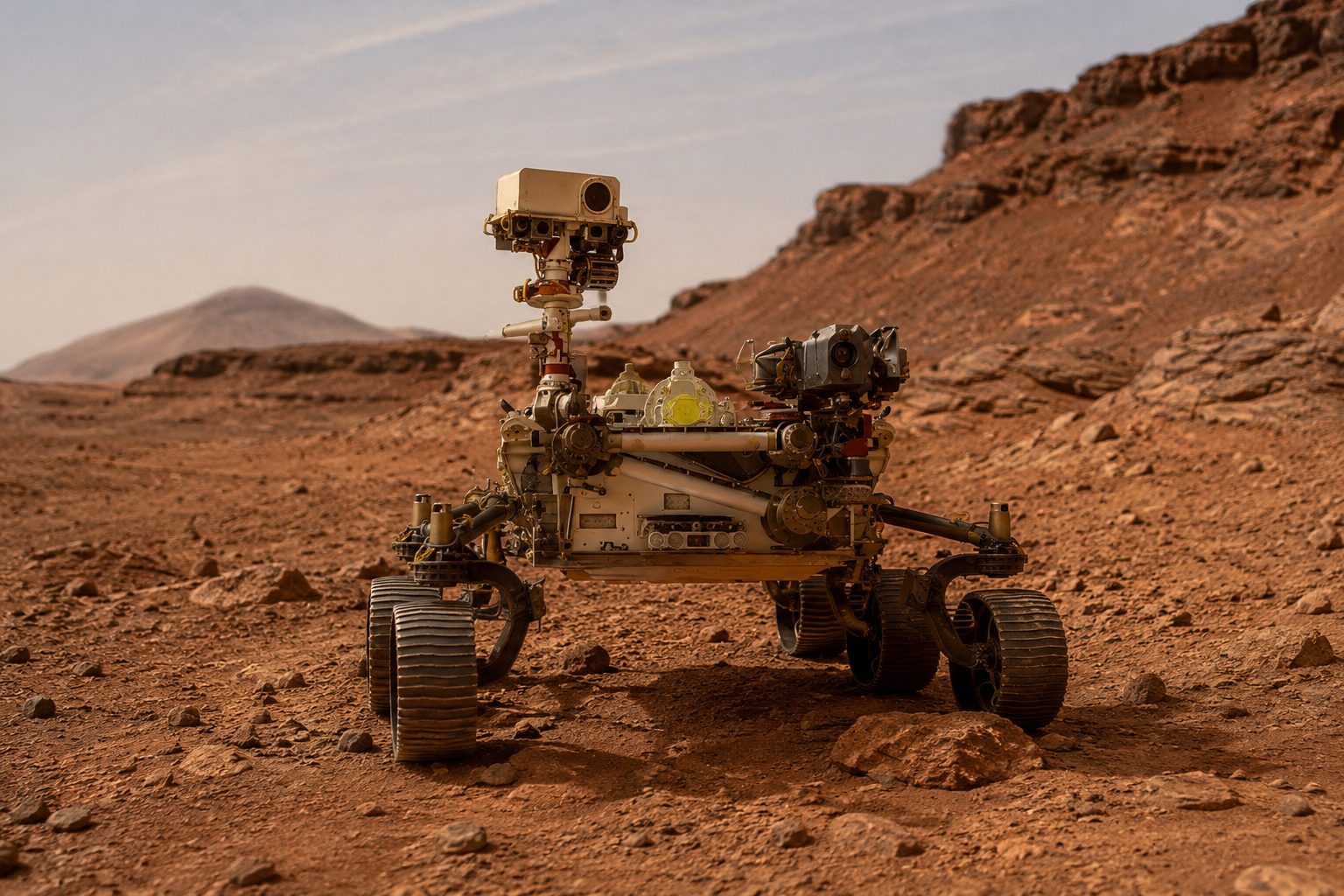
NASA’s most recent public image pick confirms the rover continued sending back Mastcam-Z photos into late May. Among the batch, one shot designated for the May 24-30 rover week was snapped on May 26, 2026, during Sol 1871—a Martian day.
The mission team reports the rover has abraded 62 rocks so far—grinding down surfaces for instruments to analyze untouched material—and gathered 27 rock cores in sample tubes, with 25 now sealed. Acting project manager Steve Lee at JPL says Perseverance is “in great shape” as they ramp up for more ambitious travel. NASA
NASA’s Opportunity rover still holds the distance record, logging 28.06 miles between 2004 and 2019. Reuters puts Curiosity at 22.93 miles so far at Gale Crater. Perseverance is closing in on those numbers, climbing up the U.S. Mars mileage list as it pursues its separate research goals.
The real uncertainty doesn’t lie in the immediate steps ahead. The crucial question is whether Mars’s most promising samples ever collected will actually make it back to Earth. In January, Nature noted that although Congress restored funding to many NASA space-science projects, it left out any allocation for the samples already on Mars. According to the Planetary Society, the fiscal 2026 bill shut down the Mars Sample Return program office and instead set aside $110 million for a Mars Future Missions budget line, possibly aimed at future tech.
Perseverance keeps rolling across the Martian surface. According to NASA, JPL continues to run the rover and its systems for the Science Mission Directorate. But the main wager hasn’t changed—those tiny sealed sample tubes, sitting out in the Martian cold, still waiting on a recovery mission that hasn’t yet come together.