

WASHINGTON, June 2, 2026, 19:10 (EDT)
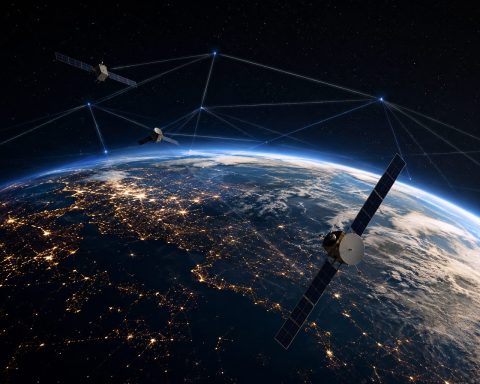
- LEO satellite fleets are expanding at a pace that outstrips what many legacy ground-data systems were designed for.
- Military demand and broadband users are both pushing for extra low-orbit capacity, and the pressure is mounting.
- Engineers refer to this as high “cardinality”—essentially, there are just too many unique spacecraft data streams for sluggish or inflexible databases to handle smoothly.
Low-Earth-orbit satellite companies are running into a serious ground-systems crunch as they ramp up from a handful of satellites to thousands. The surge in telemetry—machine data critical for tracking spacecraft health and performance—now threatens to overwhelm their ability to store, search, and respond to it on the fly.
In a May 20 piece, SpaceNews flagged the so-called “cardinality wall” as a sticking point: the real choke isn’t just the satellite link itself, but the crush of telemetry as satellite fleets scale up and start pushing richer streams of status data down from orbit. Every spacecraft, every sensor, subsystem, bit of software, each state—each creates its own unique stream, making for a tangle of data flows that quickly gets unwieldy. LinkedIn
This warning comes just as both governments and corporations are stepping up their reliance on LEO networks. On Tuesday, Reuters said the UK has started tapping into SpaceX’s Starshield—an offshoot of Starlink tailored for government use—for military operations, shifting part of its operational traffic onto the more secure system.
Defense demand is climbing in the U.S. as well. Space Systems Command revealed on May 29 that SpaceX has landed the first Space-Based Airborne Moving Target Indicator contract, a project designed to leverage satellites, secure links, and ground tech for tracking airborne targets from orbit. “We are beginning development and integration efforts immediately,” said Col. Ryan Frazier, acting Space Force portfolio acquisition executive for space-based sensing and targeting. Spaceforce
In databases, cardinality refers to the number of unique series that need tracking. For satellite systems, this adds up fast: logging a single battery value from one spacecraft is straightforward; start slicing that same metric by satellite ID, orbit, ground station pass, payload mode, and software version, and suddenly the series count multiplies. The InfluxData documentation warns that a high number of series tends to bog down reads and writes, pushing memory to its limits.
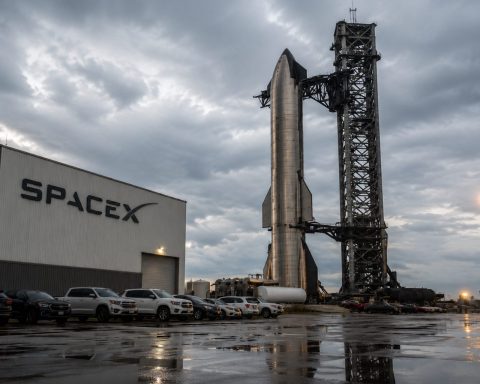
SpaceX still sets the pace. On June 1, astronomer Jonathan McDowell’s data via Space.com showed Starlink had 10,413 satellites up; 10,397 were operational. That puts Starlink at the center of the massive, real-time telemetry game.
Amazon is looking to narrow that distance with Amazon Leo, once known as Project Kuiper. On May 29, the company reported that United Launch Alliance added 29 more Leo satellites, lifting the count to 331. The eventual constellation: over 3,000 LEO satellites, all interconnected via optical links and ground gateways.
China isn’t staying idle. According to Xinhua, the country sent networking satellites for its Qianfan (Spacesail) constellation into preset orbits on June 1 using the Long March-12B rocket. The state-run agency added that this rocket handles roughly 20 tonnes to low-Earth orbit, designed for large-scale internet constellation missions.
The competition isn’t just noise—telemetry has moved out of the back room. Operators rely on it for everything from fault detection and orbit ops to collision-avoidance calls, payload checks, even customer service. But when databases or pipelines shed context for speed, engineers can get stuck with numbers that don’t explain why they shifted.
The SpaceNews exchange highlighted two possible paths: first, break apart telemetry pipelines so a single chokepoint doesn’t drag down the entire workflow. Second, bring in time-series-native tools that can actually manage rapid, timestamped data streams. Dima Anoshin, known for his work in data and AI, shared the article on LinkedIn—noting that effective anomaly detection and predictive modeling require context, “not just raw numbers.” LinkedIn
The data wall isn’t the lone bottleneck. A range of issues—launch delays, pad damage, spectrum constraints, orbital safety rules, or just slow customer uptake—can stall a constellation long before telemetry becomes the factor. Blue Origin’s trouble with New Glenn, flagged by Reuters on Tuesday, highlighted how launch infrastructure can still trip up Amazon Leo’s deployment, even if satellites and ground hardware are in place.
The shift is hard to miss. Starlink, Amazon Leo, and Qianfan aren’t just racing to put more satellites in orbit, or to win over coverage maps and defense contracts. There’s a new front: the question of whether their ground software can actually match the pace set by their fleets above.