
PASADENA, California, June 3, 2026, 03:01 PDT
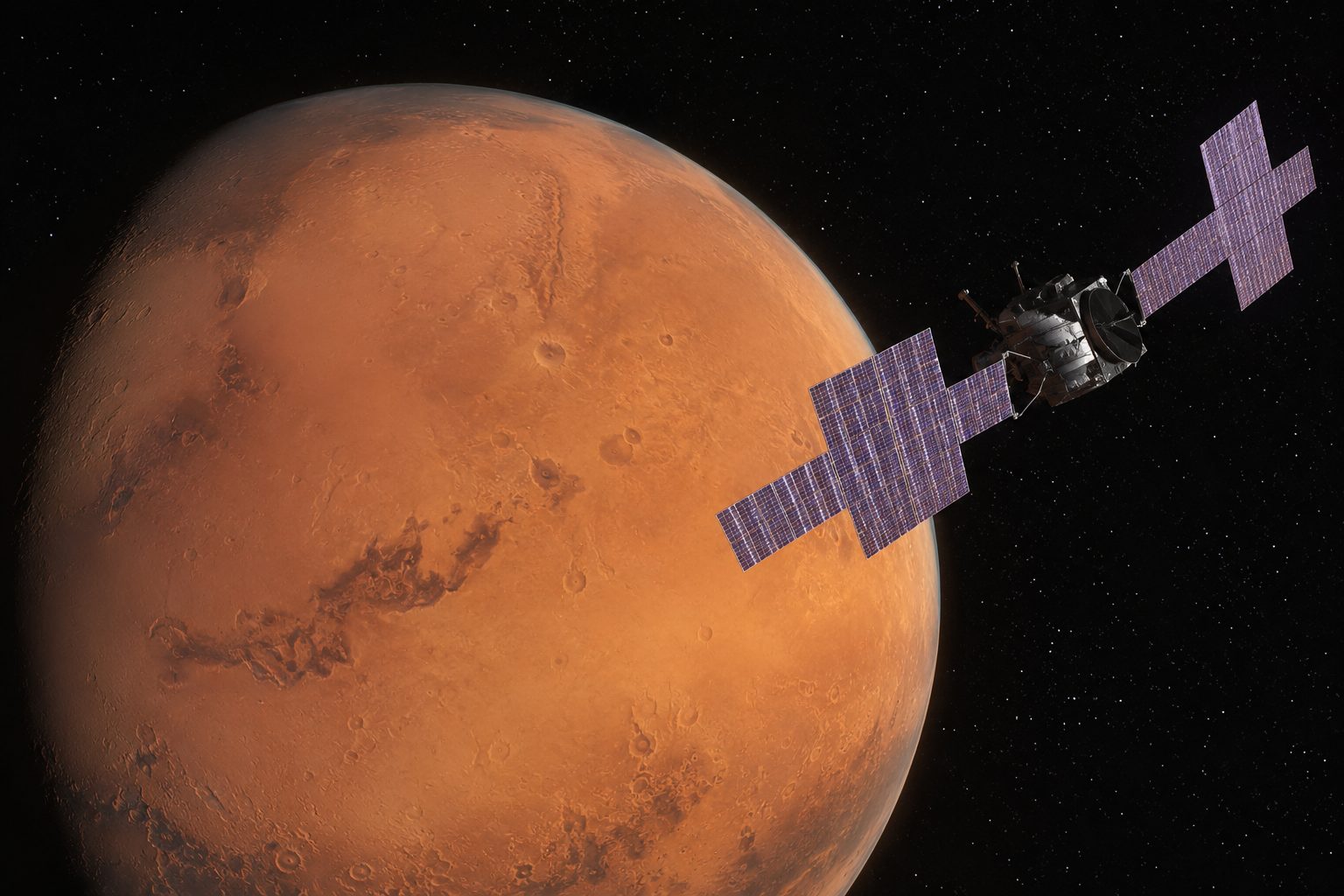
NASA’s Psyche probe has swung past Mars, picking up a 1,000 mile-per-hour velocity boost from the planet’s gravity and nudging its trajectory about 1 degree, according to the Jet Propulsion Laboratory. With the assist, the spacecraft is now barreling toward its target in the main asteroid belt—a metal-rich body scientists are eager to study.
The pass is significant—it’s the final big planetary slingshot for the mission before Psyche sets course for asteroid Psyche, which researchers think could be the exposed core of an early planet. Gravity assists take advantage of a planet’s gravity and its solar orbit to adjust a spacecraft’s speed and trajectory, all while conserving fuel.
Engineers got a dry run, too. As the spacecraft swung past Mars—familiar territory compared to the asteroid it’s aiming for in 2029—they powered up Psyche’s cameras, magnetometers, and the gamma-ray and neutron spectrometer, which analyzes chemical composition via radiation.
On May 15, the spacecraft zipped just 2,864 miles (4,609 kilometers) above Mars. The team then checked radio signals using NASA’s Deep Space Network—the agency’s worldwide antenna array for deep-space missions—and verified the craft stayed on course.
Don Han, who leads navigation for Psyche at JPL, said the team tracked the spacecraft’s Doppler shift live and confirmed the velocity increase. “We are now on course” for the planned arrival at asteroid Psyche in summer 2029, Han said in NASA’s statement. NASA
As Psyche transitioned from Mars’ shadow into sunlight, it captured thousands of new images of the Red Planet. For Jim Bell, who heads Psyche’s imaging team at Arizona State University, the trove brings “unique and important opportunities” to fine-tune camera calibration and trial image-processing software ahead of the asteroid approach. Gizmodo
The images showed Mars’ south polar cap, the Huygens crater, and wind streaks by impact craters in Syrtis Major. According to NASA, sunlight filtering through the planet’s dusty atmosphere made the bright crescent ahead of close approach stand out even more than anticipated.
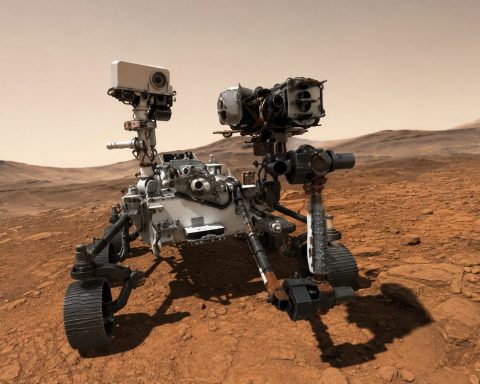
Other Mars missions joined in for the flyby. NASA noted that Perseverance, Mars Reconnaissance Orbiter, and ESA’s Mars Express all pitched in with supporting observations—these will be used to compare surface and atmospheric data while calibration is underway.
Psyche lifted off Oct. 13, 2023, powered by solar-electric thrusters running on xenon gas. That setup lets the spacecraft ramp up speed slowly, stretching out across its lengthy cruise. By swinging past Mars, Psyche was able to save xenon for what’s left of the 2.2 billion-mile trek.
The spacecraft is on track to reach asteroid Psyche in 2029, where it’s set for a roughly two-year mission circling the object. During that time, it’ll map the surface and gather data on gravity, magnetic field, and composition. Psyche sits in the asteroid belt between Mars and Jupiter, measuring about 173 miles across at its widest.
The heart of the mission’s scientific purpose hasn’t been settled yet. Researchers suspect Psyche holds a trove of nickel and iron, possibly even the exposed core of a primordial planet-like object. Still, its true appearance and the actual metal content remain a mystery until the spacecraft gets a close look.
Lindy Elkins-Tanton, principal investigator for the mission at the University of California, Berkeley, described the Mars flyby as a “critical gravitational slingshot.” With that maneuver complete, the spacecraft is once again headed into deep space—Mars fading in its rearview, the asteroid target still years out. Gizmodo