
PASADENA, California, June 2, 2026, 11:09 PDT
- NASA’s most recent update puts Perseverance’s mileage at roughly 26, with 27 rock core samples bagged so far. The rover has now started its Northern Rim Campaign.
- The rover is still a little shy of the 26.22-mile marathon milestone—Reuters had reported last month it was expected to cross that line within weeks.
- The bigger issue isn’t distance covered—it’s whether those samples ever make it back to Earth, where labs could run tests for ancient life.
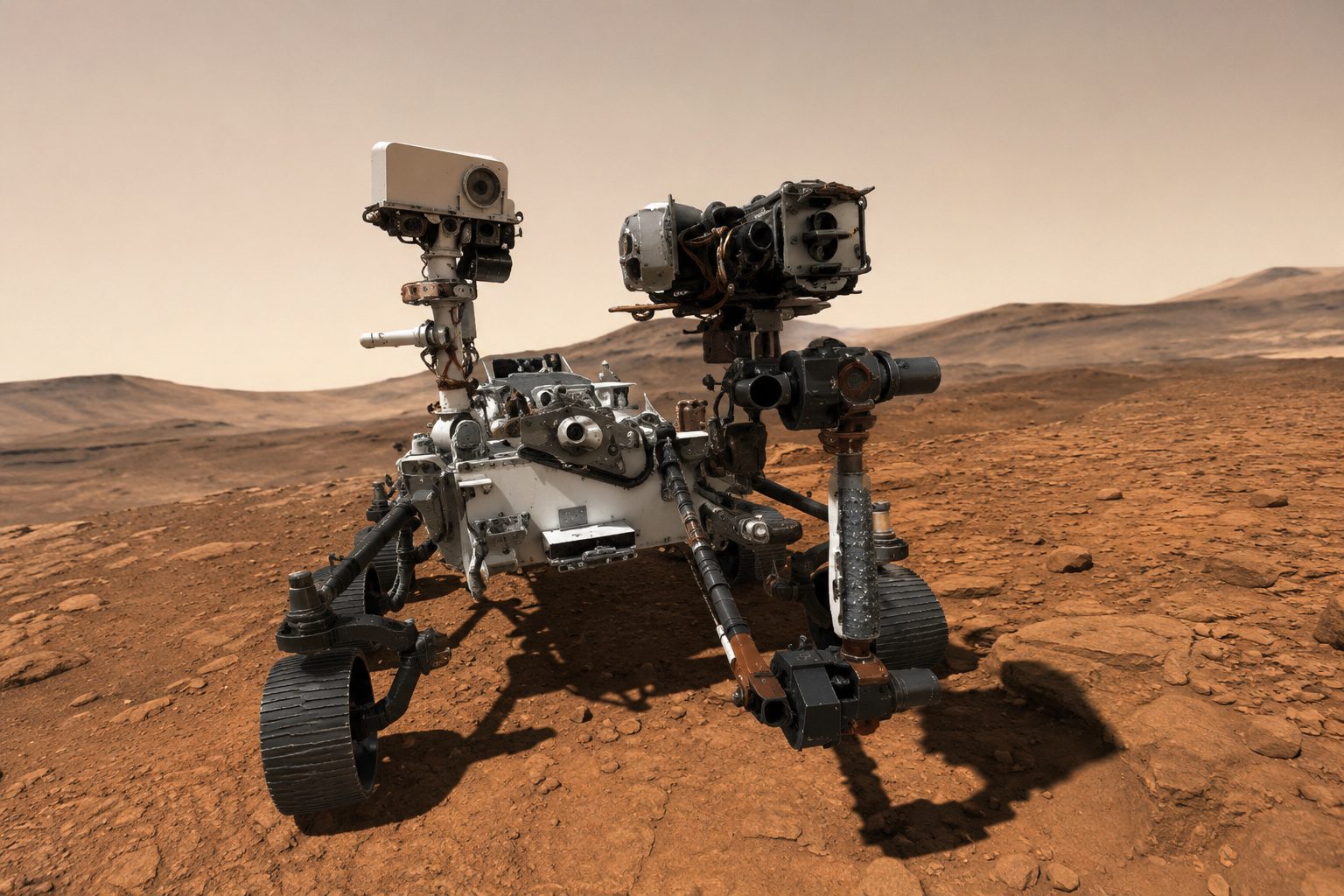
NASA’s Perseverance rover hasn’t quite logged a marathon’s distance on Mars yet, but it’s now picking its way through ancient terrain beyond Jezero Crater—territory scientists consider critical for clues to the planet’s beginnings, the agency said in a June 2 update.
That’s important at this stage—Perseverance has moved on from the crater floor and the delta system it spent its early years exploring. The rover is now traveling along Jezero’s northern rim and pushing past it, where, according to NASA, the rocks may predate the crater itself and might represent some of the oldest material anywhere in the solar system.
On May 20, Reuters noted that the six-wheeled rover had clocked 26.09 miles, or 41.99 km—just shy of the marathon mark of 26.22 miles. Perseverance mission manager Robert Hogg said at the time the rover was expected to cross that milestone within a month.
Touching down in Jezero Crater on Feb. 18, 2021, the rover has been hunting for signs that life might once have existed there, probing the ancient lakebed and river delta for clues. Alongside its astrobiology mission, it’s been drilling and collecting sealed cores of rock and regolith—broken rock and soil—that could one day make their way back to Earth.
Katie Stack Morgan, who oversees the Perseverance mission at NASA’s Jet Propulsion Laboratory, said the rover has put together evidence for what she called “a pretty stable, long-lived, and habitable lake” in Jezero. By habitable, she clarified, NASA means a setting that might have supported life—though that’s not the same as finding proof any existed. NASA
Most of the scientific buzz sticks to rocks like “Cheyava Falls,” where Perseverance spotted the so-called “leopard spots.” NASA hasn’t ruled out that these could be biosignatures — hints of ancient life — though there could be other, non-living causes. As Stack Morgan put it, “the potential is doing a lot of work here.” NASA
On Mars, Perseverance isn’t alone; NASA’s Curiosity rover has been exploring Gale Crater since its landing back in 2012. Opportunity clocked out in 2019, but that rover’s still at the top for distance, with 28.06 miles traveled. And then there’s Ingenuity, Perseverance’s helicopter companion—its mission wrapped after 72 flights.
Ingenuity forced a rethink in Mars exploration. Håvard Grip, an engineer on the helicopter project and the first chief pilot, put it bluntly: planning a Mars mission now means considering, “what role could the helicopter play.” NASA is already weighing new drones to survey the landscape and pinpoint water ice. NASA
The rover might end up leaving its strongest evidence sealed inside sample tubes. NASA bills Mars Sample Return as a future mission to deliver Perseverance’s samples back to Earth—a first. But unless that happens, Earth-based labs won’t be able to carry out the advanced analysis needed to distinguish between signs of life and strange chemistry.
Perseverance is still rolling. NASA’s most recent update puts the rover at 62 rocks abraded to check what’s inside, with 27 rock cores stashed so far. After wrapping up in the rough terrain—dubbed the “Wild West” by the team—it’s now steering southeast, aiming for an area known as Singing Canyon. NASA