

WASHINGTON, May 28, 2026, 17:02 EDT
Ground infrastructure, not orbital congestion, could be the next big choke point for low-Earth-orbit satellite operators. Ian Clark, writing in SpaceNews, described the challenge as hitting a “cardinality wall”—where thousands of satellites are churning out ever more sophisticated telemetry and status information, overwhelming legacy ground systems that can’t keep pace. Copernical
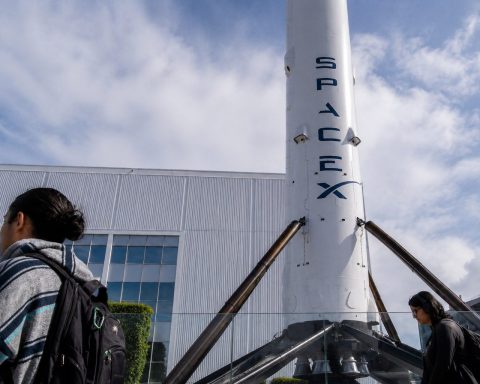
The warning coincided with the U.S. Space Force stepping up activity in proliferated low Earth orbit, or pLEO—meaning more satellites flying closer to the planet to cut latency. On May 26, Space Systems Command confirmed it handed SpaceX a $2.29 billion fixed-price contract for the Space Data Network Backbone. The project calls for an optically linked satellite mesh, with a working prototype expected by the end of 2027.
Constellation scale isn’t just a slide in a pitch deck anymore. Broadband, imaging, and defense operators are actually ramping up fleets—more spacecraft in orbit, more sensors, more software-defined payloads. Each one’s firing off its own data feeds: power, temperature, attitude, orbit, payload state, faults, you name it.
Cardinality, to use the database term, refers to how many unique data series or tag combos exist. Put another way: each time you split things up by satellite, subsystem, orbit segment, software version, or mission phase, you tack on another label—and that sends the number of data series soaring, even if the satellite fleet itself isn’t expanding as quickly.
Space Force brass put it bluntly in military language. “The SDN Backbone leverages the best of commercial innovation,” Col. Ryan Frazier, who’s serving as acting acquisition exec for space-based sensing and targeting, said in the command’s statement. For Lt. Col. Fry, managing the SDN Backbone program, there’s no tradeoff here: the service isn’t “trading speed for scale” and is “demanding both.” Space Force SSC
Commercial operators are feeling the weight of data already. InfluxData reports that Loft Orbital—known for running customer payloads on low-Earth-orbit microsats—logs upwards of 500 million measurements daily. The company sometimes gets hit with surges: over 10 million measurements can arrive within a 10-minute window, demanding almost instant processing.
Rivals aren’t sitting still. Amazon reported that Amazon Leo—previously known as Project Kuiper—has now sent up over 300 satellites across 11 missions, with more than 100 future launches already in the pipeline. Eutelsat, for its part, counts upwards of 600 satellites in its OneWeb LEO fleet, organized into 12 orbital planes at an altitude of 1,200 kilometers.
Starlink, the SpaceX satellite arm, still sets the pace. Reuters, citing industry sources in a separate report out of Italy, put Starlink’s live low-Earth orbit satellite count near 7,000—well ahead of any rival. By comparison, Canada’s Telesat is just gearing up, targeting a launch of 150 to 200 LEO satellites this year, with both military and commercial missions on its agenda.
Not all operators will run into the same obstacles. Some might slash data rates, trim metadata, reduce stored history, or shift extra triage work to spacecraft and edge hardware. Cutting back shaves costs, yet it also means engineers could be left with less evidence when something breaks.
Loft Orbital’s own documents lay out the challenge. In a company slide deck, the team described long-term trending, limit checks, and alerting as essential for spacecraft operations. Their earlier system, built with PostgreSQL and lacking time-series optimization, hit write bottlenecks and couldn’t scale.
The Space Force deal injects a defense angle into the story. According to Reuters, the Space Data Network is designed to link military sensors and weapons systems worldwide, pushing missile-warning data to interceptors almost instantly; the Space Force said this backbone will operate in tandem with the Space Development Agency’s Transport Layer.
The main takeaway here isn’t really about a single vendor—it’s about how the center of satellite risk is moving. More satellites in orbit? That’s just the starting line. Trying to monitor their nonstop data streams, second by second, could prove the trickier challenge.