

WASHINGTON, May 21, 2026, 13:17 EDT
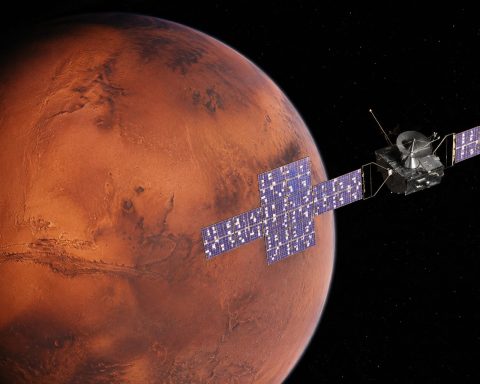
Low Earth orbit satellite operators are bumping up against a subtler bottleneck as their fleets scale up: ground systems and databases are straining under the task of processing streams of telemetry from thousands of satellites zipping overhead. SpaceNews, in a piece published this week, called it a “cardinality wall”—a traffic jam of data caused by the sheer scale and complexity of signals pouring in from today’s LEO constellations. LinkedIn
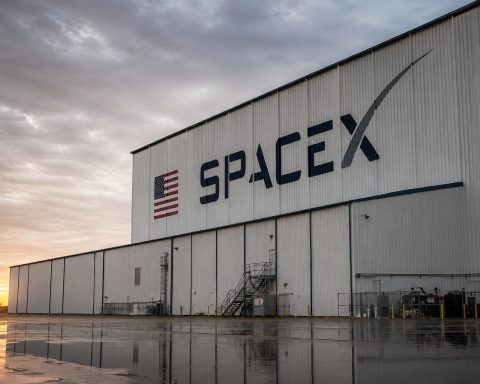
LEO has shifted far beyond its small-fleet roots. On May 19, SpaceX boosted its Starlink network with 24 more satellites out of California, bringing the total to nearly 10,500 operational units, per Space.com. Amazon Leo, meanwhile, reported over 300 satellites already in orbit and said it’s locked in more than 100 launches for its broadband constellation.
Cardinality boils down to how many distinct data streams the system has to follow. With a satellite fleet, each spacecraft, sensor, subsystem—even every ground gateway, modem, beam, and link—can spin off its own stream. Push that at real-time speed, and databases designed for log files or limited missions can get swamped fast.
The scale is massive for Eutelsat OneWeb. InfluxData puts it at over 50,000 telemetry values coming off each satellite. Total that up, and the constellation is handling north of 1 million data points every second, managing upwards of 15 million distinct time series. “Mass quantity of data,” as Dan Kroboth, Eutelsat OneWeb’s vice president of LEO satellite operations, put it. He says the usual log-centric platforms just don’t cut it for spacecraft — they’re dealing with time series, not logs. InfluxData
The battle now extends past satellites and ground hardware, right into the daily nuts and bolts of operations. Back in January, Eutelsat announced it had placed an order for 340 more OneWeb LEO satellites with Airbus—those come in addition to the 100 ordered late 2024. The move is aimed at keeping service running smoothly and rolling out onboard processing upgrades. Eutelsat describes OneWeb as one of just two LEO networks operating at full capacity, and says it’s the only one in Europe.
Pressure is mounting across national security efforts. On May 19, the Space Development Agency tapped Gurpartap “GP” Sandhoo to serve as director, keeping him in charge of Tranche 1 and 2 for the Proliferated Warfighter Space Architecture—a sprawling LEO satellite network designed for tactical comms and missile-warning intel. The decision, according to Thomas Ainsworth, now performing assistant secretary duties for Air Force space acquisition and integration, comes down to “aligning authorities with accountability.” SDA
Mission software companies want to keep scaling from getting out of hand. Quindar claims its platform lets operators see everything in one place—spacecraft, ground systems—without ripping out what’s already there. Portal Space Systems, which announced a partnership with Quindar this week, pointed to the need for quicker planning and execution as spacecraft get more maneuverable.
There’s also the option to handle more data processing up in orbit, not on the ground. Pixxel, for one, plans to equip its Pathfinder satellite—which could launch as soon as the fourth quarter of 2026—with datacenter-grade GPUs, letting it analyze hyperspectral images directly in space rather than sending back massive amounts of raw data. CEO Awais Ahmed told reporters these orbital data centers may sidestep some of the bottlenecks common to ground-based facilities by operating closer to the data source.
Still, scaling up is far from guaranteed. FAA Administrator Bryan Bedford pointed out that SpaceX is eyeing 10,000 launches a year within five years, but regulators aren’t ready to sign off just yet. “We need to see a lot more reliability,” Bedford told reporters. He also flagged the risk: launch restrictions have the potential to disrupt passenger air traffic. Reuters
New capital and fresh systems keep flooding in. “The LEO market has turned into a legitimate race,” Quilty Space research director Caleb Henry told Via Satellite, pointing to Amazon Leo, Eutelsat OneWeb, and other challengers pushing against Starlink’s headstart. Yet, mega-constellations are still far from capturing even 10% of the potential consumer and enterprise base, according to satcom adviser Carlos Placido—supply isn’t close to matching demand. Via Satellite
Operators face a straightforward but crucial challenge right now: keeping full-fidelity data searchable quickly enough for both humans and automated systems to respond before a glitch escalates into a full outage. As LEO moves forward, satellites aren’t the only scarce resource—timely insight is just as limited.