
Pasadena, California, May 21, 2026, 14:03 PDT
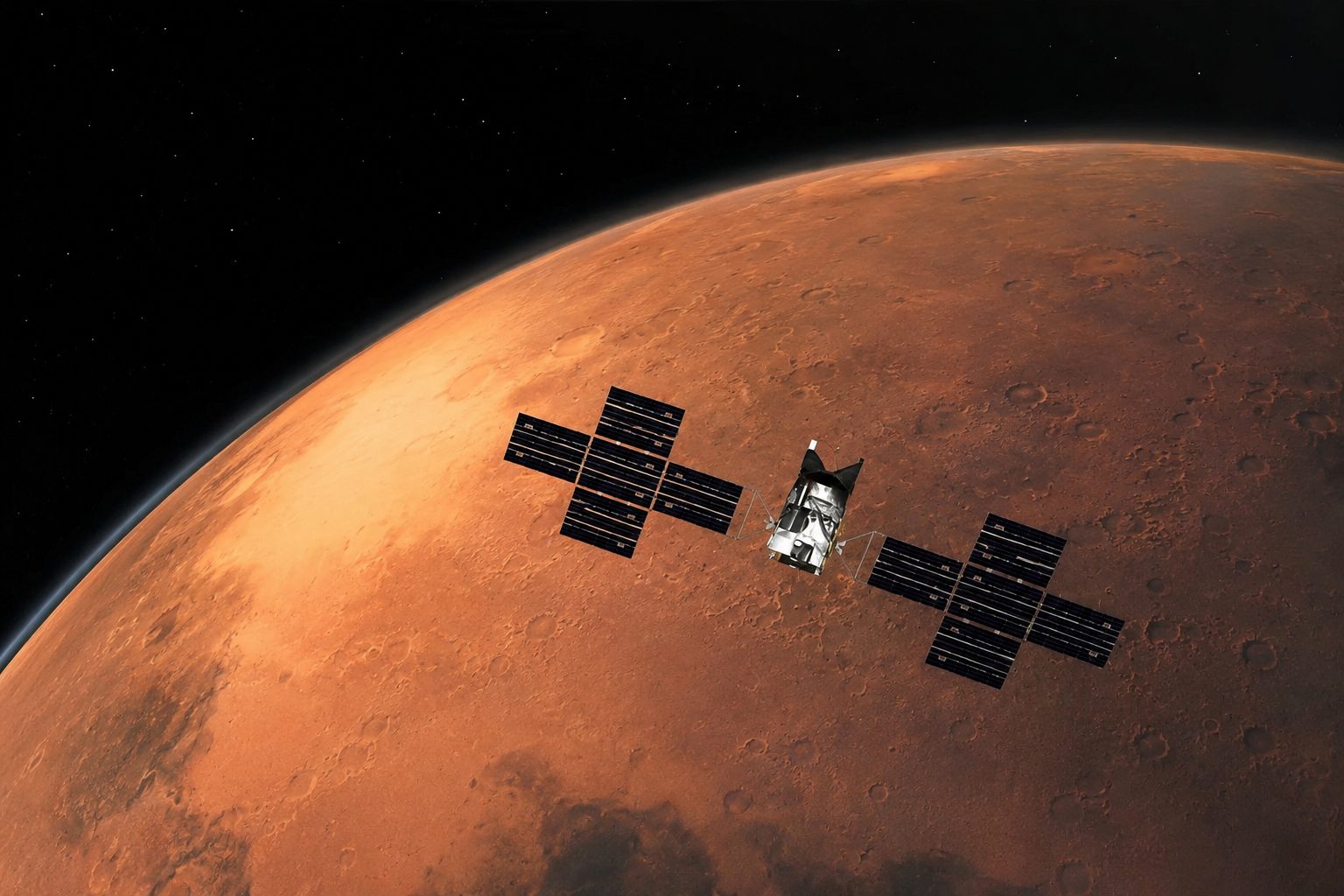
NASA’s Psyche probe snapped fresh images of Mars after swinging past the planet for a gravity assist, a move that mission leads say charts a direct path to the metal asteroid target for 2029 arrival. In one image released, Mars appears as a slim crescent—caught by the spacecraft’s camera on May 15, right before the planet slid into full view.
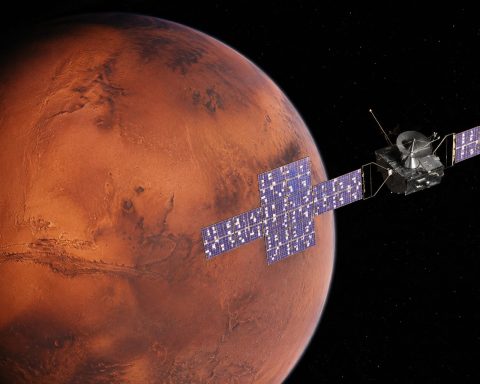
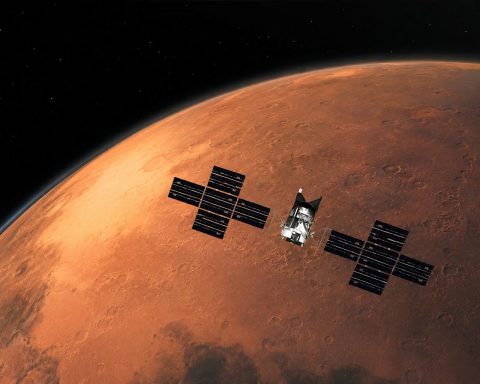
The images now carry added weight—they’re not just snapshots. According to NASA, the May 15 flyby handed Psyche a speed boost of around 1,000 miles per hour and nudged its orbital plane by about 1 degree, all without dipping into its own propellant supply. That’s what a gravity assist does: tapping a planet’s gravitational pull to tweak a spacecraft’s direction and velocity, crucial for conserving fuel on long hauls across the solar system.
Engineers got a chance to run through their asteroid encounter procedures as Psyche swept past Mars. NASA switched on the probe’s cameras, magnetometers, and the gamma-ray and neutron spectrometer for the pass, using Mars as a test case to see how everything performed—crucial practice before Psyche gets its first look at an unexplored target.
Psyche swung past Mars at a distance of just 2,864 miles—4,609 kilometers—NASA’s Jet Propulsion Laboratory reported. According to Don Han, who heads navigation for the mission at JPL, tracking radio signals via NASA’s Deep Space Network showed the spacecraft is “on course” to reach its asteroid target. NASA
Psyche’s multispectral imager snapped the crescent at about 5:03 a.m. PDT on May 15, capturing red, green, and blue channels for a natural color view. NASA told Phys.org the crescent looked unusually bright, with its arc extending farther than anticipated, a result of sunlight scattering through Mars’ dusty skies.
Additional photos captured Mars nearly in full view following the closest approach, stretching from its south polar cap up to the Valles Marineris canyon. According to NASA, Psyche will soon switch back to solar-electric propulsion—solar panel-driven engines—as it heads off toward the main asteroid belt located between Mars and Jupiter.
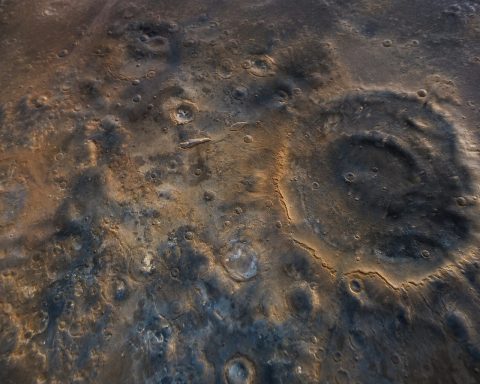
The enhanced-color shot zeroes in on Huygens, a sprawling double-ring crater roughly 290 miles (470 kilometers) wide, surrounded by the battered landscape of the southern highlands. NASA reported that the image came in at 1:18 p.m. PDT on May 15, just after the spacecraft’s closest pass, and each pixel covers about 2,200 feet.
Jim Bell, who heads imaging for Psyche at Arizona State University, called the Mars data “unique and important opportunities” to calibrate the spacecraft’s cameras and try out some early image-processing tools. As Mars gets farther away, Bell said the team plans to keep snapping calibration shots through the end of the month. NASA
The target: asteroid Psyche, sitting out in the main belt. Scientists suspect it could be a fragment of a metal-heavy planetesimal core—basically, what’s left from a planet that never finished forming. NASA is aiming for an August 2029 arrival, with the probe slated to orbit the asteroid, snap images, map its surface, and analyze what it’s made of during the main mission.
The mission is part of NASA’s larger asteroid push, joining the likes of OSIRIS-REx—recently renamed OSIRIS-APEX after dropping off its Bennu sample in 2023 and now aiming for Apophis—and Lucy, which is on track to study several main-belt and Jupiter Trojan asteroids. Psyche stands out: its destination could be much richer in metal than your ordinary rocky or icy asteroid.
The asteroid remains the big unknown. According to NASA’s mission overview, existing data put Psyche’s metal content somewhere between 30% and 60% by volume. Still, scientists haven’t had a close look yet, and the true appearance of Psyche is anyone’s guess. If the team finds it’s not a naked core after all, they’ll pivot to examining a rare, metal-heavy object—though what that means for theories of planet formation could shift.
The Mars detour pulled its weight. Lindy Elkins-Tanton—who leads the Psyche mission—described it as a “critical gravitational slingshot.” NASA’s raw image feed is still filling up with photos taken before, during, and after the flyby. NASA