
San Francisco, May 25, 2026, 10:05 (PDT)
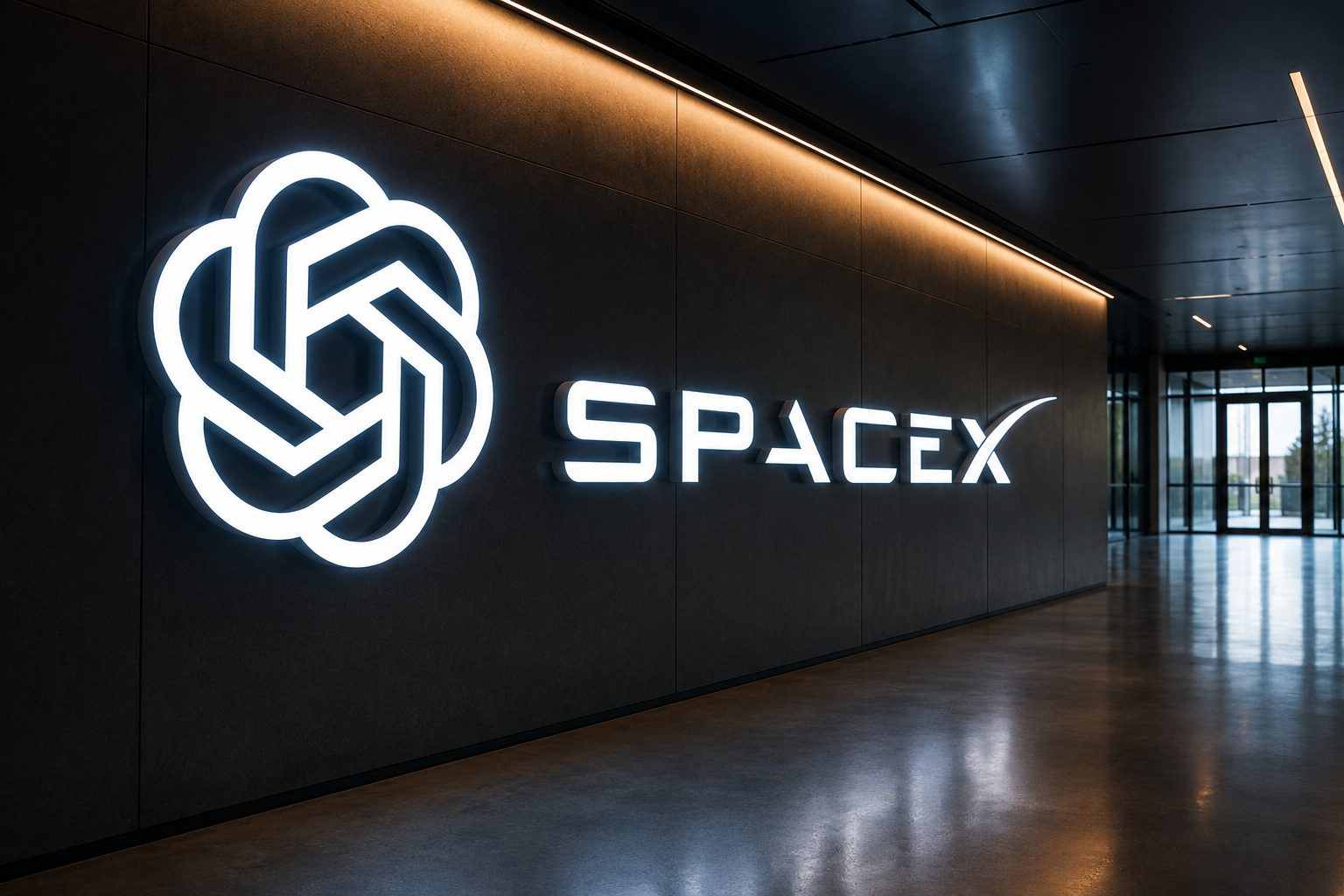
OpenAI is getting ready to confidentially file for a U.S. IPO, moving the ChatGPT developer closer to the public market even as Elon Musk’s SpaceX tries to lure investors for what might become the biggest IPO on record. According to Reuters, OpenAI could go public as early as September, with Goldman Sachs and Morgan Stanley helping draft a prospectus.
Timing’s in focus here: U.S. equity markets close Monday for Memorial Day, so investors will process the OpenAI and SpaceX developments prior to trading restarting. Both the NYSE and Nasdaq mark May 25, 2026, as a no-trade day.
Filing confidentially doesn’t put OpenAI on the public market yet. It’s just a private draft sent over to the Securities and Exchange Commission for a first look, well ahead of any investor glimpse of the company’s detailed numbers. By SEC rules, IPO registration documents have to go public at least 15 days ahead of the roadshow—the sales pitch phase before shares actually start trading.
SpaceX is stepping up its push toward a public debut. The rocket and satellite firm has filed paperwork for a U.S. IPO, Reuters said last week, and it’s eyeing a June 4 roadshow with shares potentially hitting the market as soon as June 11. Should SpaceX pull in more than $25.6 billion, it would eclipse Saudi Aramco’s 2019 offering as the biggest IPO ever.
OpenAI is moving ahead after shaking up its legal and capital-market footing. The firm’s most recent valuation landed at $852 billion, and it’s been weighing a deal that could push that figure to $1 trillion. Early talks have centered on a possible $60 billion-plus raise, according to Reuters.
OpenAI hasn’t committed to a specific timeline. “We regularly evaluate a range of strategic options. Our focus remains on execution,” the company told The Straits Times. According to that report, the timing for any confidential filing is still unclear. The Straits Times
On May 18, a U.S. jury in Oakland, California, handed down a ruling against Musk in his lawsuit that accused OpenAI of abandoning its nonprofit roots, clearing the biggest hurdle in the short term. Dan Ives at Wedbush described the outcome as a “huge win for Altman and OpenAI.” Musk, for his part, said he would appeal. Reuters
Kat Liu, vice president at IPOX, described the resolution as having “removed a major obstacle” to an OpenAI IPO, speaking with Reuters. She added that if both companies filed at once, portfolio managers would have no choice but to stack OpenAI directly against SpaceX. After that, neither firm really gets to shape the narrative—public investors will weigh growth, losses, and governance on their own terms. Reuters
That’s going to be a tough comparison. SpaceX posted an operating loss of $1.94 billion in the first quarter on $4.69 billion in revenue, with its AI unit alone losing $2.47 billion. Musk, per the filing, would keep 85.1% of the combined voting power. “There is a ‘halo effect’ around Musk but no peer group for valuing a company like SpaceX,” said Georgetown finance professor Reena Aggarwal. Reuters
OpenAI has its own challenge here: can it convince public investors to back a business burning through cash on semiconductors, infrastructure, and top-tier engineering, as competitors take shots at both pricing and product speed? Reuters noted OpenAI has already altered its product roadmap twice in just the past few months to respond to pressure from Google and Anthropic. Earlier this year, ChatGPT counted over 900 million weekly active users and topped 50 million paid consumer subscribers.
OpenAI has made moves to broaden access ahead of any IPO. Chief Financial Officer Sarah Friar told CNBC the company’s IPO plans include setting aside a slice for regular investors, with “really strong demand” already coming from retail buyers in the latest fundraising. For a company the scale of OpenAI, Friar said, it’s simply “good hygiene” to operate like a public firm. Reuters
Still, the risks are right in front of investors. Confidential filings can leak out, get delayed, or even shrink. Until the public S-1 drops, OpenAI’s true cash burn stays mostly out of sight. Fortune pointed out the filing could finally show just how much OpenAI pours into model training, cloud spending, data centers, and talent—and whether revenue is catching up fast enough.