
MERRITT ISLAND, Florida, May 25, 2026, 15:03 EDT
- Bezos said he couldn’t assess SpaceX’s valuation without seeing the actual numbers, though he did describe space as a “gigantic industry.”
- SpaceX is eyeing a June Nasdaq debut, targeting a valuation in the neighborhood of $1.75 trillion and looking to raise close to $75 billion.
- Money has started flowing into space funds after the deal, turning up the heat on Blue Origin, Rocket Lab, and other space players.
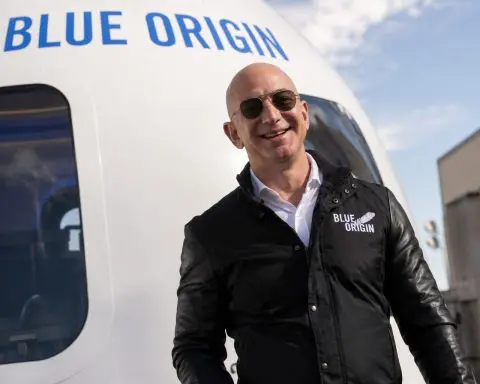
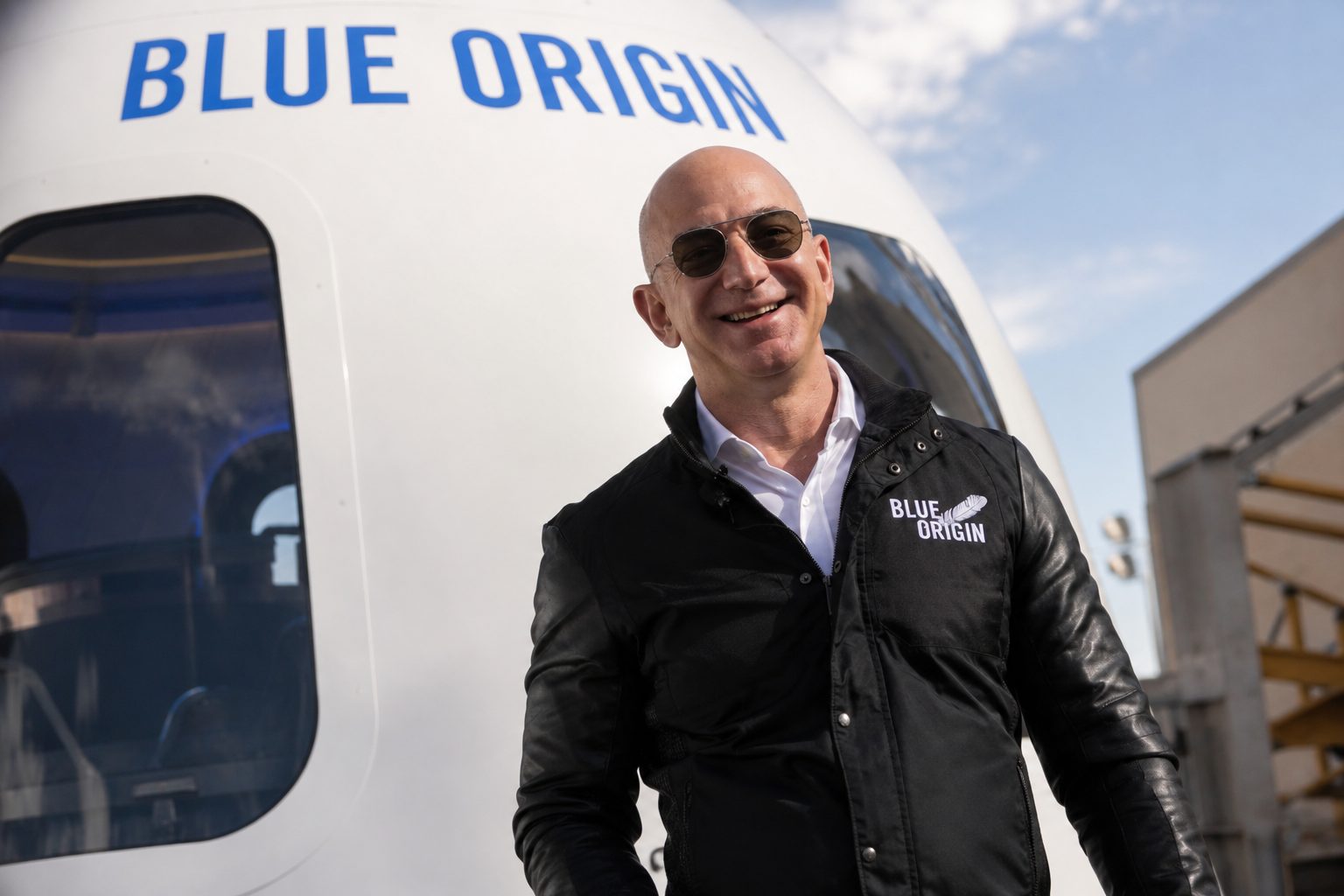
Jeff Bezos offered SpaceX a measured nod on its forthcoming listing, telling CNBC he’s unsure if Elon Musk’s rocket firm is really worth $1.75 trillion to $2 trillion, though he noted the sector itself is expanding fast. Catching up at Blue Origin’s Merritt Island rocket plant, Bezos pointed out the eventual price tag will hinge on SpaceX’s books and, in his words, “a bet on the future”—with space poised to become “a gigantic industry.” He also mentioned that after funding Blue Origin mainly through his Amazon shares, he’s now weighing the idea of bringing in outside investors. Versant Press Room
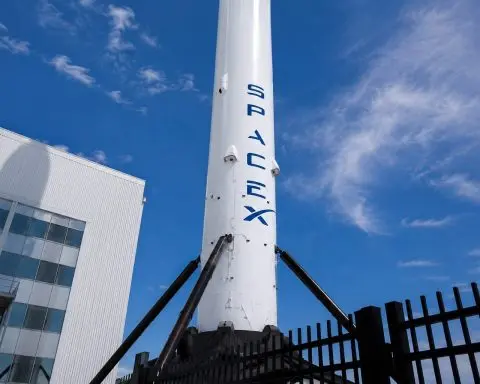
That shift is key, as SpaceX heads for a public-market debut after years as a coveted private holding. Reuters says the company is eyeing a listing date as soon as June 12, with its roadshow penciled in for June 4 and shares possibly going on sale as early as June 11. The IPO—the company’s first public share sale—would open SpaceX up to a new crowd of investors.
Even in steadier markets, this deal would stand out. SpaceX is eyeing a raise of around $75 billion, putting its valuation close to $1.75 trillion—a level that, according to Reuters, would set a new record for stock-market debuts. The lead underwriters are expected to be Goldman Sachs and Morgan Stanley, with Bank of America, Citigroup, and JPMorgan joining the roster of banks tied to the offering.
It’s more than just rockets on the table for investors. SpaceX pitches a broader vision—think reusable launch vehicles, Starlink’s global satellite internet, contracts with the government, and even potential off-planet data centers. In other words, processing hefty AI workloads from orbit or the lunar surface, not Earth.
There’s now official documentation to back up the story. According to SpaceX’s filing, Musk holds 85.1% of the total voting power, with his compensation package linked partly to ambitious goals—think a permanent human settlement on Mars, or space-based data centers. “There is somewhat of a halo effect around Musk,” Reena Aggarwal, finance professor at Georgetown University, told Reuters. She added that putting a value on SpaceX isn’t straightforward: “there is no peer group for comparison.” Reuters
On Friday, SpaceX logged another milestone. The upgraded Starship launched from Starbase, Texas, on an uncrewed test run—mostly a win for the company. It deployed mock Starlink satellites and made it to splashdown in the Indian Ocean. But not everything went as planned: one engine gave out, and the Super Heavy booster failed to execute its boost-back burn. Kathleen Curlee, research analyst at Georgetown’s Center for Security and Emerging Technology, described the flight as “another meaningful step forward,” saying it should provide SpaceX with valuable operating and engineering insights. Reuters
Blue Origin has picked up the pace, although it’s still trailing the competition. On Friday, Florida Governor Ron DeSantis unveiled plans for a $600 million expansion at the company’s Rocket Park site in Cape Canaveral. The project—an 830,000-square-foot upper-stage manufacturing facility—marks what CEO Dave Limp described as Blue Origin’s “latest and most ambitious chapter” for Florida. Reuters
SpaceX’s dominance is clear. Its scale and the cash rolling in from Starlink are putting pressure on competitors to demonstrate they can bankroll launches, land government contracts, and create steady revenue streams. Blue Origin stands as the main challenger when it comes to heavy launch. On the public markets, names like Rocket Lab and AST SpaceMobile have given investors tradable exposure to the same story.
Cash has already started flowing in. Space-focused exchange-traded funds hauled in $1.3 billion over the past month, Reuters reports, citing Morningstar Direct data. That bumps assets in the sector to $3.3 billion. Todd Sohn, an ETF strategist at Strategas, flagged the rush—he called the “chase after SpaceX and space and the next big thing” risky, since a lot of these funds are concentrated in the same handful of names. Reuters
SpaceX’s filing sent European satellite names sharply higher. Eutelsat popped 20%. OHB shares jumped 15%, and SES moved up 3.7%. OHB chief Marco Fuchs, speaking to Reuters, called big IPOs a positive for the market, adding that the sector is only just entering what he called a “real space boom.” Reuters
The risk side isn’t minor. Starship needs to show it can fly again and again, and nobody’s pulled off in-space refueling yet. SpaceX’s governance proposal? It hands Musk broad authority. Then there’s the rare move on restricted shares: the company wants to allow some to hit the market before the standard six-month lockup ends. Ali Perry, a Mayer Brown attorney, told Reuters this setup might ease the effect, “but doesn’t eliminate the impact.” Reuters
For Bezos, it’s not so much about pinning down SpaceX’s value to a specific figure right now—it’s about whether public markets are prepared to treat space as a fundamental tech sector. He chose his words with caution. The market could weigh in as soon as next month.