
PASADENA, California, May 26, 2026, 03:03 (PDT)
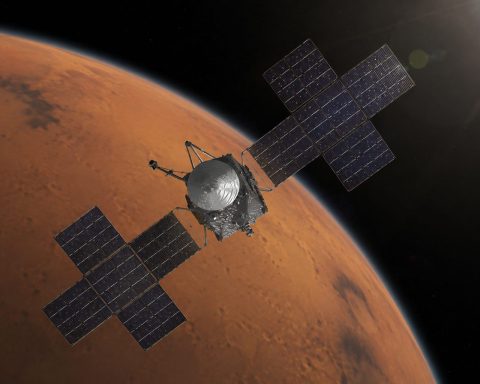
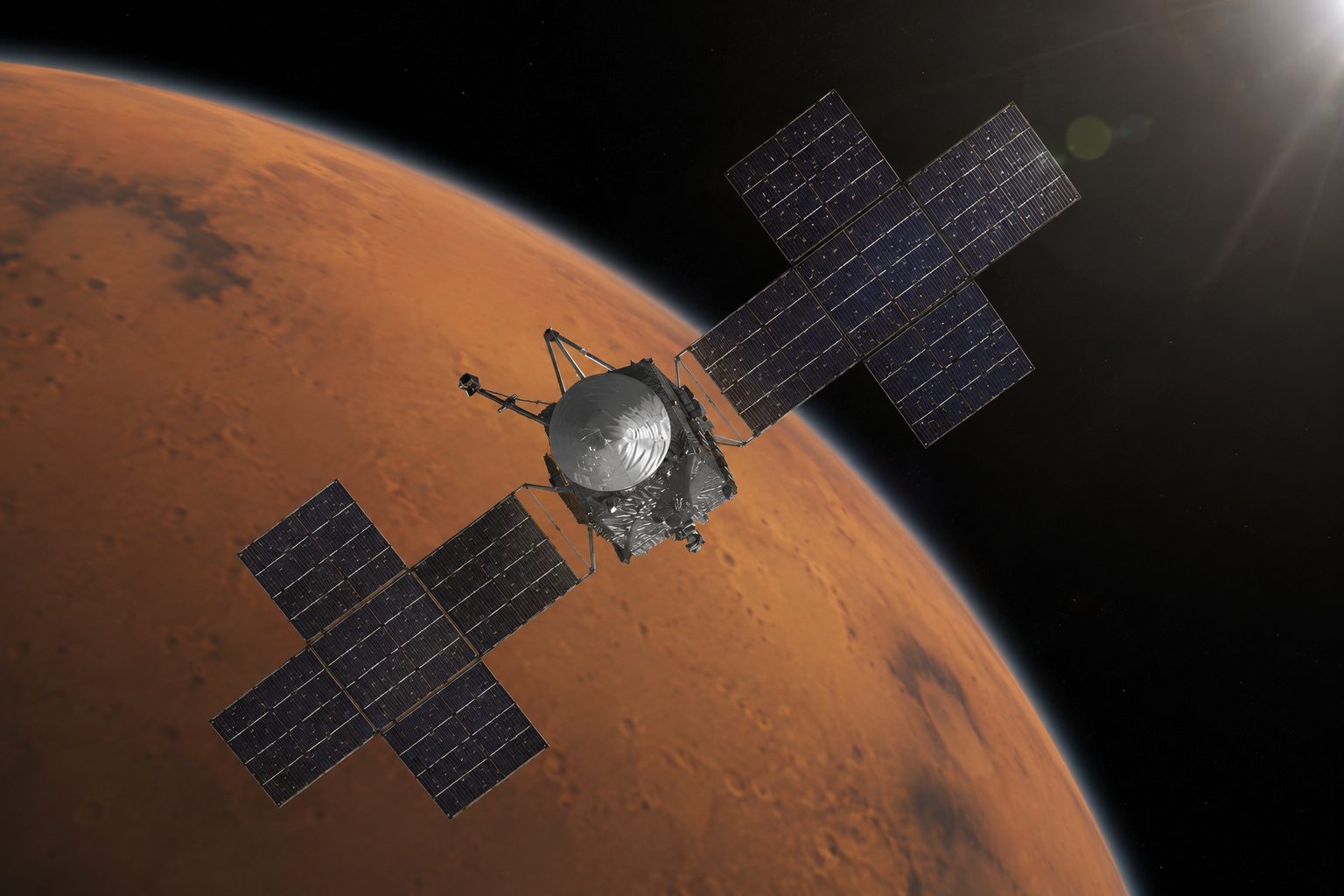
NASA’s Psyche probe snapped unusual close-ups of Mars during a recent flyby, swinging just 2,864 miles (4,609 km) above the planet on May 15. Photos captured Huygens crater, dust-blown plains, and the bright, ice-laden south polar cap. The encounter set Psyche on course for its real target: a metal-heavy asteroid, arrival slated for 2029.
This was no routine flyby. NASA said Psyche pulled off a true gravity assist, picking up roughly 1,000 mph and nudging its orbital plane by a degree—all with zero propellant used. The maneuver let the spacecraft change course using Mars’s pull, not fuel.
The mission also got an early systems check months after cruise operations picked back up, long before the real show. NASA powered up Psyche’s cameras, its magnetometers, and the gamma-ray and neutron spectrometer—an instrument that measures radiation to deduce what materials are there—letting engineers calibrate them using a familiar planet, not just some faraway speck.
Among the images: a slim crescent of Mars snapped ahead of closest approach, a nearly complete disk captured after the flyby, Syrtis Major wind streaks up close, and a sharper, higher-res shot of the south polar ice cap. According to the Psyche mission site, image scale for the polar cap was roughly 0.7 miles (1.14 km) per pixel.
Don Han, who heads navigation for Psyche at NASA’s Jet Propulsion Laboratory, pointed to Deep Space Network radio tracking—the antennas NASA uses for far-flung craft—which confirmed the spacecraft picked up “a 1,000 mile-per-hour boost.” According to NASA, network readings put Psyche right on track for a summer 2029 rendezvous. NASA
Jim Bell, who heads up the Psyche imager instrument at Arizona State University, called the Mars shots “unique and important opportunities” for checking the camera’s capabilities and running image-processing tests. According to Bell, the team plans to keep snapping Mars as it continues to fade from view through the end of May. Live Science
This was no surprise drill. Sarah Bairstow, who leads mission planning for Psyche at JPL, called Mars the team’s “first opportunity in flight” to calibrate their imager against anything bigger than just a few pixels before the encounter. NASA Science
Psyche is just one piece of NASA’s crowded lineup for small-body exploration. Lucy’s on course for Jupiter’s Trojans, while OSIRIS-APEX targets Apophis as it swings by Earth in 2029. Over at the European Space Agency, Hera shaved some time off by slingshotting past Mars in 2025 en route to the Didymos binary asteroid system.
Psyche, the asteroid NASA is targeting, circles the sun in the main belt between Mars and Jupiter. Scientists think it could be a fragment of a planetesimal’s core—a leftover from planet formation. NASA expects the spacecraft to slip into orbit in late July 2029, kick off its primary mission in August, and spend roughly two years mapping Psyche and gathering data on its makeup.
The verdict’s still out on the main question. NASA is hedging: should the asteroid turn out to be the exposed metallic core of an ancient planetesimal, scientists might get their best look yet at material that’s usually locked away inside rocky planets. If it isn’t, there’s a fresh puzzle—why is this thing packed with so much metal? As for the Mars flyby, that’s calibration, not the show.
Arizona State University heads up the mission. Mission operations fall to JPL, the Caltech-run center based in Pasadena. Intuitive Machines delivered the solar-electric propulsion chassis, and ASU teamed up with Malin Space Science Systems to handle the cameras, according to NASA. Lindy Elkins-Tanton, serving as Psyche’s principal investigator at the University of California, Berkeley, summed up the path ahead: “Onward to the asteroid Psyche!” NASA