
NEW YORK, May 26, 2026, 05:02 EDT
SpaceX’s possible IPO—its first shot at public markets—faces a tough hurdle: can Starlink deliver the growth needed to justify that towering $1.75 trillion price tag? According to a Reuters analysis out Tuesday, investors would have fared better with an S&P 500 index fund than with about 75% of the 50 priciest IPOs over the past five years at launch.
This shift is significant: what was once behind closed doors is now out in the open, with paperwork to prove it. According to a Securities and Exchange Commission filing, Space Exploration Technologies Corp. submitted an S-1 registration form on May 20—the standard first step for companies eyeing a public share sale.
Roth Capital Partners analyst Rohit Kulkarni didn’t mince words in his CNBC spot: “Biggest question is how does Starlink scale.” That phrase has stuck, distilling the conversation around the deal. Starlink stands out as the SpaceX division investors can actually price—no wild guesses needed. YouTube
The S-1 filing made it plain. SpaceX’s connectivity business—driven by Starlink—delivered $1.19 billion in operating profit in Q1. But that wasn’t enough to offset a $1.94 billion overall operating loss, with revenue landing at $4.69 billion for the quarter. The company’s AI unit hemorrhaged $2.47 billion over the same stretch, Reuters reported.
SpaceX pulled in $18.7 billion in revenue for 2025 but still posted a net loss of $4.9 billion, Via Satellite found in its review of the company’s filing. Starlink made up $11.4 billion of that top line—roughly 61%. Subscriber numbers climbed to 10.3 million by the end of March. But average revenue per user slid, dropping to $66 from last year’s $99.
The trade unravels when too many tough pieces have to fall into place. “It’s not about whether SpaceX is real,” eToro analyst Josh Gilbert told Reuters. The real risk, he said, is whether the market’s valuation truly captures what it takes to be “part rocket company, part internet provider, part AI venture.” Reuters
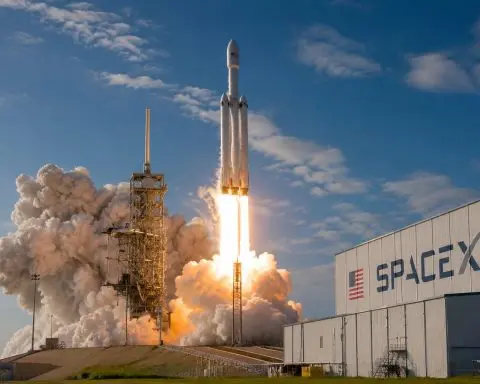
SpaceX notched a key milestone Friday as Starship pulled off a mostly successful test from Starbase, Texas—mock satellites went up, and the booster splashed down in the Indian Ocean. The rocket’s meant for heftier Starlink loads and, down the road, NASA lunar flights, so the IPO narrative just picked up a fresh technical win.
The rocket is still an expensive swing factor. SpaceX has poured over $15 billion into Starship, aiming for each flight to haul up to 60 of its next-gen Starlink satellites—far beyond the two dozen that fit on a Falcon mission. Chris Quilty, president at Quilty Space, thinks SpaceX is “getting really close,” but he still questions whether they can keep the pace with repeat flights. Hans Koenigsmann, previously a SpaceX vice president, flagged in-orbit refueling as “the last big challenge.” Reuters
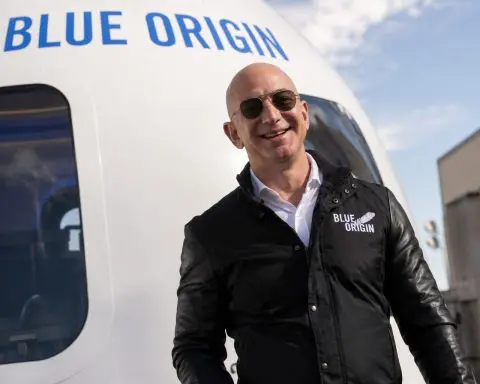
Rivals are moving fast. Amazon got its Kuiper broadband effort off the ground last year, sending up the first 27 satellites out of a targeted 3,236 for the network. Jeff Bezos, speaking to Reuters, said there’s “room for lots of winners” in the satellite internet business. Reuters
Eutelsat, with support from France and the UK, is pushing to turn OneWeb into a competitor to Starlink in Europe. The firm logged a 65% jump in low-Earth orbit service revenue last quarter, but traditional video business continues to drag.
So SpaceX wants public investors to back more than just a broadband project. The story goes: Starlink brings in revenue, that money fuels Starship, Starship makes launches cheaper, and cheaper launches open doors to more satellites, mobile offerings, and AI infrastructure. On paper, it all lines up. Now, it’s up to the market to see if every step holds.