
PASADENA, California, May 29, 2026, 03:02 PDT
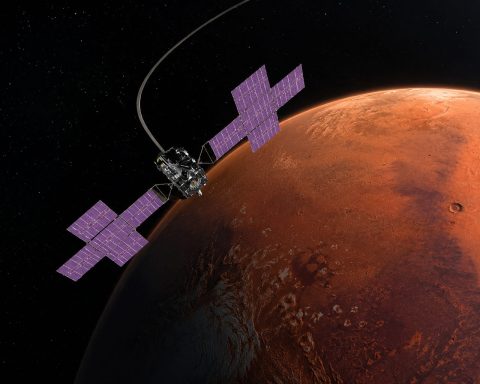
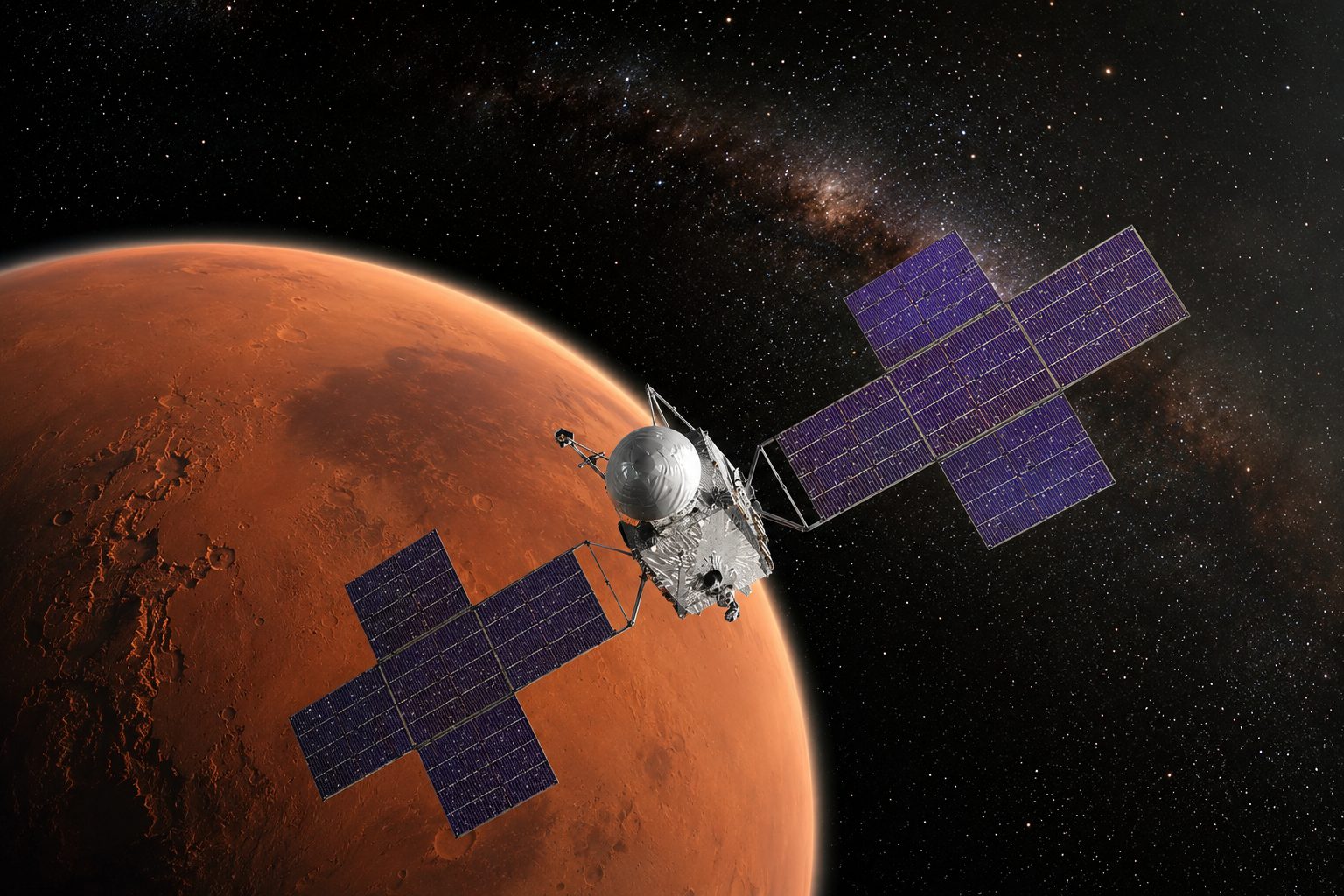
NASA says its Psyche spacecraft remains on track for its rendezvous with a metal-rich asteroid. The probe got a 1,000 mph speed bump and a new orbit thanks to a Mars flyby, all without burning any of its own fuel. On May 15, Psyche came as close as 2,864 miles from the Red Planet.
This gravity assist was crucial — Psyche had just one shot at it, relying on Mars to bend its route with a carefully timed slingshot maneuver. NASA’s Deep Space Network stayed locked on the signal after the flyby and verified that the craft remained on its intended trajectory.
Engineers got a crucial dry run ahead of the more complex 2029 task: maneuvering Psyche into orbit around its namesake asteroid. Psyche orbits in the main belt between Mars and Jupiter, and could offer a rare glimpse at material from the dawn of the solar system. Per NASA’s mission page, the spacecraft is scheduled to start its survey of the asteroid by August 2029.
“Although we were confident in our calculations and flight plan, monitoring the DSN’s Doppler signal in real time during the flyby was still exciting,” Don Han, Psyche’s navigation lead at NASA’s Jet Propulsion Laboratory, said in the agency statement. The spacecraft, Han added, remains “on course” for a summer 2029 arrival. NASA
The flyby didn’t just tweak Psyche’s course. Its cameras snapped shots of Mars, first as a slim crescent, later as a broad, nearly full disk. The images picked up the south polar cap, the Huygens crater, and wind streaks running across Syrtis Major. Jim Bell, Psyche’s imaging lead at Arizona State University, called the data a “unique and important” chance to fine-tune both the cameras and the image-processing software. Gizmodo
The spacecraft switched on its magnetometers, along with the gamma-ray and neutron spectrometer, according to NASA. First data from the magnetometer could have picked up Mars’ bow shock—the spot where the solar wind slams into the planet’s magnetic field and upper atmosphere.
The team will compare Psyche’s Mars data to findings from other missions—NASA’s Mars Reconnaissance Orbiter, the Perseverance rover, and the European Space Agency’s Mars Express—in order to calibrate their results. Matching observations like this gives researchers a baseline to work with before the spacecraft heads for uncharted territory.
Launched in October 2023, the spacecraft is on a journey of about 2.2 billion miles, relying on solar-electric propulsion that pushes out ionized xenon gas for gentle, continuous thrust. Reuters noted ahead of the flyby that planners included the Mars pass specifically to help save xenon for the remainder of the flight.
The reality behind the “metal asteroid” label turns out to be murkier than it sounds. NASA’s updated findings point to Psyche as a blend—metal and silicate, the latter being the kind of stuff you’d see in glass or sand. Metal could account for anywhere between 30% and 60% of its bulk. The actual surface, though? No one knows for sure until the spacecraft gets a close look. NASA Science
Once Psyche arrives, the plan is to chart the asteroid, gauge its gravity, analyze its makeup, and check if it could be the exposed core of a planetesimal—basically one of the early pieces that formed planets. Lindy Elkins-Tanton, who heads the mission, said the team had been waiting years for the Mars flyby. Her words: “Onward to the asteroid Psyche!” NASA