
WASHINGTON, June 4, 2026, 14:03 (EDT)
- NASA has shut down MAVEN, the Mars orbiter that served as a crucial data relay for rover communications back to Earth.
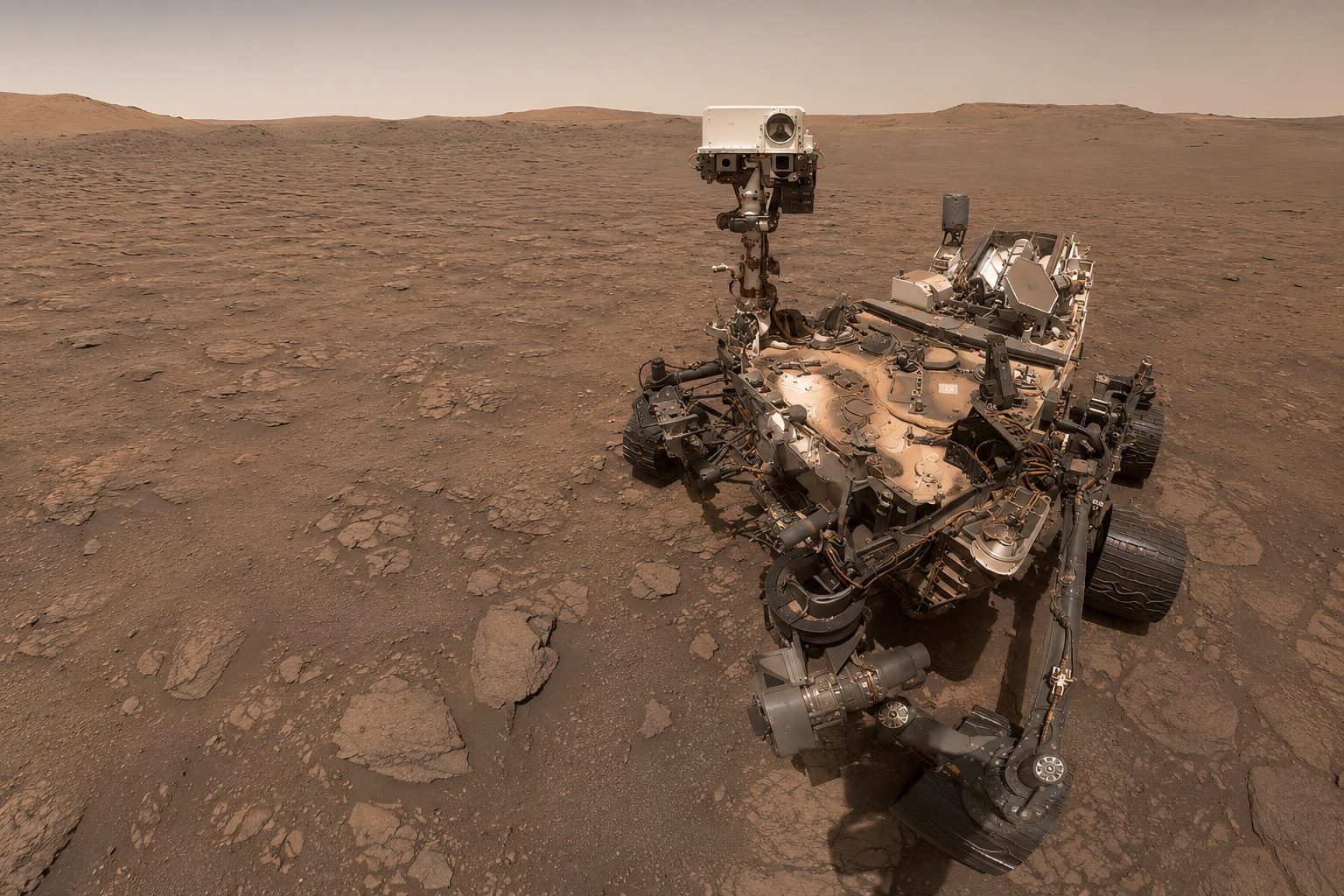
- After more than five years roaming Mars, Perseverance has almost covered the distance of a marathon.
- Up next, the rover will tackle older rock layers—potentially a boost for efforts to pinpoint past habitability.
NASA’s Perseverance rover is closing in on a marathon’s worth of travel across Mars, but it’s doing so without a key communications link. The agency has ruled out any chance of reviving the MAVEN orbiter, which fell silent half a year ago. MAVEN, once a crucial relay for both Perseverance and Curiosity, is now officially out of commission for science and data transmission, NASA confirmed.
Timing is key here: Perseverance is heading out of Jezero Crater and into more ancient ground, but it’s still drilling rock cores that could eventually make their way to Earth. The rover relies on orbiting relay spacecraft to pass along data from Mars back to Earth.
NASA says its relay network is still working, but it hasn’t come through unscathed. Tiffany Morgan, who heads NASA’s Mars Exploration Program, pointed to “a slight delay on occasion” when science data from the rovers is transmitted. Greg Heckler, handling space communications for the agency, mentioned “some small adjustments” made to rover operations. Reuters
As of May 20, Perseverance had logged 26.09 miles—41.99 kilometers—according to Reuters, putting it a hair shy of the 26.22-mile marathon. Robert Hogg, who manages the mission, told Reuters he expected the rover to hit that milestone inside a month.
Last month, NASA’s Jet Propulsion Laboratory reported that the rover had traveled almost 26 miles over more than five years, abraded 62 rocks, and collected 27 rock cores in sample tubes. Abrading refers to grinding off a rock’s weathered exterior to let instruments analyze the fresh material underneath.
“With four prior rover missions under our belt, the Perseverance team recognized from the start this was a marathon, not a sprint,” said Steve Lee, currently acting Perseverance project manager at JPL, in NASA’s May 12 release. Lee described the rover as “in great shape” as the team aimed for longer drives. NASA
Perseverance touched down in Jezero Crater back in February 2021—NASA picked the 28-mile-wide site because researchers believe it once featured water and a river delta. The rover’s assignment: hunt for evidence of long-gone microbial life, gather samples of Martian rock and soil, and stash them for potential pickup and return to Earth.
The latest targets aren’t the same delta rocks that first lured the team to Jezero. Instead, Perseverance was out past the crater rim—its most westerly position yet—when it captured images and data from the Arathusa outcrop, according to Katie Stack Morgan, the rover’s project scientist at JPL. She called this area the “Wild West.” NASA
Ken Farley, deputy project scientist for Perseverance at Caltech, pointed out that NASA’s Arbot panorama revealed what he described as “likely the oldest rocks” the rover will study. According to NASA, some of these rocks might go back roughly 4 billion years, potentially providing a window into Mars’ primordial crust. NASA
There’s a catch: none of this alone confirms Mars ever supported life. Farley explained to Reuters that potential markers spotted in an earlier rock sample still require detailed lab work back on Earth before anyone can claim they’re proof of Martian biology. The real hurdle, though, is NASA’s Mars Sample Return program—the challenging mission to actually get those tubes off Mars and into researchers’ hands.
MAVEN’s troubles stack up for operations. NASA reports contact was lost after the spacecraft slipped behind Mars on Dec. 6 and reappeared, only to be found in safe mode, spinning faster than normal. A review board found the batteries had run down, leaving it unable to communicate.
Even so, NASA and independent reports say other spacecraft are ready to fill the gap. According to AP, there are still four orbiters circling Mars—two American, two European—that can support ongoing missions. NASA officials maintain there’s no threat to rover science. On the U.S. side, Mars Reconnaissance Orbiter and Mars Odyssey are still operational. Curiosity, NASA’s other rover, carries on its work at Gale Crater.
The end of MAVEN isn’t just a finish line—it’s a milestone for science, too. “The mission has truly advanced our understanding of the Martian atmosphere and evolution,” said Shannon Curry, principal investigator for MAVEN at the University of Colorado Boulder. Over its lifespan, the spacecraft generated north of 800 scientific publications, according to NASA. NASA