
CAPE CANAVERAL, Florida, June 6, 2026, 11:02 EDT
- NASA is seeking alternatives to ensure Blue Origin’s lunar lander project stays on track, following the explosion of a New Glenn rocket at the company’s sole operational pad.
- Artemis III hardware is already making its way into launch processing, putting the squeeze on NASA as it works to safeguard a 2027 test flight and still hit the 2028 moon-landing target.
- Blue Origin says the main pad tanks made it through, and New Glenn is still on track to launch again before year-end. The company hasn’t shared what triggered the blast.
NASA is exploring ways to separate Blue Origin’s Blue Moon lunar lander project from its troubled New Glenn rocket, a move that could impact near-term Artemis program plans after last week’s Cape Canaveral blast. Following a June 4 interview, NASA Administrator Jared Isaacman told Spaceflight Now the agency’s approach is to “de-couple the lander from the launch vehicle and the pad itself.” Spaceflight Now
This shift carries weight: NASA continues to press ahead with Artemis hardware. On June 4, the agency announced that Northrop Grumman’s Utah site had sent off the last booster motor segments for the Artemis III Space Launch System rocket. They’re headed to Kennedy Space Center, where the pieces will be stacked for launch.
The sticking point is with the lander. Blue Origin’s New Glenn rocket blew up on May 28 during a hot-fire test—engines running, vehicle bolted down. Nobody hurt. The Amazon Leo satellites, which had been scheduled for this particular launch, weren’t loaded, according to Reuters.
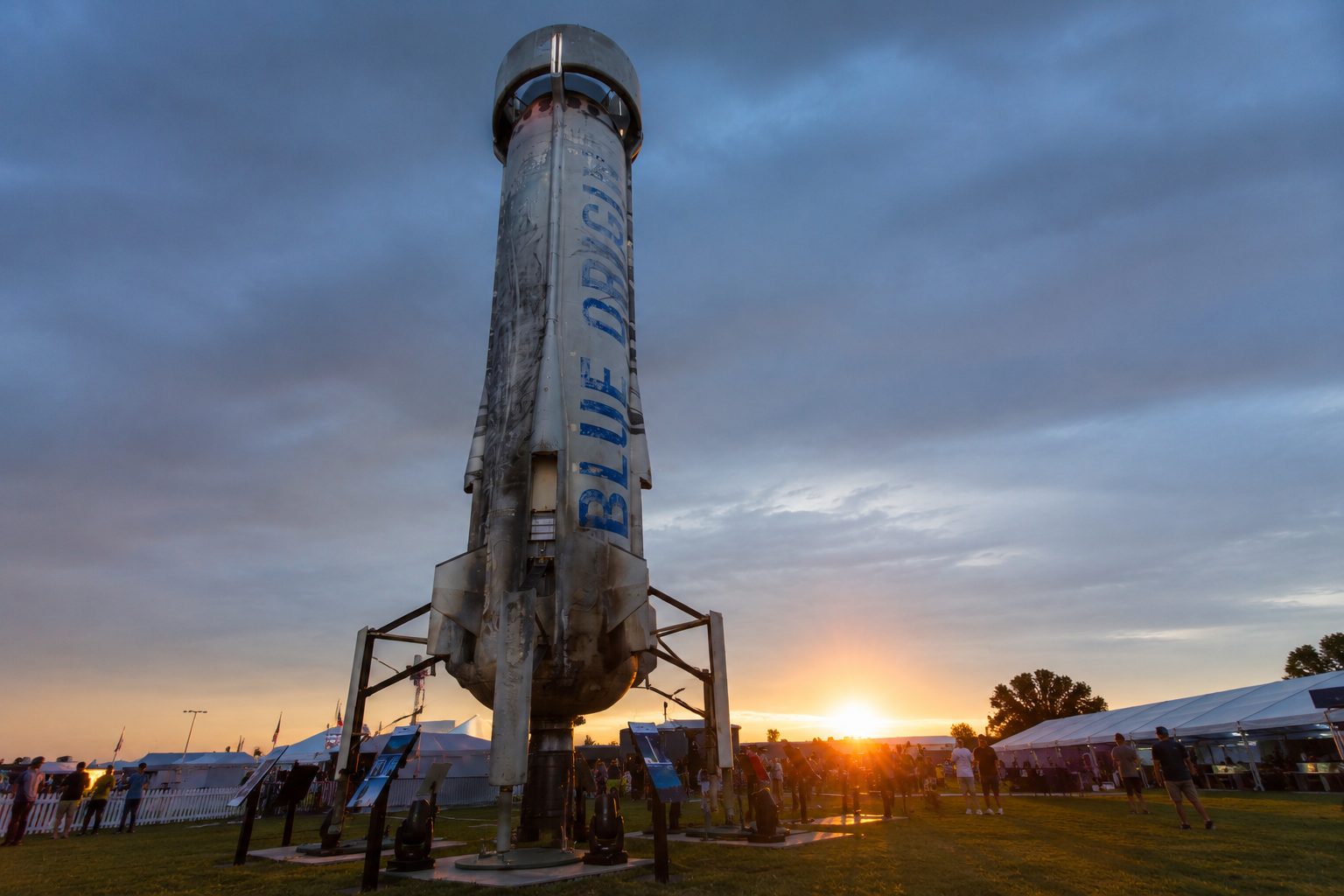
Blue Origin CEO Dave Limp reported that Launch Complex 36’s main structures held up. The propellant tanks and water tower made it through intact, and the support tower can stay where it is for repairs. Accounts of his post on X quote Limp promising New Glenn will take flight again “before the end of this year.” AP News
A quick rebound, if it happens. Reuters noted Blue Origin hasn’t disclosed the cause of the explosion yet. The mishap came on the heels of a New Glenn issue in April—tough timing as the company looks to step up launch frequency and compete with commercial heavyweight SpaceX.
NASA isn’t sitting on its hands. The Blue Moon lander, built to shuttle astronauts between lunar orbit and the moon’s surface, has already seen crew training and mission drills inside a full-size cabin mockup at Johnson Space Center. According to NASA, the Blue Moon Mark 2 cabin stands over 15 feet tall and is intended for lander docking rehearsals in Earth orbit slated for 2027, with lunar missions on the schedule for 2028.
Speaking to Fox Business in comments cited by Spaceflight Now, Isaacman said NASA remained “laser focused on the lander,” aiming to have it ready for the 2027 Artemis III test mission and possibly meet the 2028 landing goals. He described the mishap as a setback, noting that rockets operate with “an awful lot of energy.” Spaceflight Now
Securing a different launch vehicle won’t be easy. Blue Moon relies on New Glenn’s oversized fairing—the payload’s shield during ascent—and, according to Spaceflight Now, only a handful of heavy-lift rockets offer compatible dimensions and ground systems for a hydrogen-powered lander.
It’s a crowded field. NASA tapped both SpaceX’s Starship and Blue Origin’s Blue Moon for Artemis lunar lander contracts, but SpaceX has run into test-flight problems of its own. “A pretty significant setback,” is how Kathleen Curlee, a research analyst focused on commercial space at Georgetown University’s Center for Security and Emerging Technology, described Blue Origin’s recent mishap to Space.com. She made clear the company “cannot get it to the moon without their New Glenn.” Space
The explosion struck right as New Glenn was lined up to carry 48 Amazon Leo internet satellites. Amazon is tapping Blue Origin, United Launch Alliance, and Arianespace as it moves to challenge SpaceX’s Starlink constellation. Rajeev Badyal, who heads Amazon’s Leo project, reassured employees that the satellites “were not on the vehicle” and pointed out that New Glenn is “just one vehicle in our lineup,” according to a memo cited by Business Insider.
NASA faces a potential setback: delays in pad repairs beyond what Blue Origin anticipates, a probe uncovering more significant vehicle flaws, or complications requiring a redesign if a substitute launcher is needed. Reuters, citing Isaacman’s comments to CNBC, noted that the pad repairs would require “some serious time.” Even so, Isaacman held out hope for a 2028 window. Reuters
Right now, NASA is juggling several moving parts: SLS boosters are headed for Florida, astronauts are running lander drills on Houston mock-ups, and Blue Origin is sorting out a pad failure over on the Space Coast. It’s hardly a straightforward route back to the moon. But this is the route NASA’s following.