
New York, June 5, 2026, 15:04 EDT
SpaceX’s upcoming $75 billion IPO has pulled in roughly $150 billion in investor orders ahead of next week’s pricing, according to sources cited by Reuters. That’s twice the amount of stock on offer—underscoring heavy demand for what could become the biggest IPO ever seen. An IPO is when a company first sells shares to the public; oversubscribed means investors want more than is available.
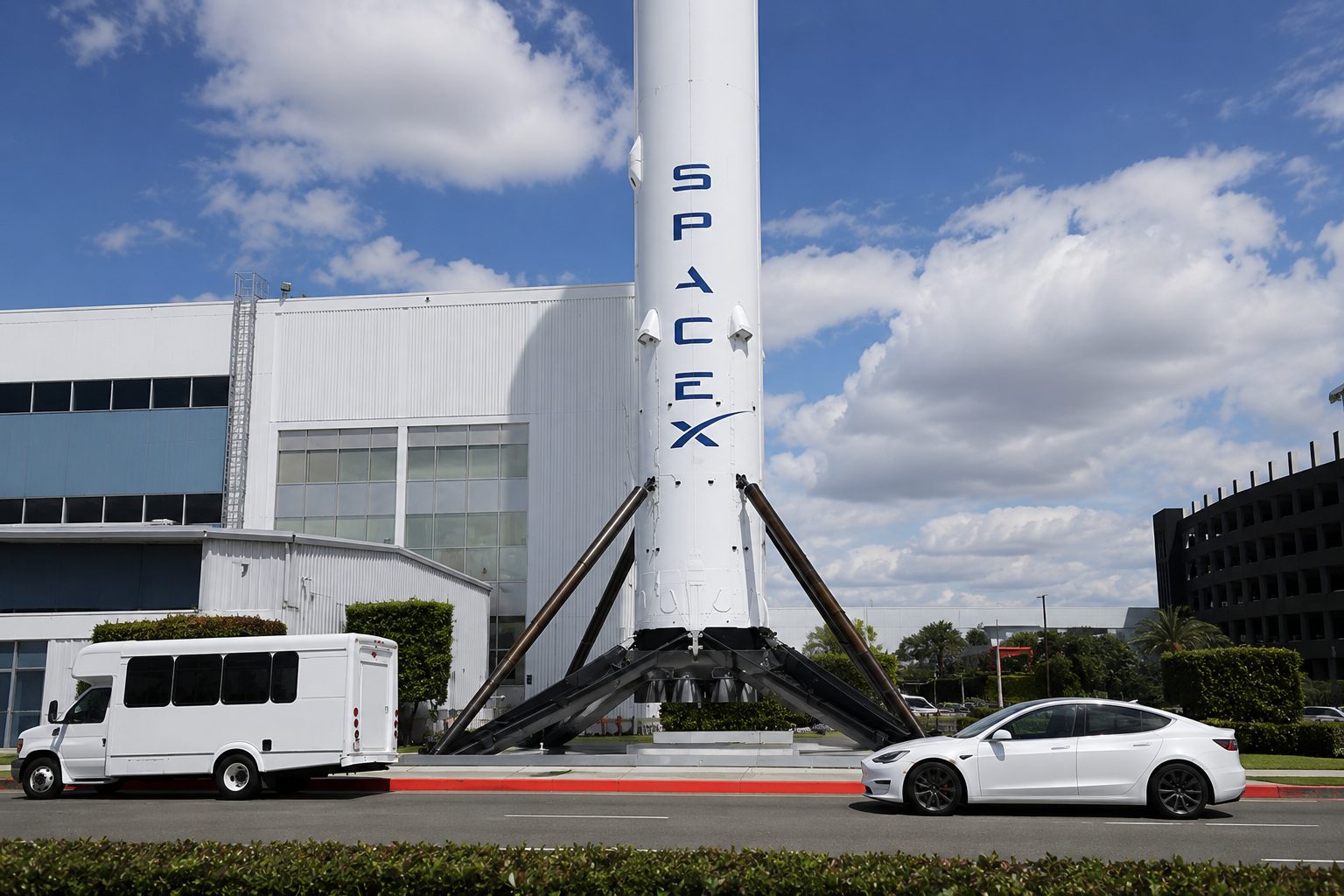
Timing is critical here, as the rocket, satellite, and artificial intelligence firm has entered its final sales phase. SpaceX is slated to price the offering on June 11, with Nasdaq trading set to kick off the very next day, according to Reuters. The deal involves 555.6 million shares going at $135 apiece, which would put the company’s valuation close to $1.75 trillion.
A straightforward deal here could hand Wall Street a new reference point after a lull in major tech IPOs. It’s seen as a signal for the wave of private AI players—OpenAI and Anthropic among them. Both are lining up public debuts, according to Reuters.
Goldman Sachs finds itself squarely in the spotlight for this one. Back in May, Barron’s said SpaceX tapped the bank to spearhead the offering, with Reuters following up to note Goldman was lined up for the coveted “lead left” role—the top underwriting spot in an IPO filing. Barron’s
Morgan Stanley is on the ticket as a lead bank for the deal, alongside names like Bank of America, Citigroup, and JPMorgan, according to Reuters. With that roster, SpaceX can tap a wide syndicate—reaching institutional, retail, and overseas investors. In the previous report, reps for SpaceX, Goldman, and Morgan Stanley all kept quiet.
SpaceX is no longer just a rocket company. Morgan Stanley is calling for revenue to hit $3.4 trillion by 2040, the Wall Street Journal has reported. Goldman Sachs, citing the Financial Times per Reuters, sees the company’s AI division bringing in $322 billion by 2030. In 2025, SpaceX booked $18.67 billion in revenue but ended the year with a $4.94 billion net loss.
Friday brought a new disclosure from SpaceX. According to the filing, the company struck a cloud-services deal with Google, locking in access to roughly 110,000 Nvidia GPUs—plus assorted hardware—needed for AI computing. Under the terms, Google is on the hook for $920 million a month, starting October 2026 and running through June 2029, with provisions for both scaling and early exit.
Retail investors are getting a bigger slice than usual. According to Fidelity, SpaceX is setting aside up to 30% of its IPO for retail clients—well above the more standard 5% to 10%. That means customers with just $2,000 in a brokerage account could potentially get in, though Fidelity noted allocations might be tight and could end up being distributed by lottery.
The retail push is stirring up friction. George Noble, a Wall Street veteran and former Fidelity fund manager, told Business Insider, “The rules are being rewritten to benefit IPO issuers and early-stage insiders,” highlighting the heated debate over broader retail access and speedier index buying tied to new listings. Business Insider
There are limits to the order book as well. According to Bloomberg News, cited by Reuters, SpaceX underwriters have blocked investors from China and Hong Kong from the prospective IPO, citing regulatory and compliance risks. On Friday, both SpaceX’s website and its IPO materials couldn’t be reached in Hong Kong or mainland China, Reuters reported. Goldman had no comment.
The sticking point? Demand alone won’t answer the pricing riddle ahead of trading. S&P Global isn’t tweaking its index admission rules, so a fast-track into the S&P 500 is off the table—SpaceX still falls short on profitability. “Profitability before entrance to the index,” B. Riley Wealth’s Art Hogan put it, after S&P’s decision. Reuters
The roadshow pace hasn’t let up. During one of the bank’s virtual events, JPMorgan Chase CEO Jamie Dimon—whose firm is an underwriter—described Elon Musk as “the Edison of our time” in a live interview with Musk, according to Fortune. Fortune
Goldman gets its fee, sure, but the transaction also puts its reputation on the line. SpaceX faces the real challenge once shares hit the market—demonstrating that buyers will bite at valuations built on rockets, satellites, AI deals, and a founder still firmly in charge, with plenty of execution risk in tow.