
PASADENA, California, May 22, 2026, 03:06 (PDT)
- NASA reported that Psyche picked up a 1,000 mph speed increase during its May 15 Mars flyby, setting it on track for a 2029 rendezvous with the asteroid Psyche.
- This flyby wasn’t just routine—it served as an early shakedown for the spacecraft’s cameras and science gear ahead of arrival at the metal-heavy destination.
- Still up in the air: is the asteroid actually a chunk of a long-lost planetary core?
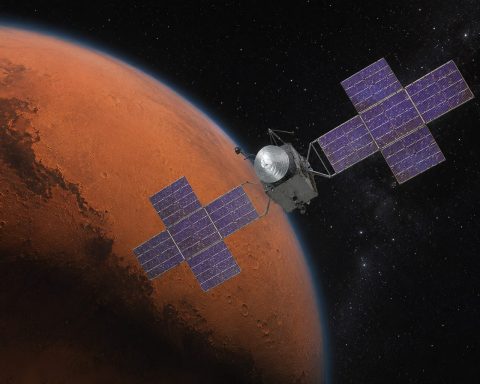
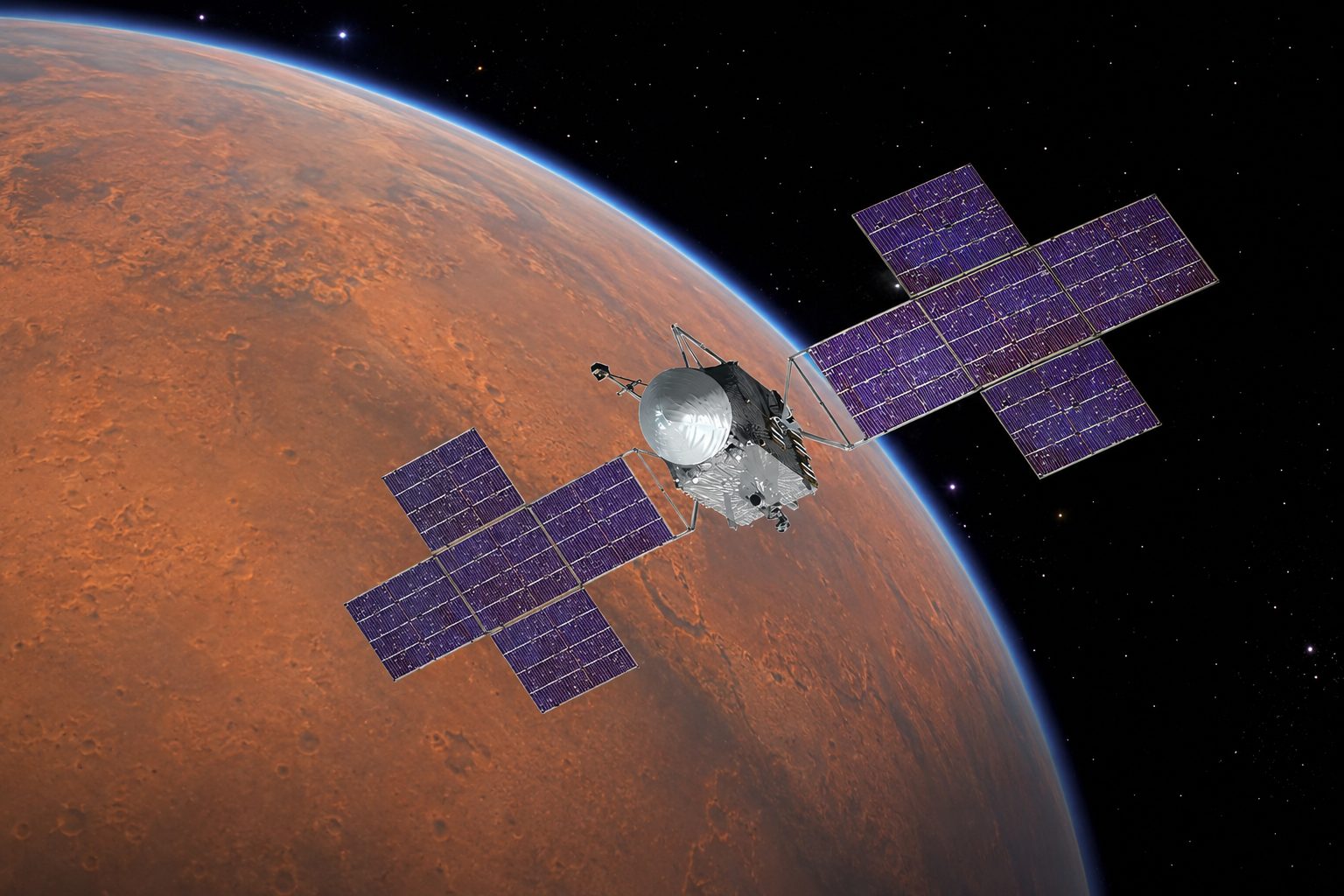
NASA’s Psyche probe swung by Mars, picking up a burst of speed from the planet’s gravity and putting its instruments through their paces ahead of its asteroid rendezvous. According to NASA, the spacecraft passed just 2,864 miles—4,609 kilometers—from the Martian surface on May 15.
Timing is key here: Psyche’s now locked on course for its destination in the asteroid belt between Mars and Jupiter. NASA confirmed that radio tracking data from its Deep Space Network—the agency’s worldwide system of antennas for deep-space comms—showed the spacecraft following the planned trajectory.
Psyche’s Mars flyby used a gravity assist, a technique that grabs a bit of a planet’s orbital momentum to redirect and speed up a spacecraft—no need for extra propellant. Don Han, who leads navigation for the mission at NASA’s Jet Propulsion Laboratory, reported that Mars handed over an extra 1,000 mph and tweaked Psyche’s orbital plane by about a degree relative to the sun. “We are now on course for arrival at the asteroid Psyche in summer 2029,” Han said. NASA
NASA got more than just a new path out of the flyby. As Psyche neared Mars, engineers switched on its imagers, magnetometers, and the gamma-ray and neutron spectrometer—an early shakedown for equipment crafted to study far stranger territory. This familiar planet offered the perfect testbed.
The spacecraft snapped thousands of photos—a slender crescent Mars as it drew near, then detailed shots of the surface right after the flyby. According to NASA, one color image released highlights the double-ring Huygens crater and the battered southern highlands. Psyche’s multispectral imager, which picks up visible and near-infrared wavelengths, captured the scene.
“This dataset gives us a rare chance to calibrate and really get a handle on how the cameras are performing,” said Jim Bell, the Psyche imager instrument lead at Arizona State University, in NASA’s statement. Bell added that the team plans to run some early image-processing tools, the same ones slated for use when they reach the asteroid. NASA
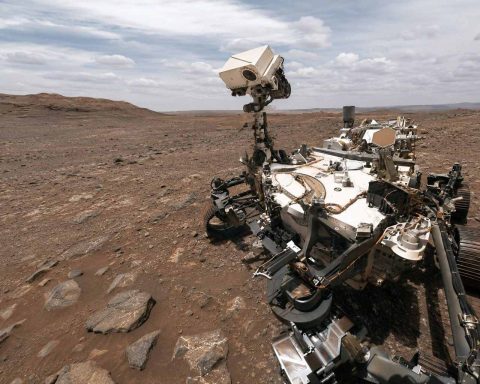
Mars played a more active role than just scenery. During the flyby, NASA’s Perseverance rover, Mars Reconnaissance Orbiter, and ESA’s Mars Express all contributed comparison data or related observations. That allowed Psyche’s team to verify their instrument readings alongside well-established Mars datasets.
Psyche got an uncommon look at Mars as it came in from a high phase angle—only a slim crescent of the planet was illuminated in the spacecraft’s view. According to NASA, the crescent was more pronounced and brighter than models predicted, with sunlight scattering across the planet’s dusty atmosphere and making the arc stretch further around the disk.
The Psyche mission took off in October 2023, setting course for its namesake asteroid some 2.2 billion miles away. The target: a 173-mile-wide body that may be what’s left of a planetesimal core—a planetary building block stripped of its outer layers. If researchers are right, this visit could pull back the curtain on material normally buried deep inside rocky worlds like Earth.
The largest scientific gamble of the mission hasn’t played out yet. NASA says the asteroid is “thought to be” a partial core, but if the object turns out to have a more varied makeup or isn’t as metallic as models suggest, the findings might muddy the simple narrative of a bare planetary interior. It could complicate, not confirm, the story. NASA
Psyche is set to fire up its solar-powered xenon thrusters again, NASA says, as the spacecraft continues its push toward the asteroid belt. Arrival at asteroid Psyche is slated for August 2029, with orbit insertion and then mapping and data collection to follow, all carried out from a sequence of circular orbits.
“We’ve been anticipating the Mars flyby for years, but now it’s complete,” Lindy Elkins-Tanton, Psyche’s principal investigator at the University of California, Berkeley, said in NASA’s statement. “Onward to the asteroid Psyche!” NASA