
GREENBELT, Maryland, May 21, 2026, 07:16 EDT
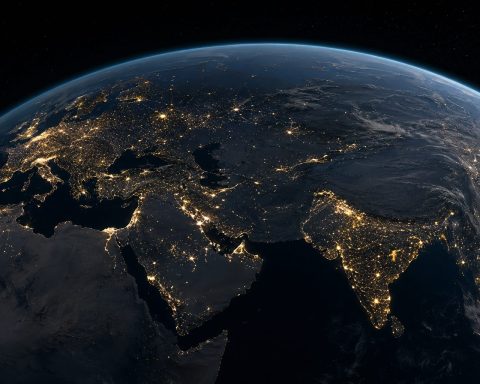
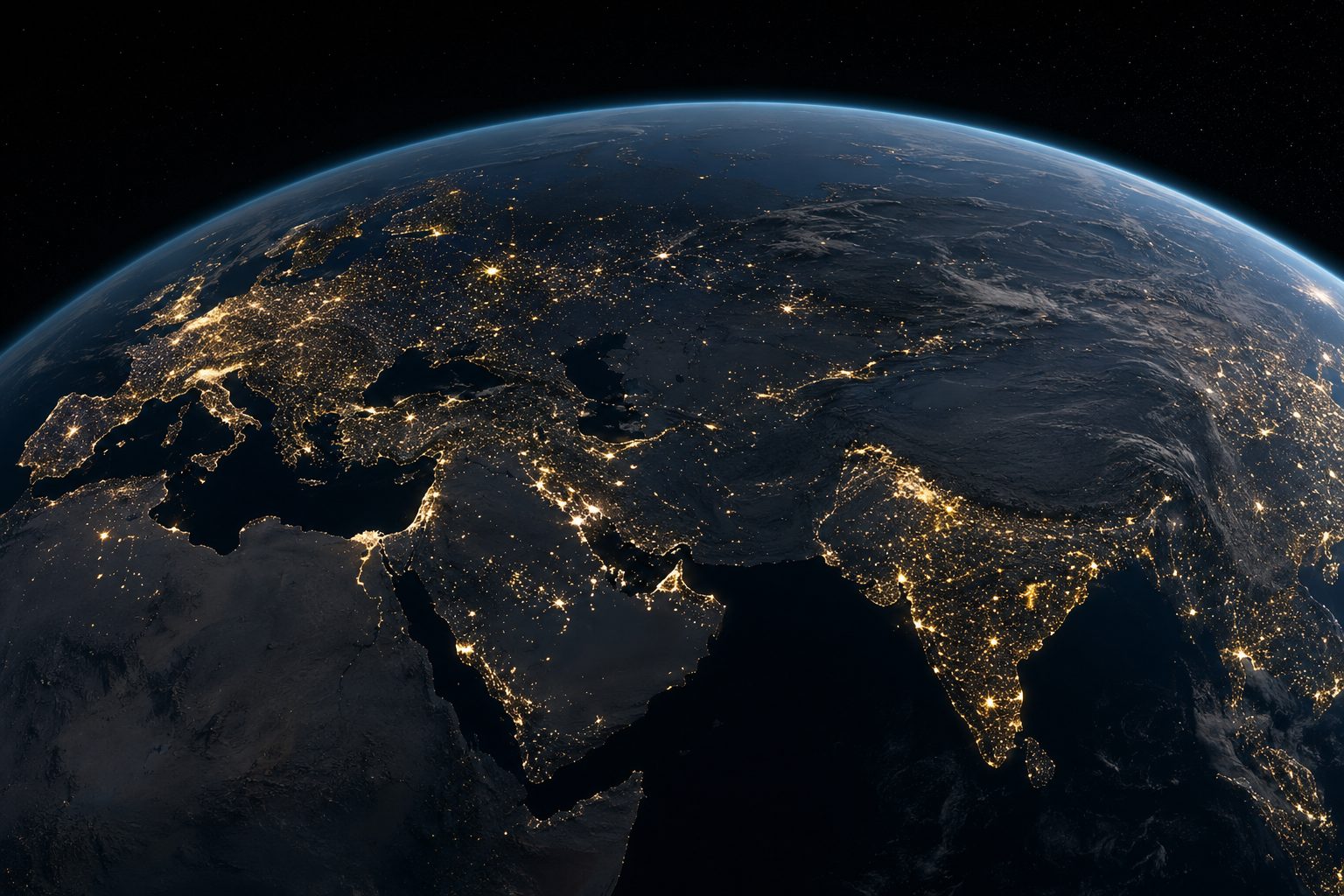
NASA’s new Black Marble night-light maps reveal that between 2014 and 2022, Earth’s nighttime brightness increased, but the story isn’t as linear as scientists once thought. Instead, the data shows more turbulence: patches of light intensifying and fading right next to each other, driven by factors like city expansion, conflict, shifting energy policy, and economic pressures.
Night lights aren’t just snapshots of cities anymore. They’re turning into a proxy for tracking everything from energy demand and disaster response to spotting illegal fishing, monitoring gas flaring, or gauging conflict damage—especially in places where on-the-ground data is spotty or delayed. Scientists, government officials, and energy analysts all lean on these images for early signals.
NASA’s Black Marble maps pull data from the Visible Infrared Imaging Radiometer Suite, or VIIRS. That’s a satellite instrument built to pick up faint nighttime light. VIIRS sensors operate aboard the Suomi NPP, NOAA-20, and NOAA-21 satellites. The system filters out noise from moonlight, cloud cover, geography, and the atmosphere to zero in on fluctuations in ground-level lighting.
A team at the University of Connecticut, with Tian Li and Zhe Zhu at the helm, sifted through 1.16 million daily satellite images spanning most populated land areas between 60°S and 70°N. Their findings, published in Nature, point to a 34% bump in global brightening from the 2014 baseline. Dimming cut that by 18%, so the net change comes out to 16% higher.
In the U.S., that divide jumped out. West Coast metros grew brighter with rising populations and more economic churn, while large swaths of the East Coast faded — a shift the researchers connected to both energy-saving LED adoption and broader economic changes. Europe’s lights dimmed, too: France saw a 33% drop, the UK 22%, and the Netherlands 21%, with a steeper falloff in 2022 after the Russia-Ukraine war set off a regional energy crunch.
In much of Asia, the trend flipped. NASA reported a jump in nighttime brightness across China and northern India tied to urban growth, and as electrification and infrastructure projects expanded, emerging markets in sub-Saharan Africa and Southeast Asia lit up areas once dark.
Conflict made itself visible. Both the study and NASA summaries highlight sharp drops in nighttime lighting over Ukraine, Lebanon, Yemen, Afghanistan—places hit by war, blackouts, and wrecked infrastructure. In Venezuela and Haiti, though, the declines connect more to grinding economic stress and spotty electricity.
“For decades, we’ve held a simplified view that the Earth at night is just getting steadily brighter,” Zhu told Reuters. But according to him, it’s far more turbulent than that. The lighting footprint on the planet is “expanding, contracting and shifting”—not just increasing, but fluctuating in unpredictable ways. Reuters
Karen Seto, professor at the Yale School of the Environment and a co-author of the study, pointed out that the findings challenge the long-held belief that brighter night lights automatically signal stronger economic growth. “The lights are now ‘a near real-time indicator’ of activity and shocks,” she said. Seto also noted that the data offer a way to check if energy policies are actually being implemented. Yale School of the Environment
The maps revealed gas flaring scattered across U.S. oil and gas regions—most notably in Texas’s Permian Basin and North Dakota’s Bakken Formation. Flaring is the practice of burning off surplus gas, usually methane, at oil production sites; it not only wastes fuel but also sends carbon dioxide and soot into the air. “This data gives the energy sector critical insight right now,” said Miguel Román from NASA Goddard. Deborah Gordon at the Rocky Mountain Institute added that public access to flaring data is of “huge” value for both energy and security. NASA Science
Interpreting these images isn’t always straightforward. Dimmer lights might reflect effective efficiency measures—or just as easily, they could be evidence of a grid in trouble, war-hit areas, or a battered economy. Brighter patches aren’t simple, either: yes, sometimes that’s progress and energy reaching new places, but it might just as well be flaring or unchecked sprawl lighting up the night. The satellite data needs to be backed up on the ground before anyone takes a strong position.
NASA’s Scientific Visualization Studio put out new animations: gold marks brightening, purple points to dimming, and white flags areas with both. Where older night-light images lagged, the daily Black Marble data now hands researchers a pulse-check on nighttime human activity—faster, but patchy.