
WASHINGTON, May 21, 2026, 06:05 (EDT)
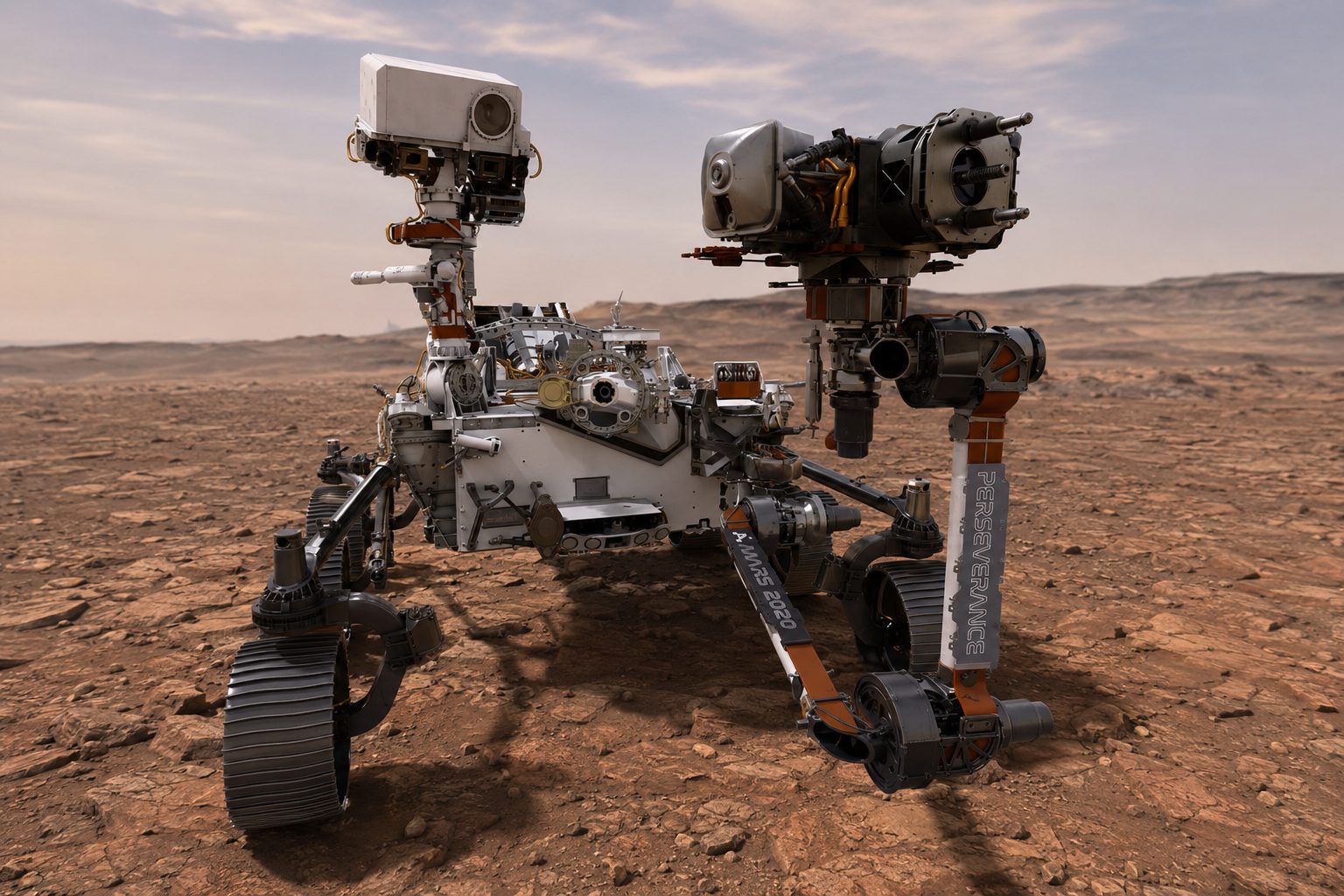
NASA’s Perseverance rover has logged 26.09 miles since it touched down in Jezero Crater back in 2021, and it’s closing in on the marathon milestone—just shy of the 26.22-mile mark, according to mission manager Robert Hogg. The rover is on track to hit that official distance on Mars in about a month, Hogg told Reuters.
The clock is ticking, as Perseverance isn’t sticking to the ancient lakebed anymore. The rover has pushed past the crater rim, into ground that, according to scientists, could contain the oldest rocks encountered so far on this mission—a pivot from probing lake sediments to analyzing much deeper Martian history.
The spotlight remains on NASA’s Mars Sample Return project, which is still working through the details of how to deliver Martian rock and dust samples to Earth. NASA aims to lock in the mission and its blueprint in the latter part of 2026, having recently switched to a dual-path strategy in hopes of controlling costs and reducing timing uncertainties.
Perseverance touched down on Mars on Feb. 18, 2021, kicking off a primary mission set for one Martian year—roughly 687 days back on Earth. Now, more than five Earth years out from landing, the rover is still at work. It’s analyzing Martian rocks and weather, searching for traces of ancient microbes, and gathering samples that might be picked up in future missions.
Ken Farley, deputy project scientist for Perseverance at Caltech, told Reuters the rover remains in good shape, with its power source expected to last “at least a decade.” How long the mission actually runs, he said, is up to NASA’s decisions. Reuters
Perseverance has kicked off its fifth science campaign, zeroing in on the Northern Rim, a stretch that features the area named Lac de Charmes by the mission team. According to NASA, the rover’s latest work includes snapping images of a site called Arathusa and grinding into the rock there to expose what’s underneath. Scientists are looking at igneous minerals—those that crystallized from molten rock—which could be older than Jezero Crater itself.
Katie Stack Morgan, the Perseverance project scientist at NASA’s Jet Propulsion Laboratory, described the rover as now operating in the “Wild West” outside Jezero’s rim—the furthest west it’s been since touchdown. According to NASA, a panorama the rover shot in April at a spot called Arbot captured one of the most geologically diverse scenes of the mission so far, revealing a mix of rock textures that could influence its upcoming route. NASA
The real goal hasn’t changed: proof, one way or another, that Mars was ever home to life. According to NASA, a sample drilled from a rock labeled Cheyava Falls includes possible biosignatures—hints that might point to ancient life, though more work is needed before scientists can say anything for certain.
Farley told Reuters the real question—are those signs actually biological?—won’t get answered until samples reach labs on Earth. That remains the main constraint for Perseverance’s alone work. Its instruments keep detecting organic molecules, rocks shaped by ancient water, and remnants hinting at a more dynamic Martian past.
NASA’s Mars lineup features more than just this rover. Curiosity, since touching down in Gale Crater back in 2012, has logged 22.93 miles. Topping the list, Opportunity racked up 28.06 miles before its mission wrapped in 2019 after a run that began in 2004, according to Reuters.
While Perseverance keeps rolling across Mars, engineers on Earth have been pushing the rover’s limits in durability tests. Back in December, NASA announced that JPL had certified the rotary actuators—those drive the rover’s wheels—for at least another 37 miles. Steve Lee, deputy project manager, called the rover “in excellent shape.” NASA
There’s a chance the samples could sit on Mars for longer than researchers hope, or come back under a different mission setup. Mars Sample Return, for now, is just a concept—there’s no active retrieval effort yet. NASA hasn’t locked in a final blueprint, either; that decision is still slated for later this year.
Perseverance is still rolling. The rover has surpassed its planned mission duration and covered more ground than nearly any Mars rover before, leaving behind the old lakebed and river delta for terrain that might hold traces of Mars’ earliest history. “The Jezero site keeps on giving scientifically,” Farley said. Reuters