
New York, May 21, 2026, 05:05 EDT
- SpaceX’s S-1, now public, lays out the company’s financials in detail for the first time—plus a look at voting control and losses tied to AI.
- This deal may gauge appetite for trillion-dollar tech IPOs, with Wall Street preparing several more hefty listings.
- Starlink is making money. Still, SpaceX shoulders significant AI expenses and has related-party risk tied to other Elon Musk ventures.
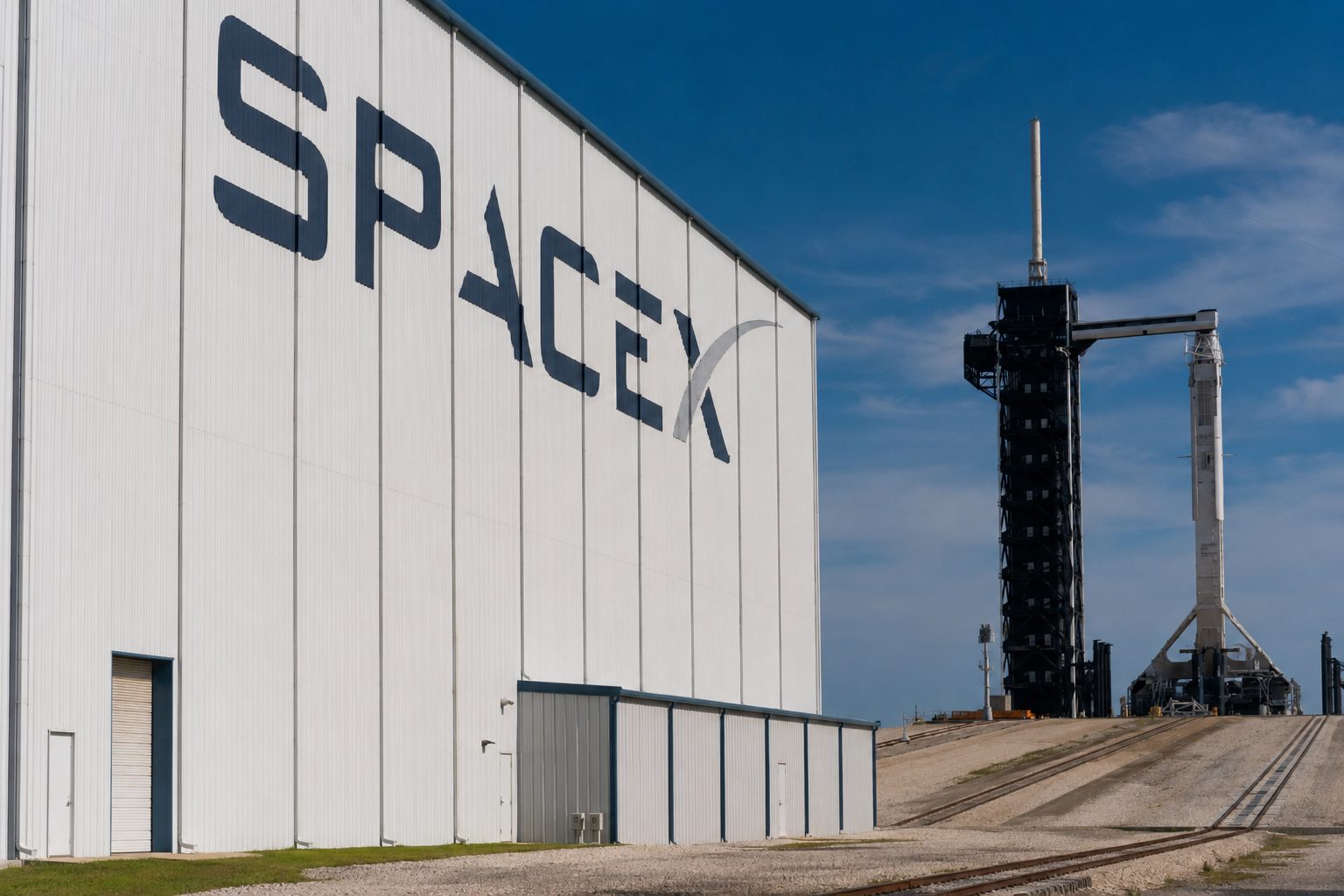
SpaceX on Wednesday unveiled its IPO filing, peeling back the curtain on its financials, Elon Musk’s grip on voting rights, and just how deep its investments in artificial intelligence run. The S-1 registration was green-lit by the U.S. Securities and Exchange Commission on May 20.
This filing flips months of guessing in private markets into a real-time gauge: will investors actually back SpaceX as a combined space, broadband, and AI play? Bloomberg highlighted the document as the one to watch for bank lineups, Musk’s grip on the company, and the crucial financials. All three details landed right in front of investors in the filing.
SpaceX is eyeing a valuation in the ballpark of $1.75 trillion and could bring in around $75 billion, according to Reuters. If it lands anywhere close, the offering would top Saudi Aramco’s IPO record from 2019. The company has set its sights on a Nasdaq debut as soon as June 12, trading under the ticker SPCX. Bookrunners on the deal include Goldman Sachs, Morgan Stanley, Bank of America, Citigroup, and J.P. Morgan.
There’s a split in the numbers. Starlink, SpaceX’s satellite-internet arm, pulled in $1.19 billion in operating profit during the first quarter. Still, SpaceX finished the period with a $1.94 billion operating loss on $4.69 billion in revenue, according to Reuters. Its AI business fared worse, posting a $2.47 billion loss on just $818 million in revenue.
SpaceX posted a $2.6 billion operational loss on $18.7 billion in revenue for 2025, according to the prospectus seen by the Associated Press. The AP noted the filing doesn’t reveal a fundraising target—outside estimates, however, peg it near $75 billion.
Musk isn’t letting go of the reins. According to Reuters, the filing indicates he’ll hang on to 85.1% of SpaceX’s total voting power—thanks to a dual-class structure. That set-up means Class A shares have a single vote apiece, but the Class B stock comes with 10 votes per share.
The filing underscored just how closely SpaceX is woven into Musk’s broader web of companies. Last year, SpaceX and xAI spent roughly $650 million on goods and services from Tesla, according to Reuters. Tesla, for its part, now holds close to 19 million Class A SpaceX shares following a $2 billion investment earlier this year.
Anthropic is going big on AI, committing $1.25 billion each month to SpaceX in a deal that runs through May 2029, Reuters says. The agreement secures access to SpaceX’s Colossus and Colossus II data-center clusters. That’s hefty compute capacity—the processing muscle behind training and operating AI models. Notably, either Anthropic or SpaceX can pull the plug with 90 days’ notice.
The filing goes well beyond a typical IPO document. SpaceX is touting asteroid mining, in-orbit manufacturing, and energy projects on both the moon and Mars as potential growth bets, but acknowledges much of that tech is early-stage or might never make money. “Love him or hate him, Musk is definitely not boring,” said Aswath Damodaran, finance professor at NYU’s Stern School of Business. Reuters
That’s both the draw and the danger. Reena Aggarwal, a finance professor at Georgetown University, described a “somewhat of a halo effect” clinging to Musk, telling Reuters it’s tough to pin down SpaceX’s value with no real peer group in sight. Blue Origin comes closest in terms of launch ambition, while OpenAI and Anthropic help define the AI market—still, none offers investors a direct yardstick. Reuters
The risks are clear: the AI unit is bleeding cash, certain revenues hinge on contracts that could get axed, and shareholders don’t have much say under the current governance setup. Earlier, Reuters pointed out that SpaceX’s structure curtails shareholder rights through supervoting shares, mandatory arbitration, and tight restrictions on legal challenges. Bruce Herbert, CEO of Newground Social Investment, described it as shutting “the voting door, the courthouse door and the proposal door” all at once. Reuters
Reputational landmines are in play as well. According to WIRED, SpaceX flagged possible litigation and regulatory blowback linked to Grok, the chatbot from xAI—specifically when it’s running in its less-restricted modes—and set aside $530 million for potential lawsuits. That throws another curveball at investors sizing up the deal before the roadshow: how much of SpaceX are they actually buying—rockets and Starlink, or a slice of Musk’s ambitious AI push?