
Washington, May 21, 2026, 08:07 EDT
- NASA has turned Artemis III into a 2027 rehearsal in Earth orbit, scrapping plans for it to be the next human moon landing. The mission’s new focus: using Orion to practice docking maneuvers with commercial lunar lander systems.
- NASA is pushing for a 2028 lunar landing, while China has set its sights on sending astronauts to the moon by 2030. The race is on, and the window is narrowing.
NASA’s Artemis III isn’t heading straight for the Moon after all. The mission will now serve as a crewed test in low Earth orbit—just a few hundred miles up—where astronauts get hands-on practice connecting the Orion spacecraft with commercial lander test vehicles from SpaceX and Blue Origin. The agency is holding off on attempting a lunar landing until Artemis IV.
The shift is significant: Artemis III has for years carried the expectation of putting U.S. astronauts back on the Moon—something not seen since 1972. NASA’s updated plan positions the 2027 flight as a risk-reduction step ahead of targeting a 2028 landing close to the lunar South Pole, where ice and potential for future bases are key draws.
This follows April’s Artemis II lunar flyby—NASA noted that four astronauts traveled farther from Earth than any previous crew. Just ahead of a May 26 briefing in Washington on Moon Base plans, NASA is set to reveal new industry partners and fresh mission details.
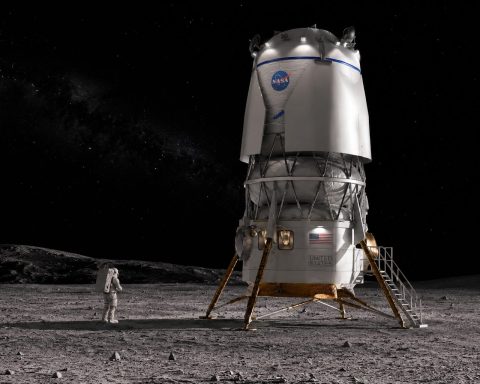
NASA’s updated plan puts the SLS rocket on the pad at Kennedy Space Center, sending Orion into space with four astronauts aboard. The crew will carry out a test of orbital rendezvous and docking—the spacecraft will link up with both SpaceX’s Starship Human Landing System pathfinder and Blue Origin’s Blue Moon Mark 2 pathfinder, according to NASA.
Jeremy Parsons, NASA’s acting assistant deputy administrator for Moon to Mars, described Artemis III as “one of the most highly complex missions NASA has undertaken” and an “important stepping stone.” Astronauts may step inside at least one lander test article, according to NASA, but details on the mission’s length, scientific objectives, and spacesuit interface trials are still under discussion. NASA
NASA chief Jared Isaacman told the AIAA ASCEND crowd in Washington the agency isn’t letting up. SLS stacking should happen within two months, he said, with a partial wet dress rehearsal—essentially a fueled launch simulation—on the calendar before year-end.
China is where the tension sits. Isaacman pointed to Chinese astronauts—taikonauts—probably circling the moon in 2027, even if there’s no official word out of Beijing on that flight so far. China’s government, for its part, maintains its goal: land astronauts on the moon by 2030.
“No bigger prize for China” exists than putting astronauts on the moon, Clayton Swope, deputy director at the Center for Strategic and International Studies’ Aerospace Security Project, told Reuters. The agency also noted that analysts consider Beijing’s 2030 lunar goal within reach, but emphasize China still faces key technical hurdles: rockets, landers, spacesuits, spacecraft—all need to deliver. Reuters
It’s a tight field, packed with big players. SpaceX and Blue Origin have locked up NASA’s major lunar lander deals. Axiom Space leads on spacesuits, picking up after Collins Aerospace’s involvement was reduced. NASA’s inspector general put total funds obligated for Human Landing System projects at $6.9 billion, with spending forecast to reach $18.3 billion by fiscal 2030.
NASA has shaken up its bigger picture for the lunar program. Back in March, Reuters reported the agency scrapped plans for the Gateway station orbiting the moon, repurposing some of those elements into a roughly $20 billion base on the lunar surface. That pivot throws more uncertainty on the roles of international partners like Japan, Canada, and the European Space Agency.
The timeline remains in flux. According to the inspector general, both SpaceX and Blue Origin are running into technical and integration hurdles—and SpaceX’s lunar lander won’t make the cut for a June 2027 landing. Elsewhere, a separate audit pointed out NASA’s risk with next-generation spacesuits: Axiom is now the only company supplying lunar suits, and the agency may not be ready for a 2028 surface mission.
Artemis III remains a high-stakes rehearsal at this stage. NASA plans to announce the crew and finalize key aspects of the mission as launch approaches. There’s no landing on this flight anymore—the test itself could determine if the following mission actually puts astronauts on the lunar surface.